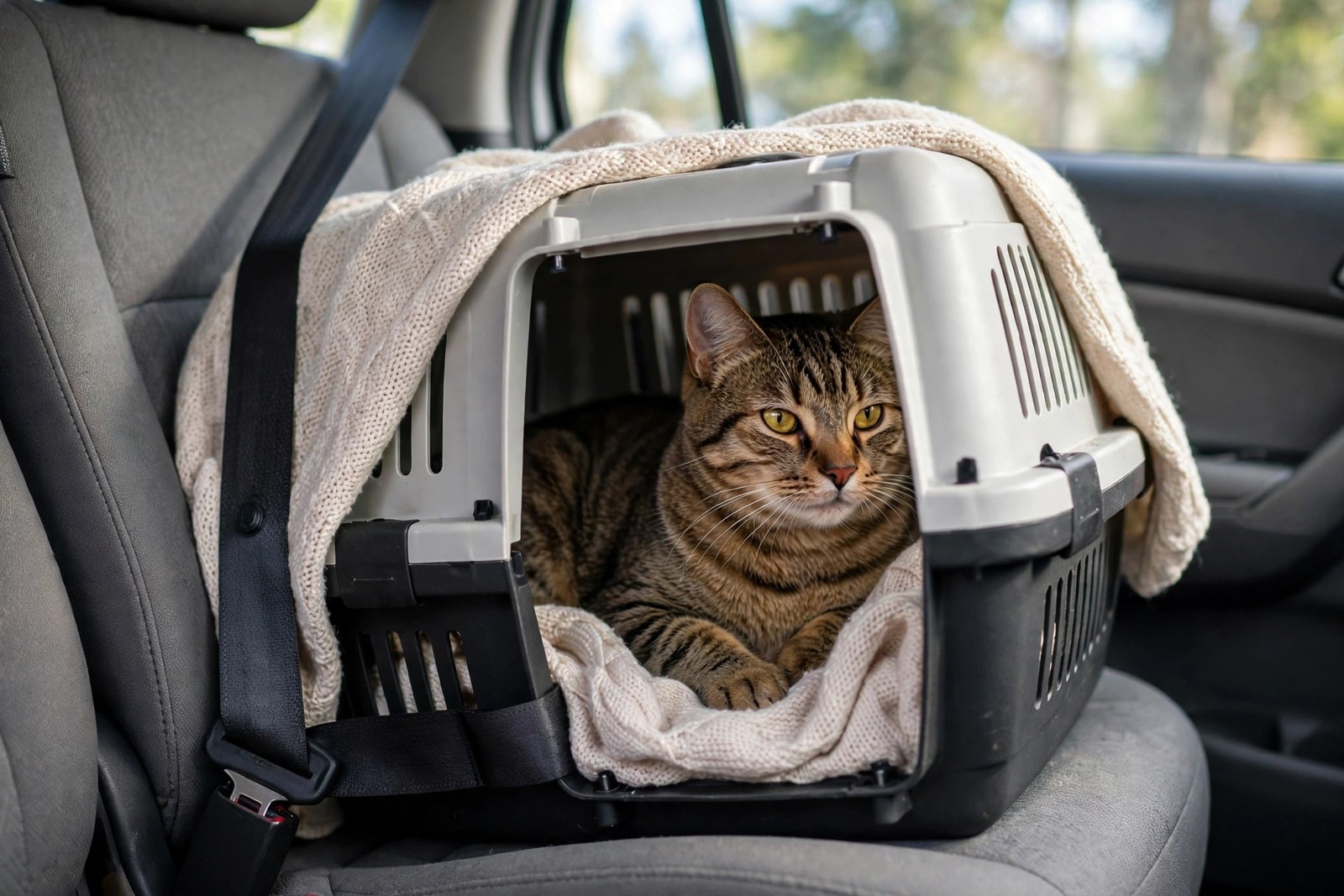
Most cats hate car journeys for a learnable reason: the carrier appears only for vet trips, so carrier means clinic, and the car means noise, motion and a frightening destination. A long journey prepared in a single weekend inherits all of that. Prepared over several weeks, the same trip becomes a sequence of familiar steps — a carrier she already sleeps in, car sounds she has heard while eating treats, and short drives that ended back home with dinner. Begin as early as you can; two to four weeks of gentle build-up transforms the day more than any purchase made the night before.
Weeks before: make the carrier furniture
Leave the carrier out in a room she uses, door fixed open, with her own bedding inside, and feed treats and occasional meals in it until she chooses it for naps. Practise closing the door for a few relaxed minutes, then carrying the carrier around the house, then setting it in the car while you sit reading beside her. Start the engine and let it idle without moving, then take drives of five minutes, then fifteen, always returning home to something good. If she drools, howls continuously or pants on short drives, she may have genuine motion sickness rather than mere worry — mention it to your vet well before the trip for advice on the day itself.
Choose a hard-sided carrier big enough for her to turn and lie stretched, with a top opening if she loads more calmly that way. Line it with bedding that smells of home and pack a spare set, because accidents on a long day are common.
The day before and the morning of travel
Withhold a large meal in the hours before departure — travelling on a full stomach invites vomiting — while keeping water available until you leave; your vet can advise the right gap for a kitten, an elderly cat or one with health conditions. Set up the car before bringing her out: carrier placed level on a seat or in a footwell where it fits snugly, secured with the seat belt through its handle or frame so it cannot slide or tip under braking, partly covered with a light blanket to cut visual stimulation while leaving airflow. Never carry her loose in the car, on a lap, or in the boot space of an estate where she could roam — a loose cat under the pedals is a crash cause, and an escaped cat at a service area is usually gone.
Keep the car cool and quiet: air conditioning on while you drive, and never leave her alone in the vehicle on a warm day, even briefly. Radio low, voices calm, no strong air fresheners.
En route: stops, water and litter
Plan stops every two to three hours, in the parked car with doors and windows closed before the carrier opens. Offer water — many cats drink only when the car is still — and a litter chance from a shallow tray of familiar litter inside the car. Most cats will not use it mid-journey; the offer matters, and a bedding change matters more if she has soiled hers. Never open the carrier outside the car: a frightened cat bolts faster than anyone can grab.
Expect vocal protest for the first stretch; many cats complain for twenty minutes, then settle into silence for hours. Continuous panting, open-mouth breathing or frantic scrabbling are different — pull over safely, let her calm in the still car, and phone your vet if it does not ease.
On arrival, set the carrier down in one quiet room with litter, water, food and a hiding place, open the door and let her emerge on her own timetable. Keeping her vet details, medication schedule and feeding notes accessible to whoever shares the driving means her routine survives a driver swap, and KinsLe Care Pass gives that co-driver temporary, time-limited access to exactly those care details for the journey, so her plan is in the car even when you are asleep in the passenger seat.