A first trailer journey goes well or badly long before the engine starts. Horses who load calmly have usually eaten several meals in a stationary trailer and already know its sounds, smells, and footing. Give yourself at least two to three weeks of short practice sessions, and treat travel day as a graduation rather than a first lesson.
Stage One: The Trailer as a Feeding Place
Back the trailer onto level ground, chock the wheels, lower the ramp fully, and open every door and window so the inside looks bright rather than like a dark cave. Lead your horse past it and around it until he is bored, then feed his normal bucket feed beside the ramp, moving the bucket a little closer each day. When he is eating on the ramp without tension, place the bucket just inside, then further in over several sessions, letting him choose to step up and always letting him back out freely. Never tie him inside during this stage, never close him in on the first successful entry, and end every session while he is still calm, even if that means stopping sooner than you planned.
Stage Two: Standing, Closing, and Engine Sounds
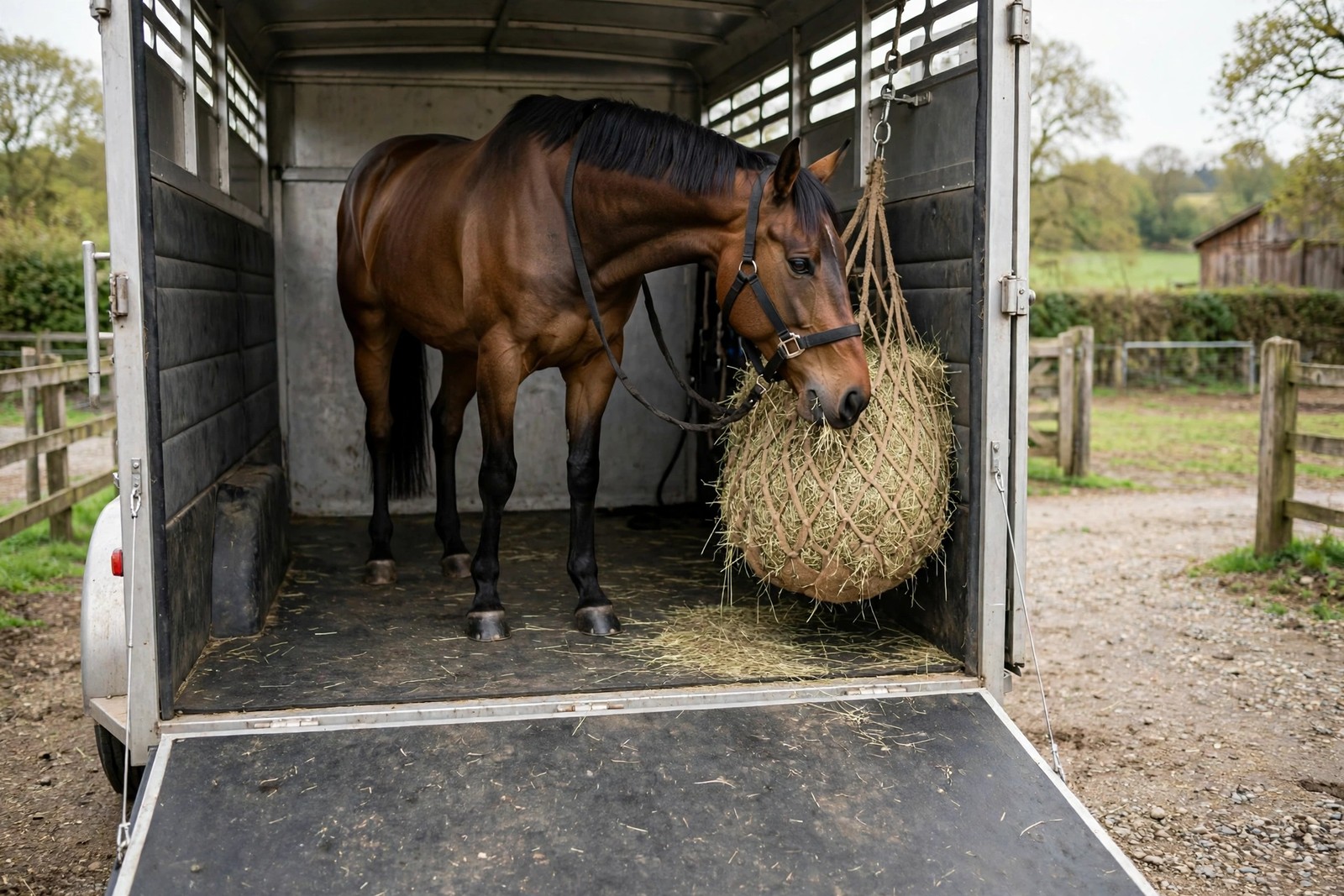
Once he walks in for feed willingly, practise standing quietly inside for a few minutes at a time while a handler stays at his head. Over separate sessions, add each new element on its own: a hay net hung safely within reach, the breech bar or strap fastened behind him, the ramp raised, the doors closed briefly and reopened, and finally the towing vehicle idling nearby so he learns the vibration and noise while nothing else changes. Check the trailer itself during this stage too: sound flooring under the mats, a ramp surface with real grip, working lights and brakes, correct tyre pressure, and partitions adjusted so he has room to balance without being thrown from side to side.
Stage Three: Short, Easy First Drives
The first moving trips should be five to ten minutes of slow, smooth driving that end back at home with feed and turnout, so the trailer does not come to predict only long journeys or vet visits. Drive as if carrying an open bucket of water: accelerate gently, brake early, and take corners wide and slow, because a horse balances against every change of speed with his legs and neck. Travel a calm, experienced companion horse alongside him if one is available and the trailer is built for two. After each short trip, unload calmly, note what worried him, and repeat until the whole sequence is dull.
Travel Day Itself
Load in good time, offer hay for the journey, tie with a quick-release knot at about head height so he can balance but cannot turn around, and plan water and rest stops on longer trips rather than driving through in one stretch. Drive the first part gently, stop after a short distance to check he is settled and not sweating or scrambling, and unload somewhere quiet at the destination with the ramp lowered onto level ground. KinsLe's Care Teams lets you turn the loading stages, trailer checks, and travel-day jobs into assigned duties with completion times, so everyone helping knows exactly which step your horse has genuinely mastered and which one still needs practice.