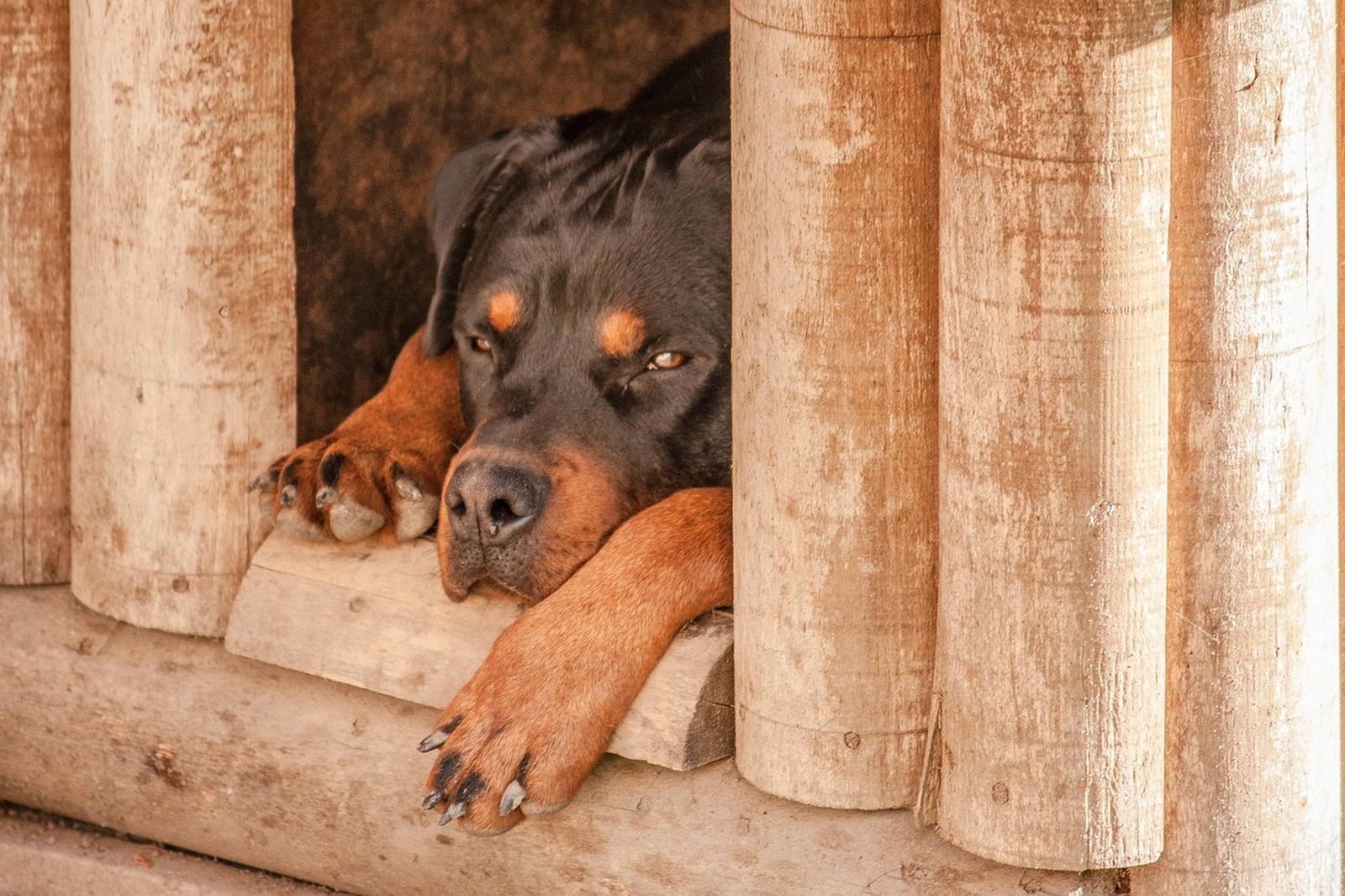
His Job Is Guarding, and a Move Scrambles the Job Description
A Rottweiler's world is organised around a territory and a family he watches over. A house move disturbs both at once: strangers handle his family's belongings, furniture leaves his space, and then he is expected to accept an entirely new territory as his. Preparation is mostly about lowering the number of decisions he has to make. Pack in stages, keep his exercise and feeding times firm, and maintain normal, calm behaviour around him. Rottweilers read their owners closely, and a household that treats the process as dull administration gives a watchful dog little to escalate about. His bed area should stay intact until the final stage of packing.
Moving Day: Secure, Separate, and Undisturbed
He should not meet the movers. Plan for him to be in a closed, cleared room well away from the loading route — with a sign, water, his bed, and a substantial chew — or, better, spending the day with a trusted person he already knows and accepts. For a dog of his strength and protectiveness, an accidentally opened door is not a minor mishap, so brief every helper personally rather than relying on the sign alone. The same arrangement applies at the new house during unloading. He travels in your vehicle, calm and secured, and he is the last arrival of the day, entering a quiet house rather than a working site.
Handing Over the New Territory
Bring him in on lead and walk the house with him slowly, room by room, letting him sniff and settle without excitement, visitors, or ceremony. His bed and bowl should already be placed, ideally in a spot with a similar relationship to family life as the old one, so his base exists inside the new territory from the first hour. Before any off-lead garden time, walk the boundary with a strong dog in mind: fence height and condition, gate latches, side passages, and anything left by previous occupants. Then supervise his first garden sessions, keeping them calm and ordinary rather than celebratory.
New Neighbours, New Sounds, Same Rules
Expect heightened alertness in the first days — listening at doors, watching windows, reacting to neighbouring dogs and unfamiliar night sounds. This is a guarding breed recalibrating, and it usually settles as the soundscape becomes familiar. Walk one or two local routes repeatedly so the territory's edges become known, and keep introductions to neighbours and their dogs controlled, on lead, and brief at first. House rules transfer exactly: where he sleeps, how he greets, what he may guard from the sofa. Consistency from the first day prevents a powerful dog from writing his own version of the new household's rules during the unsettled week.
Watch for Stress Behind the Stoicism
Rottweilers often go quiet rather than dramatic when stressed, so look for appetite changes, restlessness at night, digestive upset, or increased guarding intensity that does not ease as days pass. A dog who stops eating, pants and paces persistently, or becomes reactive beyond his normal baseline deserves a vet conversation to check that pain or illness is not compounding the stress of the move. On KinsLe, Family Sharing lets the trusted people helping you see your Rottweiler's routine, handling preferences, and emergency contacts in one place, so his care and management stay consistent even when you cannot be the one present.