
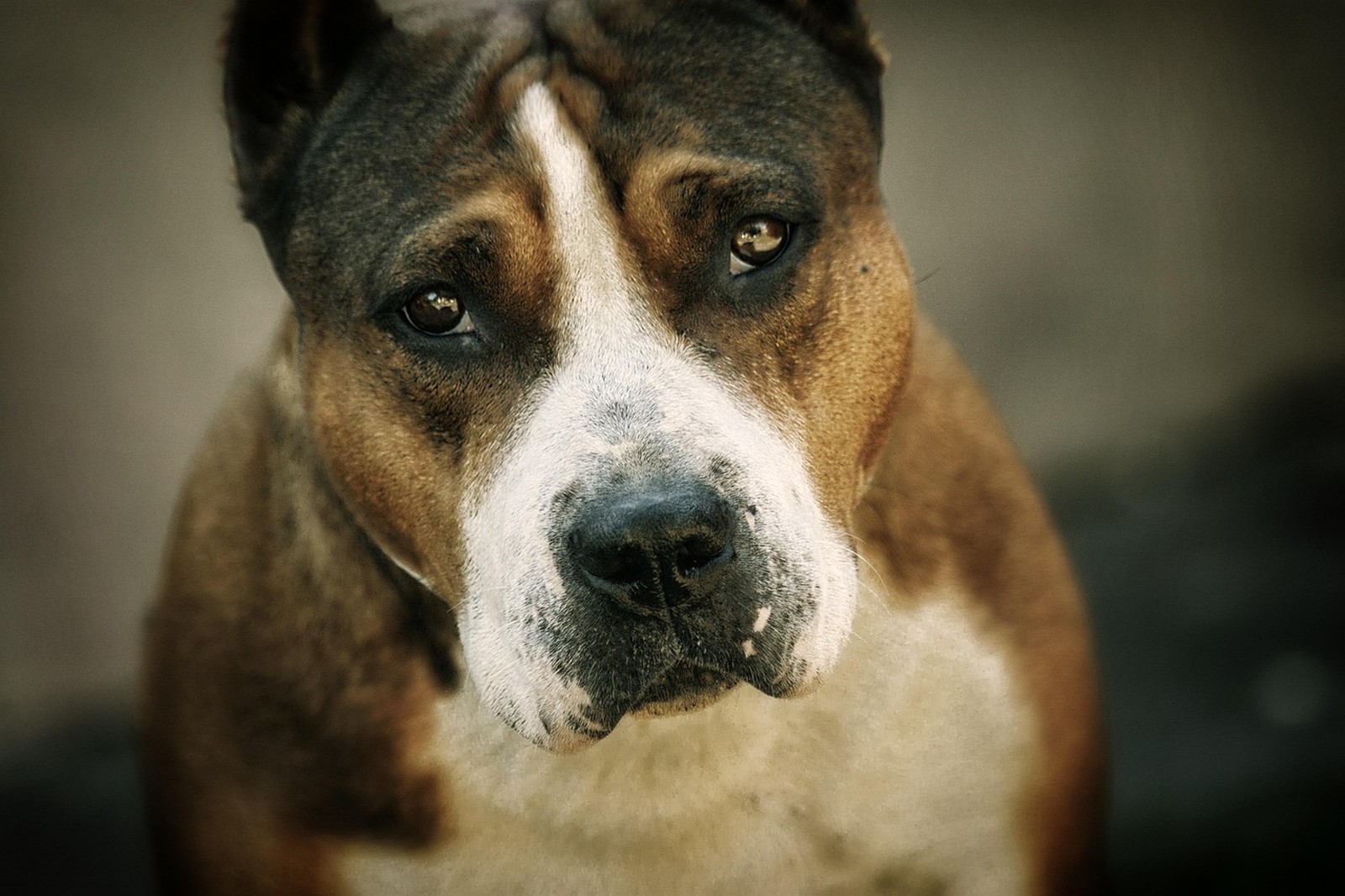
His Family Is His Territory
A Staffordshire Bull Terrier is a people dog to his core — devoted, physical in his affection, and happiest in the middle of whatever his family is doing. A house move unsettles him less through the change of building than through the change in his people's availability and mood. Pack in stages, keep him near the action at a safe distance where possible, and hold his daily pattern tight: same feeding times, same walks, same evening sprawl with his humans. Staffies are sensitive readers of household emotion, and a family that stays calm and keeps cuddling on schedule tells him the important things are not changing, even while the sofa disappears into a van.
Tire Him Out and Give His Jaws Legal Work
This is a strong, energetic breed with powerful jaws and a deep commitment to chewing when bored or anxious. Every packing day should include real exercise — a proper walk with play, not a token loop — and his resting area should hold tough, sanctioned chews he is allowed to demolish. Packing materials are a hazard with him: cardboard, tape, and wrap will all be tested, and swallowed fragments are a genuine risk, so keep supplies off the floor and finished rooms closed. If he becomes destructive in the old house during packing, that is information — he needs more exercise, more chew time, or more company — rather than naughtiness to punish in an already stressful week.
Moving Day: Loved, and Safely Out of the Way
A Staffy's instinct is to be among his people, greeting every mover as a new friend, but an affectionate, muscular dog leaning against people carrying furniture is a safety problem. Set him up in a cleared room with his bed, water, and a long-lasting chew, with a sign on the door and every helper told he is there, or let him spend the peak hours with a person he knows and loves. He travels in your car, not the van, and enters the new house once it is quiet, on lead, to find his bed, bowl, and a couple of familiar toys already in place. First explorations go better with his favourite person walking beside him at his pace.
First Days in the New House
Let him investigate room by room, then check the garden together before off-lead time: fences and gates should be assessed for a strong dog who may jump up at them in excitement, and anything left behind by previous occupants should be cleared. Resume his normal rules from the first day — where he sleeps, how he greets visitors, what is chewable — because Staffies thrive on clear, kind consistency and will happily adopt any looser arrangement the chaotic first week accidentally teaches. Walk one or two local routes repeatedly, keep evenings calm and together, and expect his confidence to rebuild quickly once the family's rhythm is recognisably restored around him.
Stress Signs in a Dog Who Hides Them Behind Good Cheer
Staffies often stay sunny while stressed, so watch the quieter signals: appetite dipping, restless sleep, increased clinginess or shadowing, chewing that turns frantic, or digestive upset that does not settle. Give him company, exercise, and predictability first, and keep absences from the new house short and gradual. If changes persist beyond a few days, or he stops eating, injures himself chewing, or seems flat rather than his usual exuberant self, a vet visit is the right call. On KinsLe, Family Sharing means family and trusted helpers can all see your Staffy's feeding, exercise, and care notes, so the routine that keeps him settled is followed by everyone, not just you.