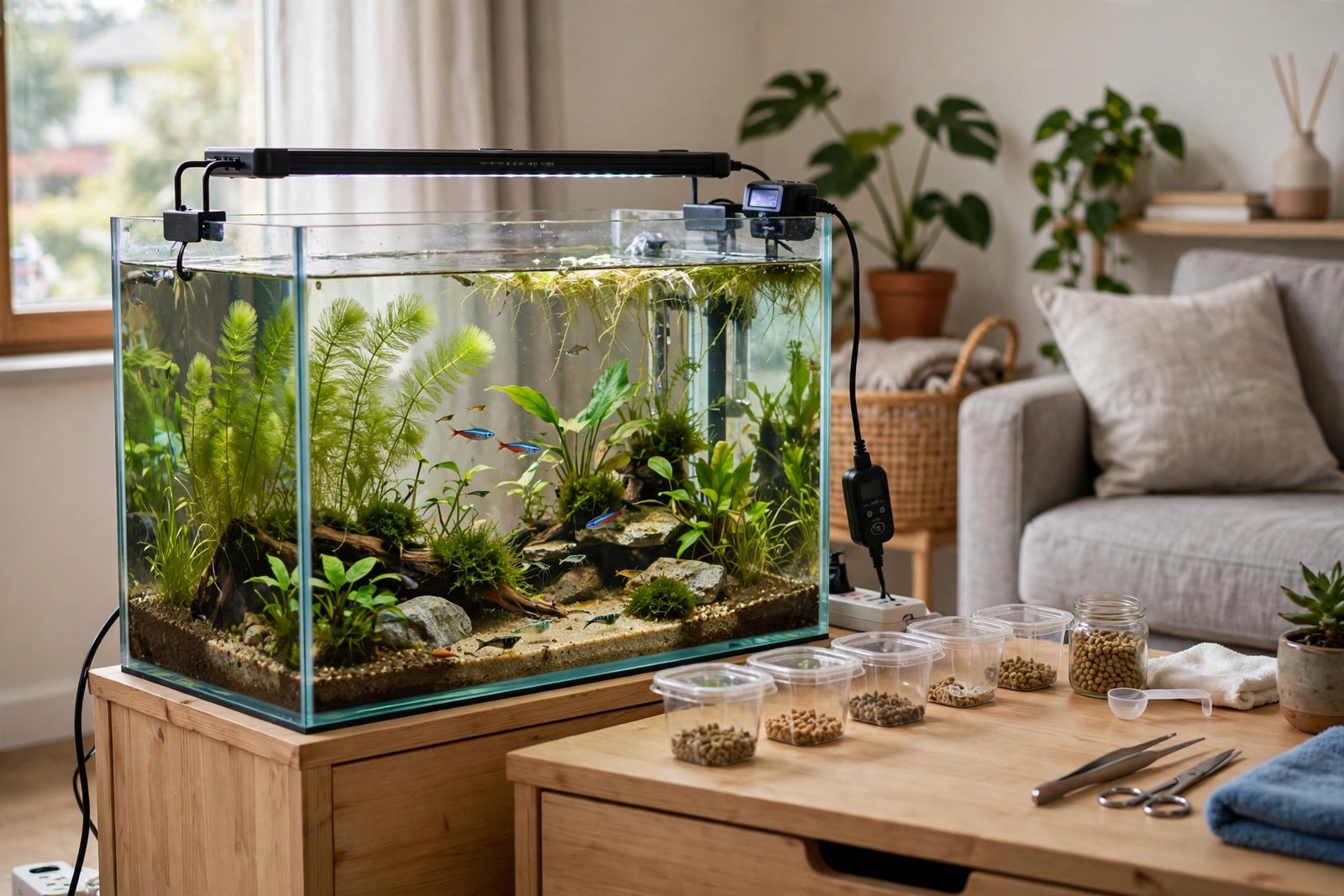
Most vacation losses are not caused by the trip. They are caused by the last-minute water change that destabilised the tank, the well-meaning sitter who fed a week's food in three days, or the filter that failed unnoticed in an empty house. Prepare the tank in the week before you leave, simplify everything, and write the plan down as if you will have no phone signal — because you may not.
Do the Maintenance Early
Several days before departure, do your normal partial water change, clean the gravel lightly, scrape the glass, and test ammonia, nitrite, nitrate, and temperature so you know the tank is starting from stable numbers. Service the filter if it is due: rinse media in removed tank water, check the impeller and flow, but never replace all the media or deep-clean everything at once, and never do a major rescape, new stocking, or medication course in the final week.
Check heaters, lights, air pumps, and plugs, replace weak batteries in auto-feeders, and confirm timers work by watching a full light cycle before you go. Leave spare dechlorinator, a bucket, and towels by the tank where a helper can find them without hunting.
Feed Less, and Make Overfeeding Hard
Healthy adult fish tolerate a short trip with no food better than they tolerate polluted water, and for longer trips the risk balance still favours light feeding. The single most effective step is portioning: measure each day's food into a labelled container, one per feeding day, and hide the main food tub. A sitter cannot overfeed food they cannot find, and a labelled box removes all judgement calls.
Set an auto-feeder, if you use one, several days early and watch it dispense, because an untested feeder can dump or jam on day one. Skip vacation feeder blocks unless you already know how your tank handles them; in many tanks they foul the water faster than hunger would harm the fish.
Write the Sitter Briefing You Wish You Had
Leave one page by the tank: what to feed and when, light hours, the temperature the thermometer should show, and what normal looks like — fish behaviour, water clarity, filter sound. Then cover the failures: what to do if a fish dies (remove it, note the day, do not add anything), if the filter stops (check the plug, call you, do not strip it down), if water turns cloudy (feed nothing that day and contact you), and if there is a leak or power cut lasting hours.
Name a local backup who knows fish — a friend, neighbour with tanks, or your regular aquatic shop contact — and leave their number beside yours, with clear permission for that person to do a water change if you cannot be reached. Show the sitter the routine once in person before you leave; a five-minute demonstration prevents most misunderstandings.
While You Are Away and When You Return
Ask for a brief check-in photo of the tank every couple of days rather than daily reports; you are looking for water level, clarity, and the filter running. On return, test the water before feeding, do a partial change if nitrate or waste has crept up, remove any uneaten food or losses, and resume normal feeding gradually over a day or two instead of offering a feast.
All of that briefing works better as a handover than as a note on the fridge that one person may never read. KinsLe Care Pass gives your sitter temporary, time-limited access to the feeding portions, light schedule, normal-baseline notes, and emergency steps for your tank, so the person standing in your living room has the full plan in hand.