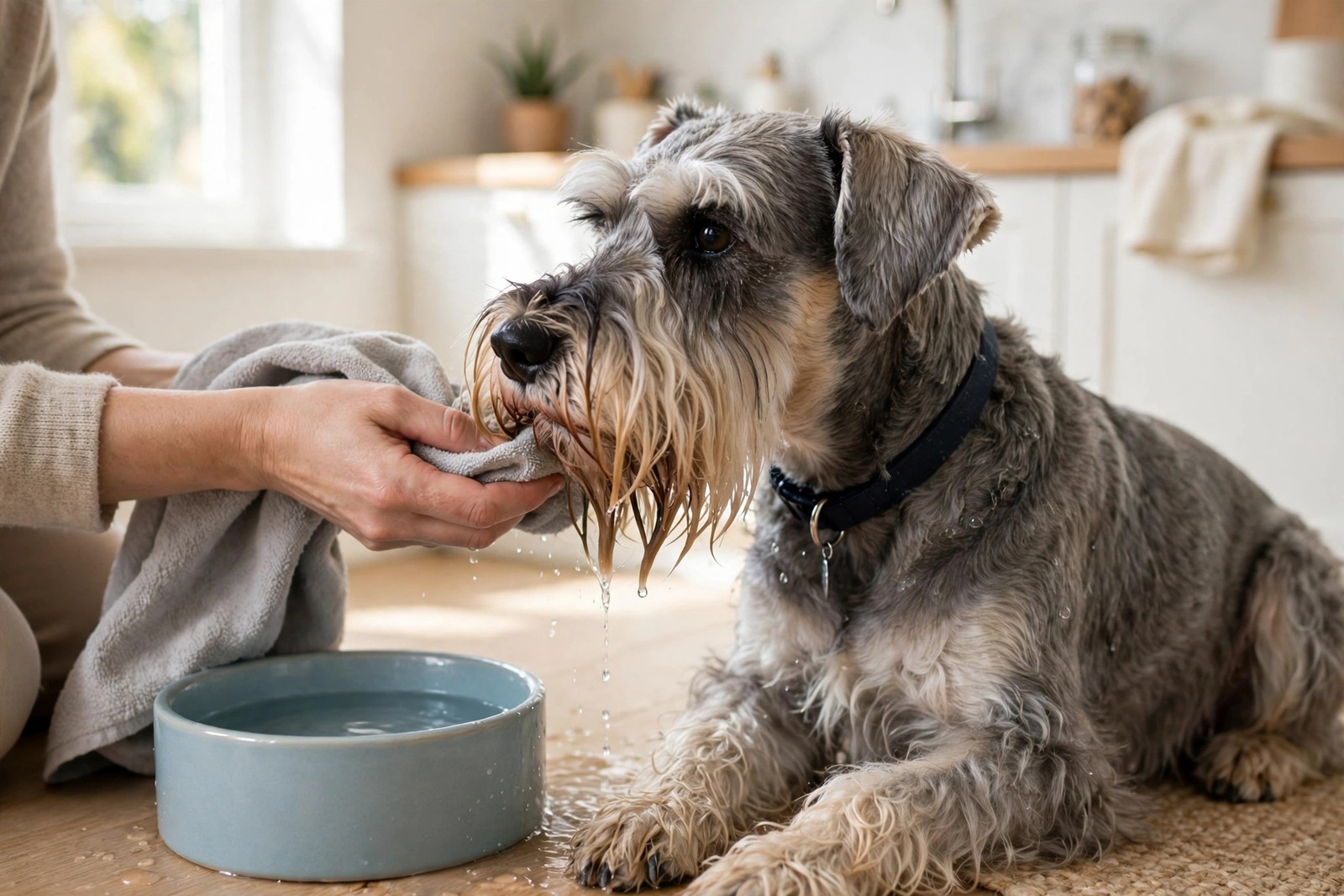
The smell has a simple engine: a beard that stays wet. Each drink pushes water deep into the hair around the mouth, each meal leaves food particles caught near the skin, and a beard left to dry slowly on its own ferments quietly through the day. Fix the moisture and the food, after every single meal and drink, and the sour note between grooms largely disappears.
The after-meal wipe, dry and comb
Build a three-part habit that takes under two minutes. First, wipe the whole beard with a cloth dampened in plain water, working from the skin outward and turning the cloth as it picks up food. Second, dry thoroughly with a clean towel, pressing and squeezing rather than rubbing, because a beard that feels dry on the surface can still hold water at the roots. Third, run a comb gently through the hair to lift out trapped crumbs and separate strands so air can circulate.
Keep the kit where the habit happens: a small stack of cloths, a towel, and a comb beside the feeding area, with a laundry routine that keeps clean cloths coming. A cloth reused for days becomes part of the problem, carrying yesterday's sourness back onto a clean beard.
Reduce soaking at the bowl
Look at how much beard enters the water in the first place. A narrower bowl limits how much hair dips with each lap, and a raised bowl can reduce the downward drag of a long beard into the water for some dogs. Watch a full drink before changing anything, because bowl height should suit the dog's neck and build, and a dog who struggles to reach comfortably will drink less.
Wipe the chin dry after the final drink of the evening as well. Overnight dampness gives odour a long, warm run, and many owners notice the morning beard smells stronger than the afternoon one for exactly this reason.
Wash the beard properly once a week
A weekly beard wash resets what daily wiping cannot reach. Use a dog shampoo, work it through the beard down to the skin, and rinse until the water runs clear and the hair feels clean rather than slick. Dry fully afterwards, combing as the hair dries so the beard lies flat and air reaches the roots. Bathe the whole dog on your normal schedule; the beard alone needs the weekly attention.
Keeping the beard trimmed shorter is a fair option when hygiene keeps losing to length. A shorter beard holds less water, traps less food, and dries in minutes, and a groomer can keep the shape tidy while reducing the bulk around the mouth. Owners who value the full traditional look can keep length and accept the stricter drying routine instead.
When the smell points elsewhere
Book a veterinary appointment if the sour smell persists despite a dry beard, if the skin underneath looks red, sore, or flaky, or if teeth and gums look off, with tartar, redness, or a reluctance to chew. Skin infection and dental disease can both scent a beard, and each needs a vet to examine and investigate the cause rather than stronger washing at home. Care Teams, viewed in KinsLe at the weekly wash, shows whether post-meal drying actually happened on busy days.