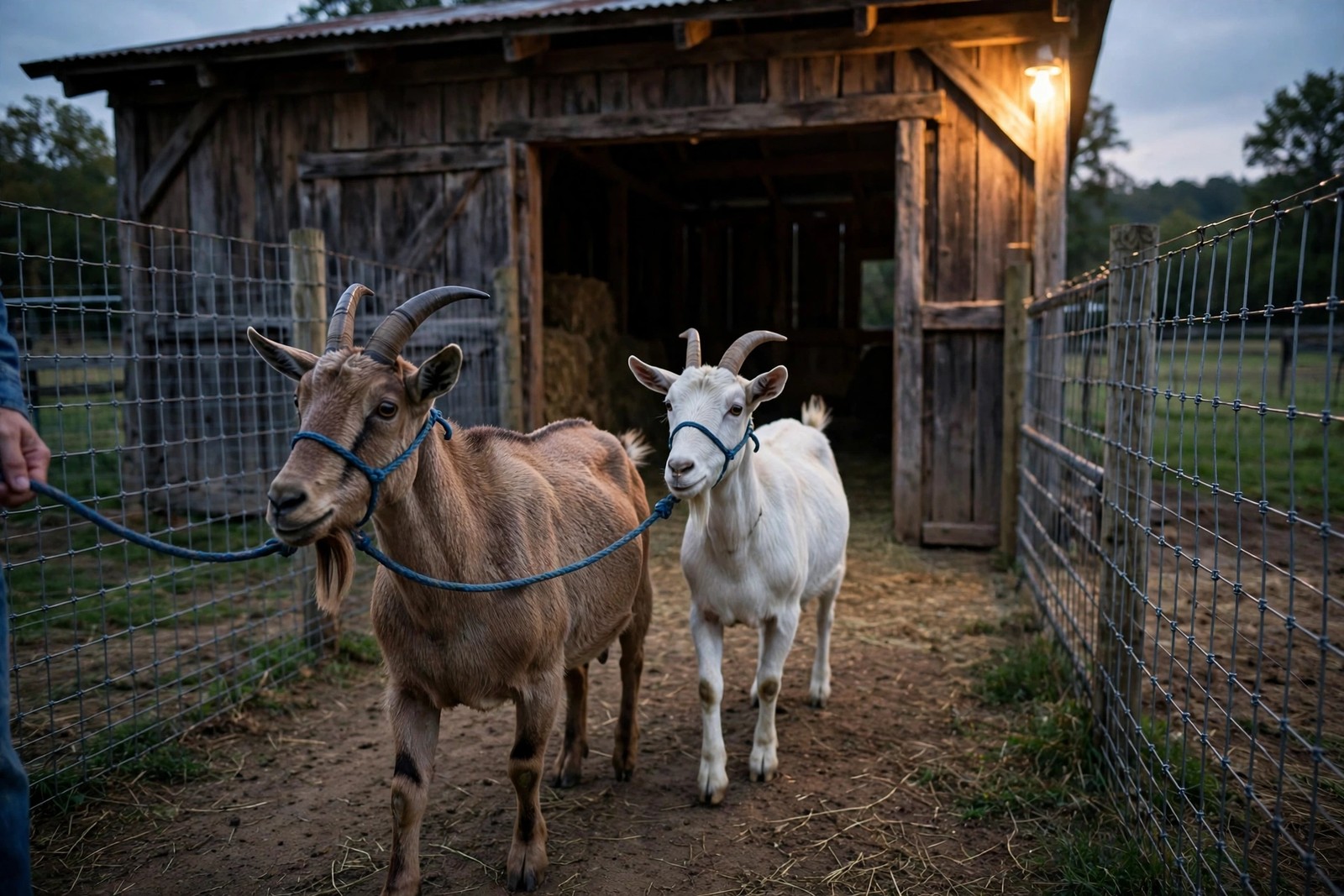
Goats are prey animals with almost no defence of their own, and the predators that take them, most often coyotes and roaming dogs, hunt mainly at dusk and overnight. Protection therefore works as a system: a secure night shelter, fencing built to stop digging and climbing, and daily habits that close the gaps predators test for.
Lock the Herd In at Night
The single most effective step is bringing every goat into a solid, lockable barn or shed before dark, every night, without exceptions for fine weather. The shelter needs doors that latch firmly shut, no gaps at ground level that a digging animal can widen, and windows or vents covered with strong welded mesh rather than light screening. A night pen of heavy mesh close to the house, lit by a yard light, makes supervision easier still. Count the herd in as you close up: a goat left outside because she was grazing out of sight is exactly the goat a predator finds, and kids, elderly animals, and any goat that is unwell or close to kidding should be housed closest to the buildings, never at the far end of the pasture.
Build Fencing a Predator Respects
Daytime fencing has to do two jobs at once: keep goats in and keep predators out. Sturdy woven wire, pulled tight and well supported, outperforms loose strands that a coyote can slip between or a dog can push under. Pin a skirt of mesh flat on the ground around the outside of the fence line, or bury the bottom edge, so an animal that starts digging meets wire instead of soil. An offset electric strand run low on the outside of the fence teaches digging and climbing predators to back off before they ever test the mesh itself. Walk the line regularly looking for washouts under the wire, fallen branches that form climbing ramps, and holes started at corners, and repair them the day you find them rather than adding them to a list.
Add Guardians and Remove Invitations
A livestock guardian dog, raised with goats from puppyhood and living with the herd full time, patrols, marks, and confronts intruders in a way fencing cannot, and many small herds rely on one as their main defence. Donkeys and llamas are sometimes kept as guardians too, though their protective value varies by individual, so treat them as a supplement to housing and fencing rather than a replacement. Just as important is removing what draws predators close: store feed in sealed containers inside a building, clear away afterbirth and any animal that dies promptly and properly, avoid leaving mineral tubs or pet food outside overnight, and keep the area around the shelter free of dense brush where a predator can lie up unseen. Motion-activated lights near the night shelter startle some nighttime hunters and, just as usefully, alert you to check. KinsLe's Care Teams lets you assign the evening count-in, the lock-up, and the morning fence walk to named helpers with a completion time on each, giving a small herd the consistent, layered routine that actually keeps predators from ever finding an easy night.