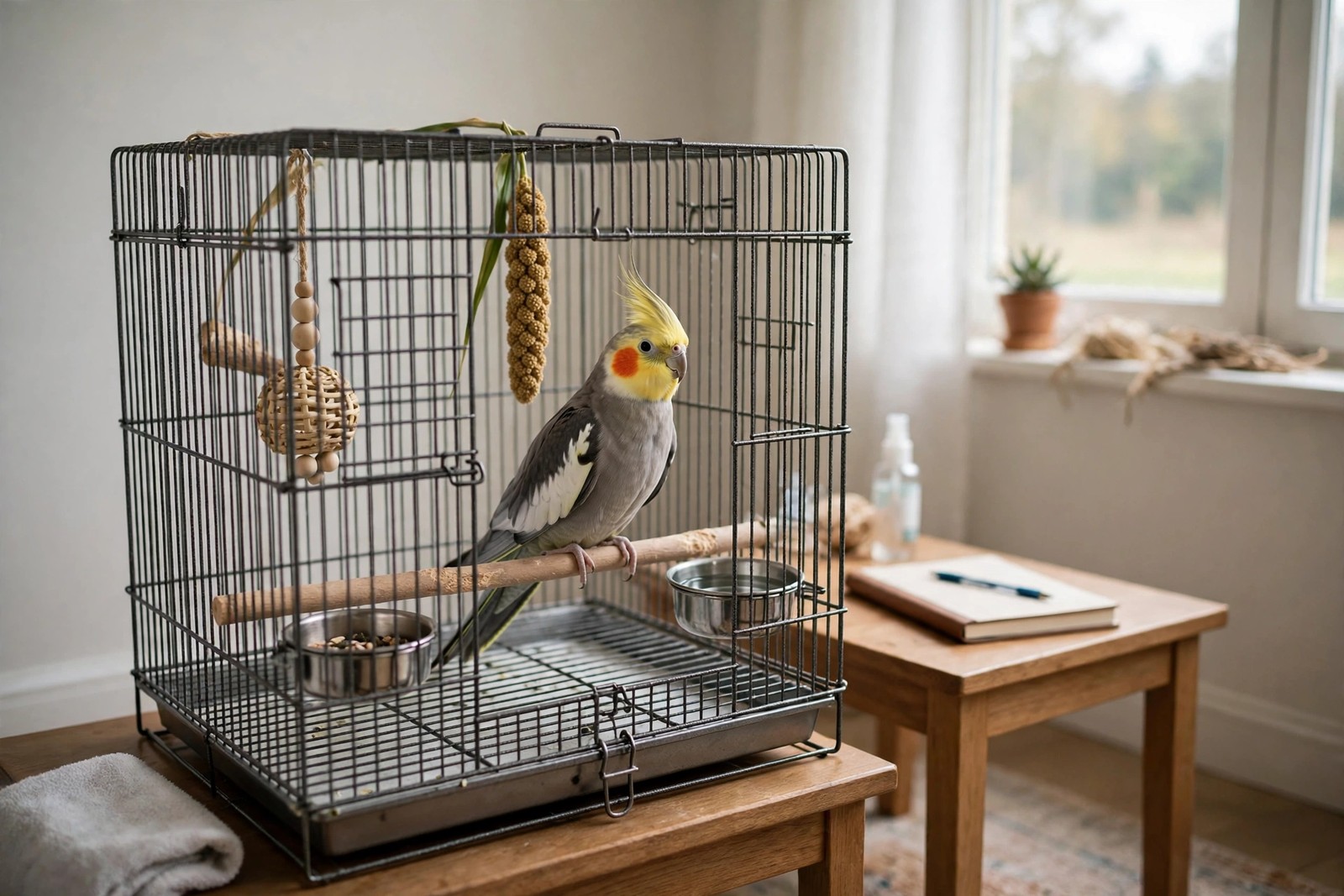
Quarantine is the least glamorous and most consequential thing you will ever do for your flock, because many serious avian diseases are carried by birds who look perfectly healthy — a bright, eating, vocal new bird can still shed viruses or bacteria that your residents have no defence against. A proper quarantine is not "a few days in the spare cage"; it is a period of genuine separation, run in a strict order, and ended by evidence rather than by impatience.
Set Up Real Separation, Not Just a Second Cage
House the new bird in a different room from your flock — as far away as the home allows, and ideally not sharing the same airflow, since several avian diseases travel in feather dust and dried droppings through shared air. A cage in the corner of the same room is not quarantine. The newcomer gets entirely separate equipment: its own food and water dishes, perches, toys, cleaning brushes, and cage-cleaning supplies, none of which crosses to the resident birds, and its food is stored and prepared separately. Keep the room calm and the routine consistent, because a stressed new bird is both more likely to fall ill and harder to read — and quarantine doubles as decompression time for a bird who has just changed homes, which staged introductions later will benefit from.
Run the Hygiene Order Every Single Day
The daily order never varies: resident flock first, newcomer last. Feed, clean, and handle your established birds in the morning; only then attend to the quarantined bird; and after handling the newcomer or cleaning its cage, wash hands and forearms thoroughly and change your outer clothing — and shower if you have had close contact — before touching your residents again. Nothing travels backwards: not a half-used food portion, not a spray bottle, not a shoulder the new bird sat on. If several people care for the birds, one person ideally owns the quarantine duties for the whole period, because hygiene routines survive on habit and collapse on handovers. Keep visitors, and especially visitors who own birds, away from both groups during quarantine.
Use the Time for Veterinary Evidence and Observation
Book an avian vet examination early in the quarantine, not at the end of it, and discuss the testing appropriate to the species, source, and your vet's judgement — screening for diseases such as psittacosis and other species-relevant viruses and parasites is a veterinary decision, and this article cannot make it for your bird. Weigh the newcomer on a gram scale two or three times a week and log it, and watch daily for the quiet signs: changed droppings, reduced appetite, fluffed posture, tail bobbing, discharge from eyes or nostrils, or a bird who stops vocalising. Any of those means the vet hears about it promptly and the quarantine clock effectively restarts — the standard period owners work to is at least 30 to 45 days of clean observation, and a bird who becomes ill mid-quarantine is treated and observed for a full healthy period afterwards, on veterinary advice.
Introductions Come Last, and in Stages
Quarantine ends when the observation period is clean and your vet is satisfied — not when the date arrives and the bird looks lonely. Then, and only then, stage the meeting: cages in the same room at a distance for several days so the birds can see and hear each other, then side by side, watching for lunging at bars, stress, or feeding changes. First out-of-cage time together happens in a neutral space, supervised, with an easy way for either bird to retreat, and short sessions that end well rather than long ones that end in a fight. Keep separate cages permanently — flock mates do not have to share a cage to be a flock. Throughout, the newcomer's quarantine log, weights, examination notes, and test results belong in KinsLe's Pet Passport, the portable record packet that keeps this bird's health history complete from its very first day with you, ready for every vet visit that follows.