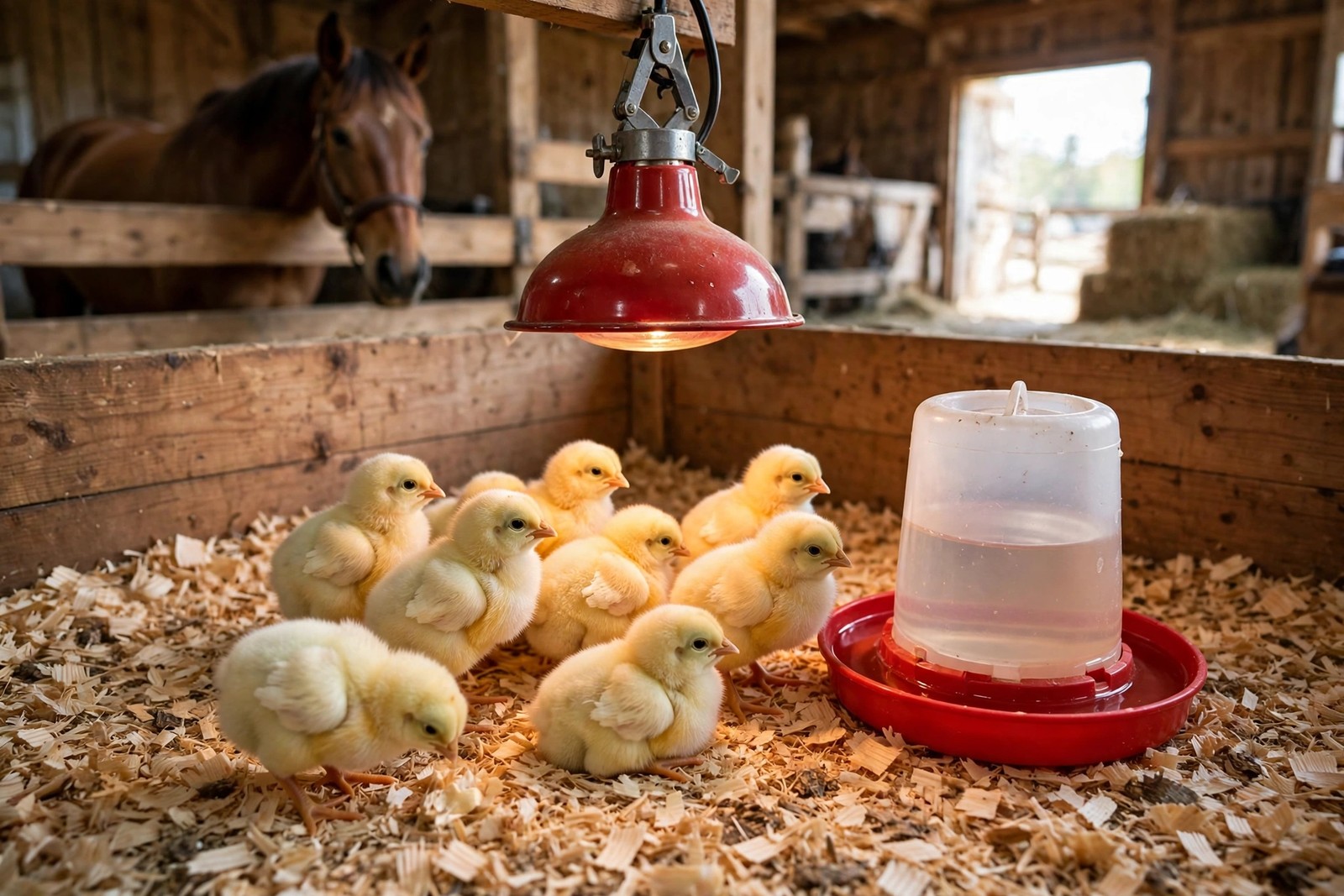
Baby chicks cannot regulate their own body temperature, cannot eat adult hen food, and can drown in an inch of water, so the first weeks are about controlling three things precisely: warmth, feed, and water. Get the brooder running and warm a day before the chicks arrive, because troubleshooting a cold setup with peeping chicks in your hands helps nobody.
Heat: The Number That Runs the Brooder
Keep the warm end of the brooder at about 95 degrees Fahrenheit for the first week, measured at chick height under the heat source, then lower it by roughly 5 degrees each week until the chicks are fully feathered at around six weeks. Place the heat at one end only, so chicks can move toward or away from it and choose their own comfort. Their behaviour is the honest thermometer: chicks huddled in a tight, loudly peeping pile directly under the heat are cold, chicks pressed against the far walls panting with wings held out are too hot, and chicks spread loosely across the brooder, eating, drinking, and sleeping in small groups, are just right. A thermometer confirms the reading, but adjust by what the chicks are doing.
Feed and Water, Sized for Chicks
Feed a chick starter crumble made for the first weeks of life, available around the clock, and do not offer layer feed: its extra calcium suits laying hens and burdens chick kidneys, while its protein runs too low for the growth happening now. Scatter a little crumble on paper towel or a flat tray for the first day or two so newly arrived chicks find food easily, then move to a chick feeder they cannot scratch bedding into. Water matters even more in the first hours. Use a shallow chick drinker with a narrow trough a chick cannot fall asleep in, dip each chick's beak briefly as you place it in the brooder so it learns where water is, refresh the water daily, and set the drinker on a flat block as the chicks grow so shavings stay out of it. A little chick grit is only needed once they start eating anything beyond starter crumble, such as a few mealworms or greens.
Bedding, Space, and the Daily Once-Over
Line the floor with large-flake pine shavings over a non-slip base; never start chicks on smooth newspaper alone, because splayed legs can result when tiny feet slide. Keep the brooder dry, draft-free, and secure against rats, cats, and curious dogs, and give space generously, since crowding plus damp bedding is the combination that makes chicks ill. Each day, pick up and check every chick quickly: the vent should be clean, because a pasted-up vent blocked with dried droppings needs gentle cleaning with a warm, damp cloth straight away, and eyes should be bright with the chick active and peeping. Handle them briefly and calmly so they grow tame, wash your hands before and after, and expect the brooder walls to need raising as wings develop. A chick that stops eating, sits fluffed and silent apart from the group, or develops laboured breathing needs prompt advice from a vet, because chicks decline quickly. KinsLe's Care Teams lets family members share the temperature checks, water refreshes, and daily chick checks as assigned duties with completion times, which is exactly the steady rhythm the first weeks demand.