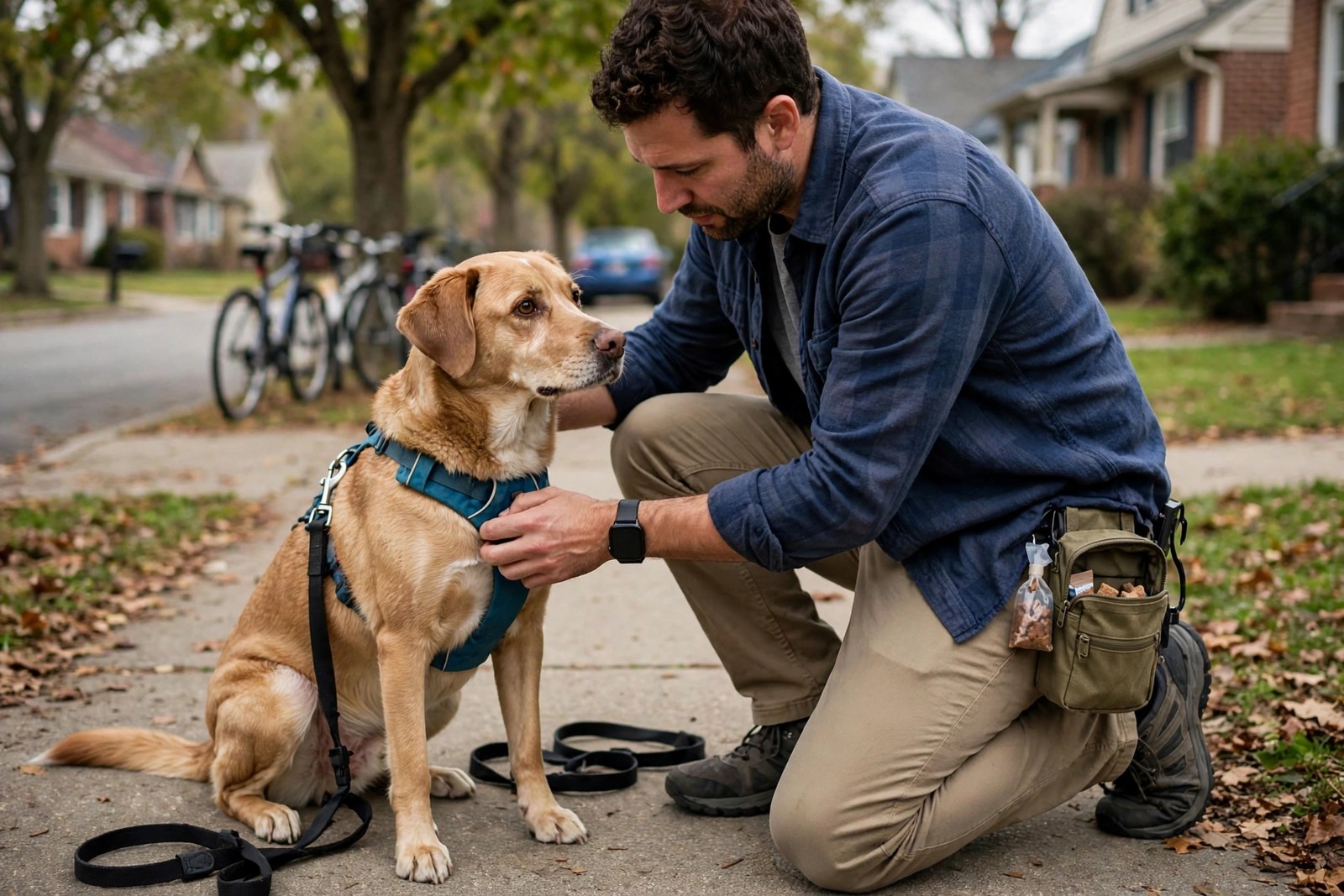
Recovery starts with her, not with a timetable: let her choose the distance at which other dogs are just something to watch, pay that calm watching with food, and keep early outings to quiet places where nothing can rush her. First dog contact, when she is ready, should be one known, gentle, uninterested dog, parallel walking with no face-to-face greeting, ending early and well. Watch for the quiet signs she is not coping rather than waiting for a reaction, and if fear generalises or she starts lunging pre-emptively, a behaviourist's plan is worth it; confidence after an attack rebuilds in months, not weekends.
What Owners Need to Know
An attack rewrites how your dog reads other dogs. A dog who was rushed, pinned or bitten at the park may now scan constantly, freeze at a distant bark, or bark and lunge first in the hope of keeping others away. None of that is stubbornness: it is a dog trying to make a frightening thing stay at a distance she can manage.
Her recovery therefore runs on distance and predictability. Dogs she already knows and trusts are her training partners; strange dogs at close quarters are the exam she is not ready to sit. Let her watch from far enough away that she can still take food and turn back to you, because that calm watching, repeated, is what slowly updates her expectation of what another dog means.
Practical Steps That Help
Work through these in order and give each one time to become routine before you judge it:
- Map the places and distances where she first tenses at the sight of another dog
- Pay her with high-value food for calm watching at a distance she can handle
- Practise in short outings of a few minutes, several times a week, ending before she is overwhelmed
- Give her pressure-free outlets on those days: sniffing walks, chewing and quiet play away from other dogs
- Write down each outing for a week — distance kept, reaction seen, recovery time — so progress is visible
Attach the practice to walks she already gets: one calm-watching stop on the morning route, one parallel-walk lap on a quiet evening street. Practice woven into ordinary outings survives busy weeks far better than a special session planned for a free afternoon that never comes.
Making It Part of Everyday Life
Measure her against the dog she was before the attack and the dog she was last week, not against a confident dog at the park. Her own signals are the progress chart: eating near a dog who once made her refuse food, choosing to look away, recovering in minutes instead of staying wound up for the rest of the walk.
Keep a brief line after each outing — where you went, how close another dog came, how she responded — and look back over it whenever her world is about to change: a new walking route, a visiting dog, a first group walk. Owners who recover a dog like her are rarely doing anything dramatic; they repeat the same calm exposures, notice setbacks early, and bring in a behaviourist promptly when fear starts spreading into everyday life rather than waiting for it to harden.
Sharing that work keeps it steady: through KinsLe's Care Teams, each household member can pick up their assigned confidence walks and parallel sessions — timestamped once done — so her graded plan keeps moving even on days you cannot walk her yourself.