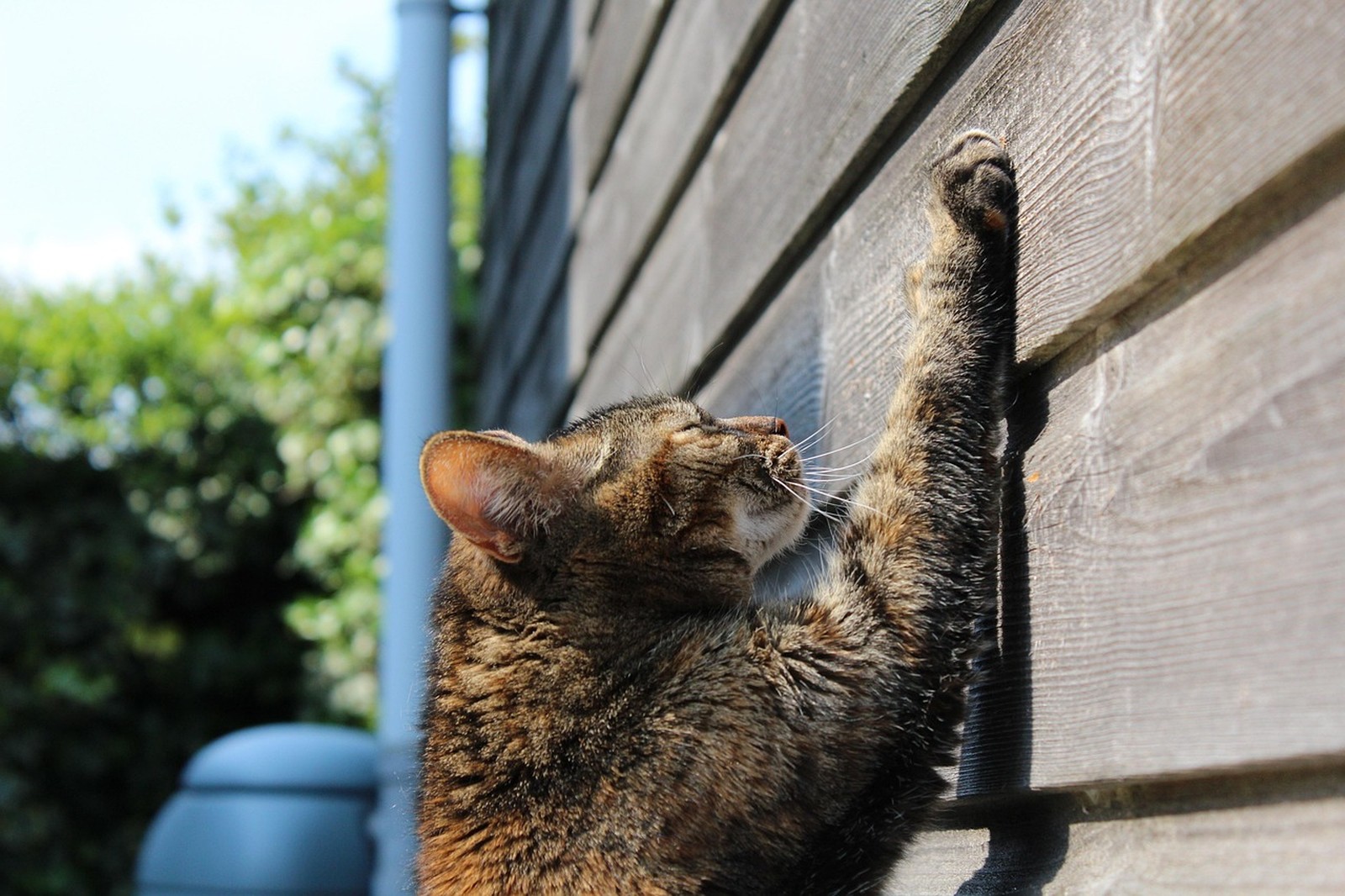
Cats that scratch leather almost always have a favorite address: one arm, one side panel, one corner at a particular height on a particular route through the room. That loyalty is useful information. Instead of swaddling an entire sofa in throws nobody wants to sit under, protect the chosen spot precisely, offer a better surface within a paw's reach of it, and make the leather itself briefly disappointing to scratch. The cat keeps a legal target in the place it already loves, and the rest of the furniture stays uncovered and usable.
Guard the Target, Not the Whole Sofa
Fit a snug cover over the targeted arm or panel only — the operative word is snug. A loose throw bunches, slips, and gives claws something to hook into, which can make the game better rather than worse. The cover's job is short term: it shields the leather underneath while the new habit forms, and it comes off in stages once scratching has moved. Over the covered spot, a temporary deterrent texture does the persuading: a smooth, slick panel or guard that claws cannot grip turns each attempt into a slide, quietly teaching that this surface no longer pays. Avoid anything sticky enough to coat paws or anything the cat could chew loose; the texture should bore the cat, not distress it.
Put the Replacement at the Exact Corner
A scratcher across the room competes with geography and loses. Stand the replacement directly at the corner being defended, close enough that a cat arriving to scratch finds it first — a sturdy post, an angled board, or a sisal-wrapped leg guard, stable enough not to rock when used at full stretch. Some cats want height here even if they scratch flat elsewhere, so let the cat's own testing decide the shape over the first fortnight. Reward use instantly and every time at first: a treat, warm praise, or a favorite game delivered within seconds builds the new surface's reputation. If scratching starts on leather, interrupt calmly, carry the cat the short distance to the scratcher, and reward any touch there; scolding after the fact teaches nothing except that people near sofas are unpredictable.
Trim Nails, Tell the Truth About Leather
Blunt nails do shallower work, so keep the tips trimmed on a regular rhythm — just the sharp point, well clear of the quick — and a scratch that does land leaves less behind. Then be clear-eyed about existing damage, because leather forgives selectively. Faint surface scuffs and light lines often mellow considerably with ordinary conditioning, settling into the grain until they read as patina rather than damage. A true puncture is different: the claw has pierced the surface, and that hole does not close, fade, or condition away. Promising otherwise sets up disappointment, so judge a protection plan by new damage stopped, not old holes erased, and start it before the favorite corner collects more of them.
One Log the Whole Household Follows
This plan fails when one person rewards the scratcher, another forgets the cover after cleaning, and nobody remembers when nails were last done. A single household log works better than a jumble of reminders: the targeted corner, the trim rhythm, and the reward rule sit in one shared log that everyone in the home can see and update. Someone notes each new scratch attempt and where it landed, which shows within weeks whether the scratcher is winning or needs moving a few inches closer to the action. The arrangement needs no heroics, only the same small responses repeated by every person who uses the room. Relatives you pick are able to open the cat profile once access is granted under KinsLe Family Sharing.