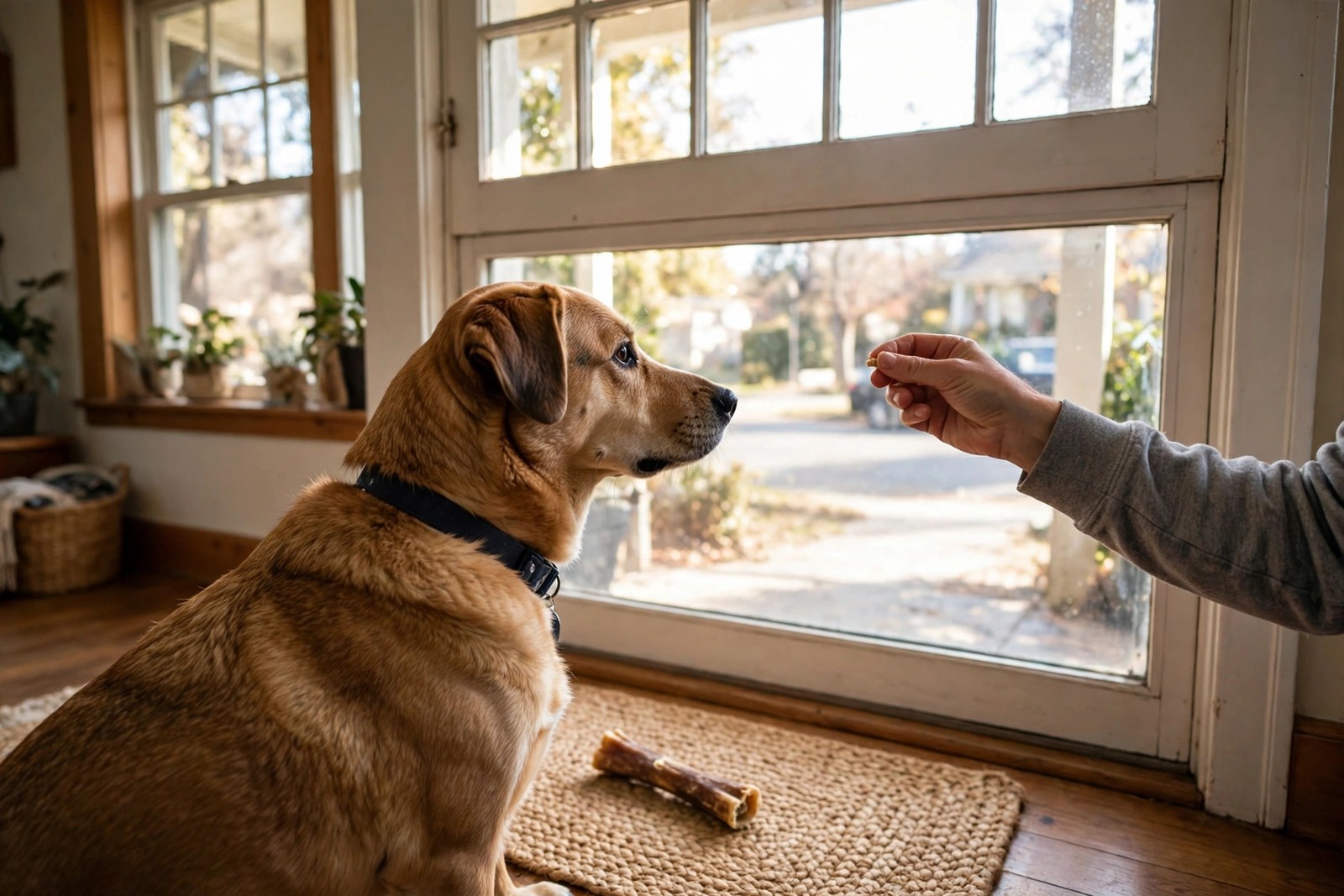
Front-window barking is self-employed work: she spots a passer-by, barks, and from her side of the glass the person always leaves, so barking works perfectly, many times a day. Every unopposed episode also rehearses the sequence — spot, stiffen, bark, lunge — until it fires in under a second. Blocking the window would end it, but many dogs love that view, and a dog moved away without a new job often transfers the patrol to the front door. The better plan keeps the window and rewires the routine at it.
Install a new routine: look, turn, settle
Teach the pieces away from the window first: a reliable response to her name meaning “turn to me, food is coming”, and a mat she already loves settling on with a chew. Practise both in quiet rooms until solid, because a skill invented during a barking episode will not survive one.
Then stage the real thing at a quiet time. The moment she notices a distant passer-by — ears up, body still oriented, but before the first bark — say her name warmly, reward generously when she turns, then cue the mat and deliver a chew or a scatter of treats there. You are paying for the sequence notice, turn away, settle, and building a new association: people outside predict turning to you and being paid, not a shouting match through glass. Repeat in short sessions, a few passers-by at a time, ending before she gets worked up.
If she barks once first, stay calm: call her away cheerfully, pay the turn, and lower the difficulty next rep — repeated barking means rehearsal is outrunning your timing, not defiance.
Manage the rehearsal you cannot supervise
Training sessions are minutes; the street performs all day. While the routine is young, reduce free access to the prime patrol spot when you cannot run it — a gate at the room door during the busiest peak, or furniture moved so the low sill is not a standing platform. If you use film or a blind, apply a partial band at her standing eye height that blurs movement while the upper glass keeps the room bright and her view of sky and birds intact — a training aid to peel away in stages as the routine takes over, not a blackout.
Feed the underlying motivation too: window patrol peaks in under-occupied dogs, and a morning walk with real sniffing, a midday sniff game and company rather than long solo hours all lower the street's entertainment value.
Practise with controlled passers-by
Recruit a friend to walk past on cue, starting at whatever distance produces a look but no barking — far pavement, partly screened by parked cars. Run the routine for each pass, pay heavily, and only over days bring your walker closer. Add variations gradually: a person with a dog, a jogger, a delivery stop with a van door slamming, since each new picture can restart the barking even when the basic version is solid. Keep sessions cheerful and brief, and always finish with the walker gone and your dog settled, so the street returning to quiet is part of the lesson.
What progress honestly looks like
Expect the sequence to shrink over two to six weeks: full barking, then remembering mid-bark, then one bark and a turn, then the alert look with a glance back at you — reward that moment most richly of all, because she has chosen the new job. Relapses around exciting events or a new dog on the street are normal; drop back a stage for a few days rather than scolding. If barking comes with lunging hard enough to risk the glass, frantic behaviour she cannot break off, or aggression that extends to visitors entering the home, involve a qualified behaviourist, and mention the pattern to your vet.
A note of who practised, which passers-by she handled and where the film band still is keeps the whole household at the same stage of the plan, and KinsLe Care Teams lets you share those window-routine duties with timestamps, so your dog gets one calm, identical answer to the street from everyone in the house.