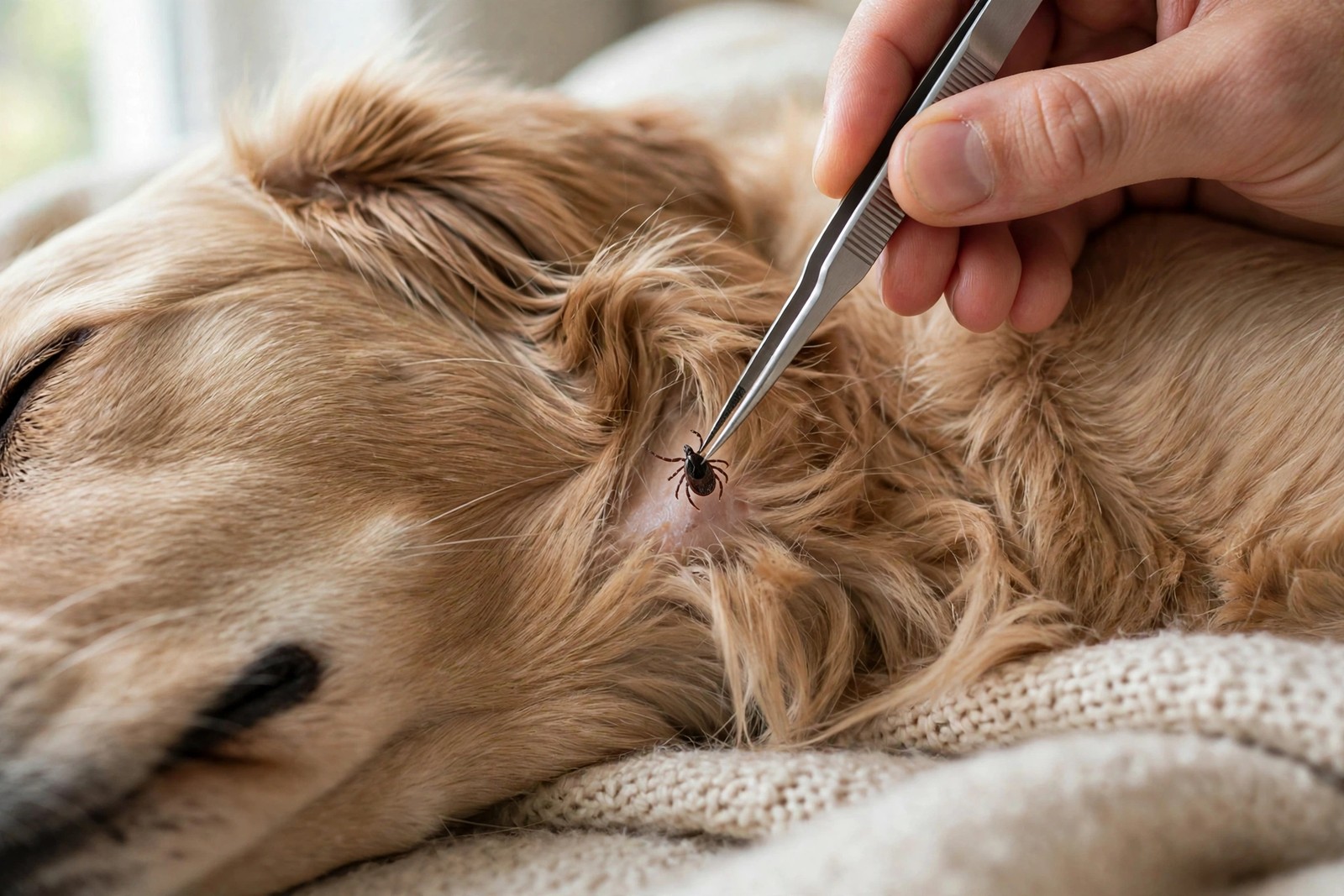
Act as soon as you spot one: a tick left feeding gives disease more time to pass across, so deal with it straight away rather than waiting until after the walk. Part the fur, grasp the tick as close to the skin surface as possible without squeezing its body, and pull upward with steady, even pressure (with a tick tool, follow its twist or slide motion). Do not burn the tick, smother it in alcohol or petroleum jelly, or squeeze the abdomen — those folk methods increase risk and delay removal. Afterwards, clean the bite area and your hands, and check the tick is whole, with the mouthparts out.
After Removal: What to Watch
Save the tick in a sealed container with the date, or photograph it — identification can help your vet. A small red bump at the bite site that settles within a day or two is common. Over the following weeks, watch for lethargy, appetite loss, fever, pale gums, joint pain, or a bullseye-like expanding rash, and mention the tick bite if any of those appear, since tick-borne diseases can take time to show. Prevention (vet-recommended tick cover, and checking the coat after walks in long grass or woodland — ears, neck, armpits, groin, between toes) is what turns this from a routine event into a rare one.
Recording the Bite for Your Vet
A tick removal is worth writing down while the details are fresh: the date you found it, where on his body it was attached, whether the mouthparts came away cleanly, and a photograph of the bite site once it is cleaned. Keep the tick itself in a sealed container with that date, or keep a clear photo of it, because identification can matter if he becomes unwell in the following weeks. Note, too, whether the skin around the bite stays calm or reddens over the next two days.
Watch the record, not just the dog: note any lethargy, appetite loss, fever or joint stiffness with the day each sign starts, since signs that appear weeks apart are easy to disconnect from one small bite. A mouthpart left behind, a bite area turning swollen, hot or oozing, or illness after a bite are reasons to book the vet, who does the examining and diagnosing.
One removal rarely stays the only one across a grassy summer, and a running log quickly shows whether ticks cluster after particular walks or fields. At that appointment, KinsLe's Pet Passport lays the removal dates, bite photos and symptom notes out in a single packet your vet can read in order.