Burrs and sap both trap hair, yet each releases in a different way, and treating one like the other causes the pulling and panic owners want to avoid. Burrs hook mechanically and yield to patient, individual removal. Sap binds like glue and yields to softening first. Work in good light, on a calm dog, with breaks built in.
Burrs first: one by one, from the tip outward
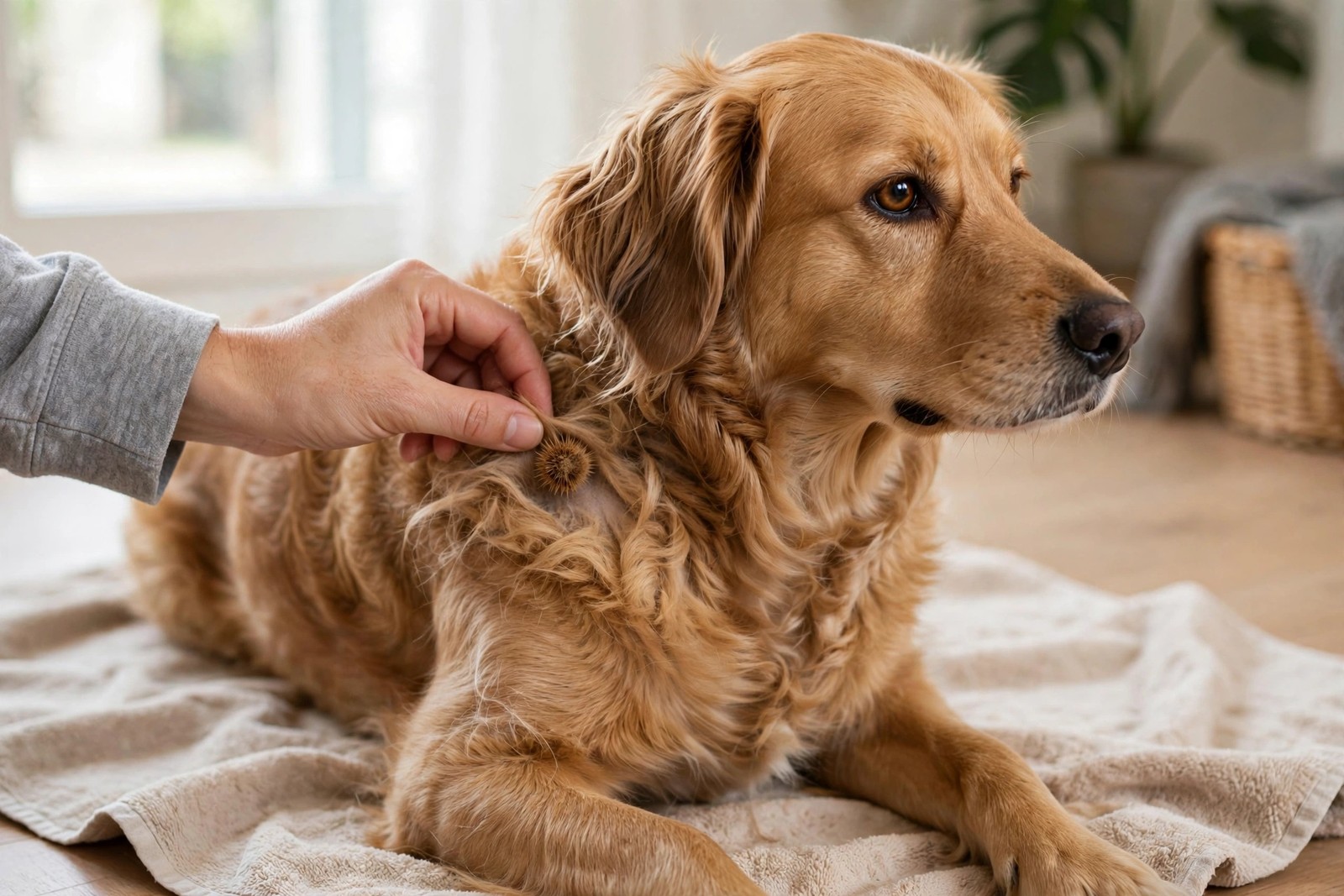
Settle the dog on a mat or towel and start with the least sensitive patch, so early success builds tolerance. Take one burr at a time. Hold the hair between your fingers at the skin, close to the root, so tension lands on your fingers rather than on the dog's skin. With the other hand, work the burr from its outer tip inward toward the hair ends, easing hooked barbs free a few hairs at a time with fingers or the end teeth of a comb.
Crush a stubborn burr gently with fingers or pliers pressure applied to the burr alone, because a crushed burr loses its grip and sheds its hooks in fragments. Never yank a cluster. A mat containing several burrs needs separating into single burrs first, even when that takes ten extra minutes, because one hard pull teaches the dog that grooming hurts and doubles the struggle at the next patch.
Check the hidden places after the visible ones: armpits, the groin, behind ears, between toes, and along the tail underside. Burr fragments left in those areas rub skin raw during the next walk.
Sap: soften, tease, then wash
Sap softens with oil and patience. Work some food-safe oil, such as olive or coconut oil, or a coat detangler into the sticky patch with your fingertips, and leave it for a few minutes so the resin loses its grip. Tease the hair apart strand by strand, adding oil as the patch dries, and slide freed hair away from the sticky centre so it cannot reattach.
Comb only after fingers have freed the bulk of the patch, starting at the hair tips and moving toward the skin in short strokes. Once the hair moves freely, wash the area with dog shampoo to remove oil and residue, rinse thoroughly, and dry fully. A large, rock-hard sap patch tight against the skin, or sap covering a wide area after a dog has rolled in it, belongs with a groomer who has the time, tools, and extra hands to work safely.
Keep the dog calm and the skin safe
Short sessions protect cooperation. Ten calm minutes with food rewards, repeated later, beat one long wrestle, and a dog who can walk away and return learns that grooming stays negotiable. Watch skin as you work: redness, small cuts from barbs, or swelling around a worked patch deserve a pause and a closer look, and any patch that looks infected or painful needs veterinary advice.
Prevention trims future work. Note the verges and woodland edges where burrs came from, brush the coat through after country walks before burrs migrate toward the skin, and check feet and armpits at the door. Care Teams, checked in KinsLe after country walks, confirms whether the post-walk brush-through actually happened.