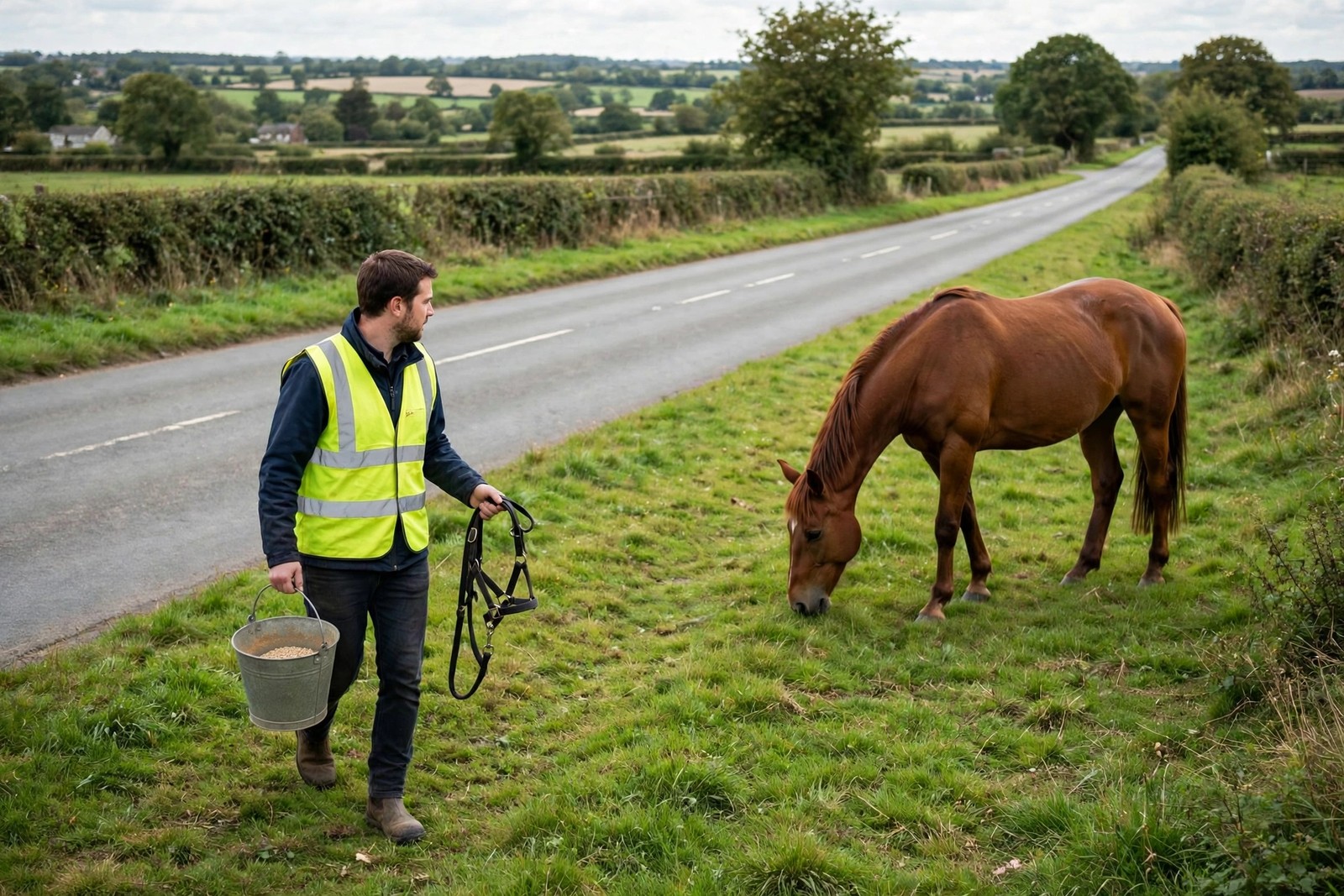
A loose horse near roads is a traffic emergency before it is a catching problem. A frightened horse can cover ground quickly, drivers do not expect a large animal in the carriageway, and well-meaning chasing is what turns a horse grazing a verge into a horse galloping through a junction. Work in a clear order: alert the authorities and warn traffic, locate the horse without pressuring him, catch him calmly where he has settled, and secure him somewhere safe before you investigate how he got out.
First: Police, Hi-Vis and Warning Traffic
Call the police straight away and report a loose horse on or near the road, giving the road name, the nearest landmark or junction, the horse's colour and the direction he was last seen travelling. Put on hi-vis before you leave the yard, day or night, because you will be walking verges and crossing roads where drivers are not expecting pedestrians. Send available helpers to safe positions — on pavements and at gateways, not in the road — to wave traffic down to a crawl with clear, slow arm signals, and to warn drivers approaching from side lanes. Alert neighbouring yards, houses and farms at the same time, because a loose horse is often reported, photographed or quietly caught in someone's field, and those sightings are your search map if you have lost sight of him.
Search Without Chasing
Take a headcollar and lead rope, a bucket with a small amount of feed in it, and a phone. Search in the direction he travelled, checking field gateways, verges, tracks and open gates. Work with the sightings you receive rather than roaming widely: a horse who is not being pursued typically slows, grazes and stays in an area, while a horse who feels hunted keeps moving. Do not chase him on foot, from a vehicle, or with a dog, and do not let helpers spread out and drive him forward between them. If he reaches a field, a large garden or a yard with a gate, getting that gate shut behind him matters more than catching him immediately: a contained horse can be approached at leisure, while a perfect catch attempted too early can put him back on the road.
The Catch: Feed, Shoulder, Headcollar
Approach once he has settled and is grazing or standing, walking in calmly at an angle toward his shoulder rather than straight at his head or from directly behind. Talk to him, carry the bucket so he can hear the feed rattle, and let him come the last few steps to the bucket if he will. Set the bucket down, stroke his neck and shoulder, and slip the lead rope around his neck before you bring the headcollar up and fasten it unhurriedly, because fumbling at a raised, tense head is where catches are lost. Lead him on the verge, on the side away from traffic where the layout allows, with a helper in hi-vis walking ahead to warn drivers, and take him to the nearest secure field or yard — not necessarily his own — if his home stable is far. Once he is secure, check him over for cuts, shoe damage and lameness, offer water, and let him settle before any journey home; call your vet about any injury, any sign of colic after stress or gorging, or if he has eaten an unknown quantity of rich grass or garden plants.
Close the Loop Once He Is Safe
Tell the police he is caught, thank the neighbours and helpers who reported sightings, and then walk the fence line, gates and latches to find the failure before another horse finds it — a pushed-through fence, a gate left on the latch rather than shut, a broken rail. When a horse gets out, his KinsLe profile can carry a map display at no cost, with a direct route back to you for whoever spots him — the Lost Pet Alert System in KinsLe, so reports reach you quickly while the search is under way.