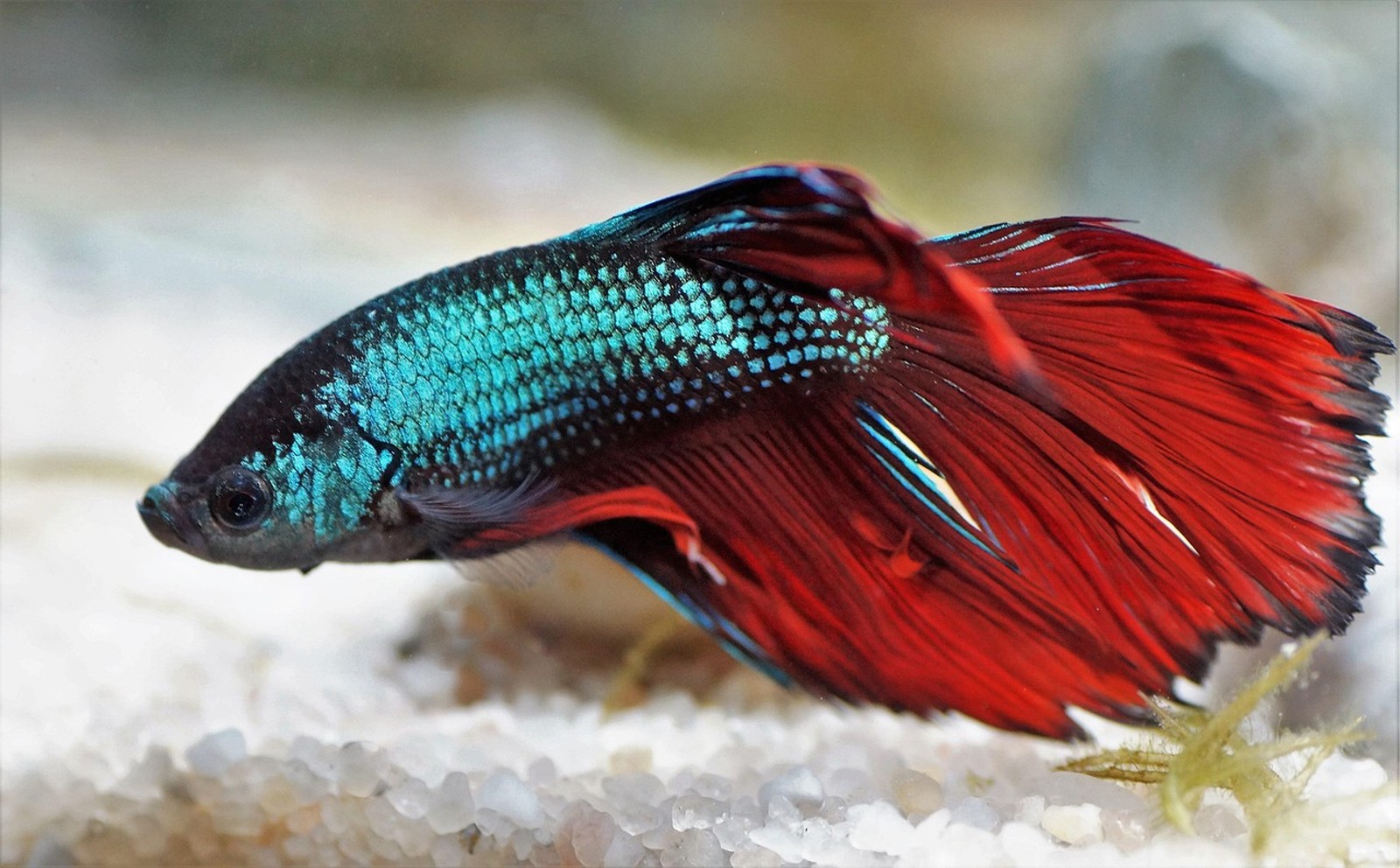
A planted betta tank works when three things come together: warm stable water, gentle flow that long fins can swim against, and plants chosen for low light rather than looks alone. Set the hardware up first, plant second, cycle third, and add the betta last of all — reversing that order is where most failed planted tanks begin.
Tank, Heater and Flow
Choose five gallons as a sensible minimum, with more room making temperature and water quality easier to hold steady. Bettas come from warm, slow water, so fit a heater and check it against a thermometer rather than trusting the dial; aim for the high seventies Fahrenheit and watch for daily swings. Filtration should be calm: a sponge filter or a baffled outlet suits a long-finned male far better than a strong current that pins him to the glass. Fit a lid, because bettas jump, and leave a gap of warm air above the surface — bettas breathe surface air, and plants trailing at the top give a resting place near it.
Substrate, Light and Easy Plants
Lay a nutrient-rich fine substrate, or a thin soil layer capped with sand or fine gravel, deep enough for roots to anchor — around two inches, sloped higher at the back. Begin with plants that forgive beginner lighting: anubias and java fern, whose thick rhizomes must sit above the substrate tied to stone or wood, never buried, or they rot. Add a fast-growing stem plant at the back and a few floating plants to soften the light; bettas dislike a bare, bright tank. Run the light six to eight hours a day on a timer. More light than that, before the plants settle, usually grows algae faster than leaves.
Cycle Before the Betta Arrives
A planted tank still needs a full fishless cycle. Feed the empty tank a source of ammonia, test every few days, and wait until ammonia and nitrite both read zero while nitrate is present — typically several weeks, and plants do not shorten it. Planting during the cycle is fine and helps the plants establish, but no fish goes in on hope. When the cycle holds, add the betta, float his bag to equalise temperature, and mix tank water in gradually over half an hour before releasing him. Skip the temptation to add tank mates in the first weeks; shrimp and snails can follow once parameters have stayed boring for a while.
The First Month of Care
Change roughly a quarter of the water weekly with dechlorinated water matched for temperature, trim dead leaves at the base, and wipe algae from the glass rather than scrubbing plants. Feed sparingly — uneaten food in a planted tank becomes algae fuel and ammonia. Expect some melt as new plants adjust, with leaves yellowing while fresh growth comes in from the base; pull soft, rotting leaves out, but leave firm ones alone. Once the tank settles, keeping it there is a rhythm of tests, trims and water changes shared out clearly, and KinsLe's Care Teams helps by letting you assign each of those jobs for this betta to a named person, timestamped when done, so the quiet weekly work that keeps plants green never depends on one person's memory.