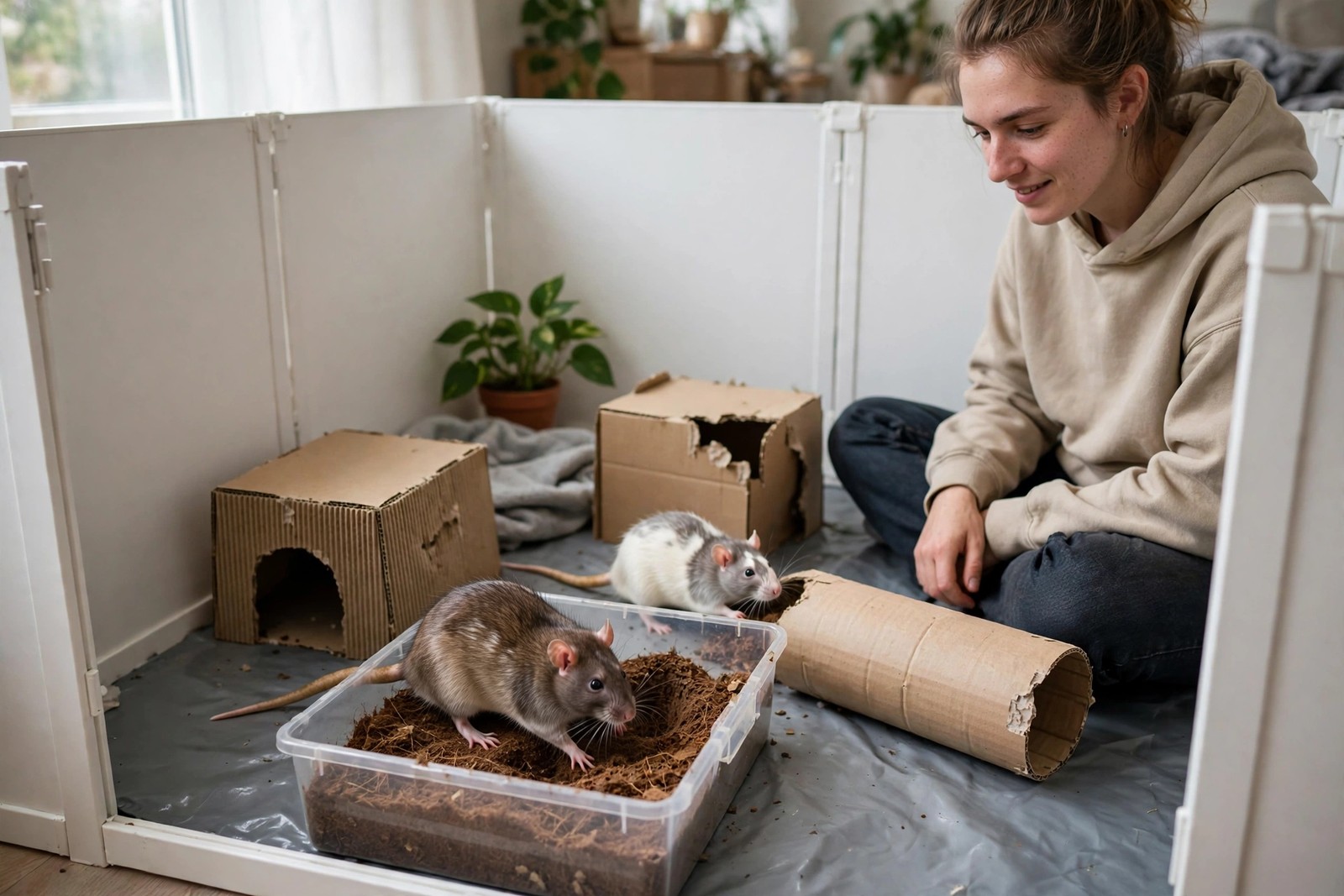
A good rat playpen is not a small cage outdoors; it is a temporary room your rats can explore, dig in and rearrange while you sit with them. Rats are agile climbers, determined chewers and surprisingly strong jumpers, so the pen has to be planned around escape first and enrichment second. Get the barrier, floor and contents right, and daily out-of-cage time becomes the highlight of their routine rather than a chase around the furniture.
Choose a Barrier Rats Cannot Beat
Use smooth, solid panels at least 28 inches (71 cm) high, and go to 36 inches (91 cm) for young, athletic rats. Smooth plastic or coated metal panels work because they offer no footholds; pens made from wire grids invite climbing, and fabric or thin cardboard walls will be chewed through during a single distracted session. Join panels tightly with no flexing corners, and check that no gap is wider than about half an inch (1.3 cm), because a young rat can pass through any space its head fits through. If your rats test the top edge by standing and leaping, add a lid of the same panels or move sessions into a pen placed inside a rat-proofed bathroom.
Lay a washable waterproof mat or a large piece of washable flooring offcut under the pen. Rats scent-mark as they explore and will use corners as toilets, so bare carpet and wooden floors suffer quickly, and a washable base also stops paws slipping.
Furnish It Like a Small World
Put in more hiding places than you have rats, so nobody has to compete for cover: cardboard houses with two doors cut in them, fleece hammocks laid low, tubes and a small wooden hide all work. Add a heavy, tip-proof ceramic water bowl even for a short session, plus a handful of their normal food scattered in the bedding so exploration pays. Chew material matters as much as toys: provide untreated wooden sticks, cardboard and loofah pieces they are allowed to destroy, and replace the pen's chewed stock weekly.
A dig box is the single most loved addition for most groups. Fill a deep box with clean, pet-safe soil, shredded paper or crinkle paper, bury a few peas, sweetcorn pieces or meal treats through it, and let the rats excavate. Rotate one feature per session, a new tunnel layout, a pea-fishing bowl with shallow water in warm weather, or a cardboard maze, so the pen itself stays novel.
Run Sessions Safely
Before every session, walk the room: unplug and lift cables, block the gap behind heavy furniture, remove houseplants and cleaning products, and close the door with other pets outside. Lift rats into the pen in a tube or house they choose to enter rather than grabbing from above, and let shy rats watch from a hide for the first minutes.
Stay with them for the whole session, ideally sitting inside the pen so you become part of the furniture they climb on and trust. Sessions of 45 to 60 minutes suit most groups, and daily time out matters more than one very long weekend session. Return any rat who is sneezing repeatedly, hunched or unusually withdrawn to the cage and contact your veterinarian if the change persists, because playtime should never push a poorly rat to perform. In KinsLe, Family Sharing means a partner or teenager setting up the pen on their turn sees the same barrier height, dig-box notes and shy-rat handling guidance instead of guessing.