
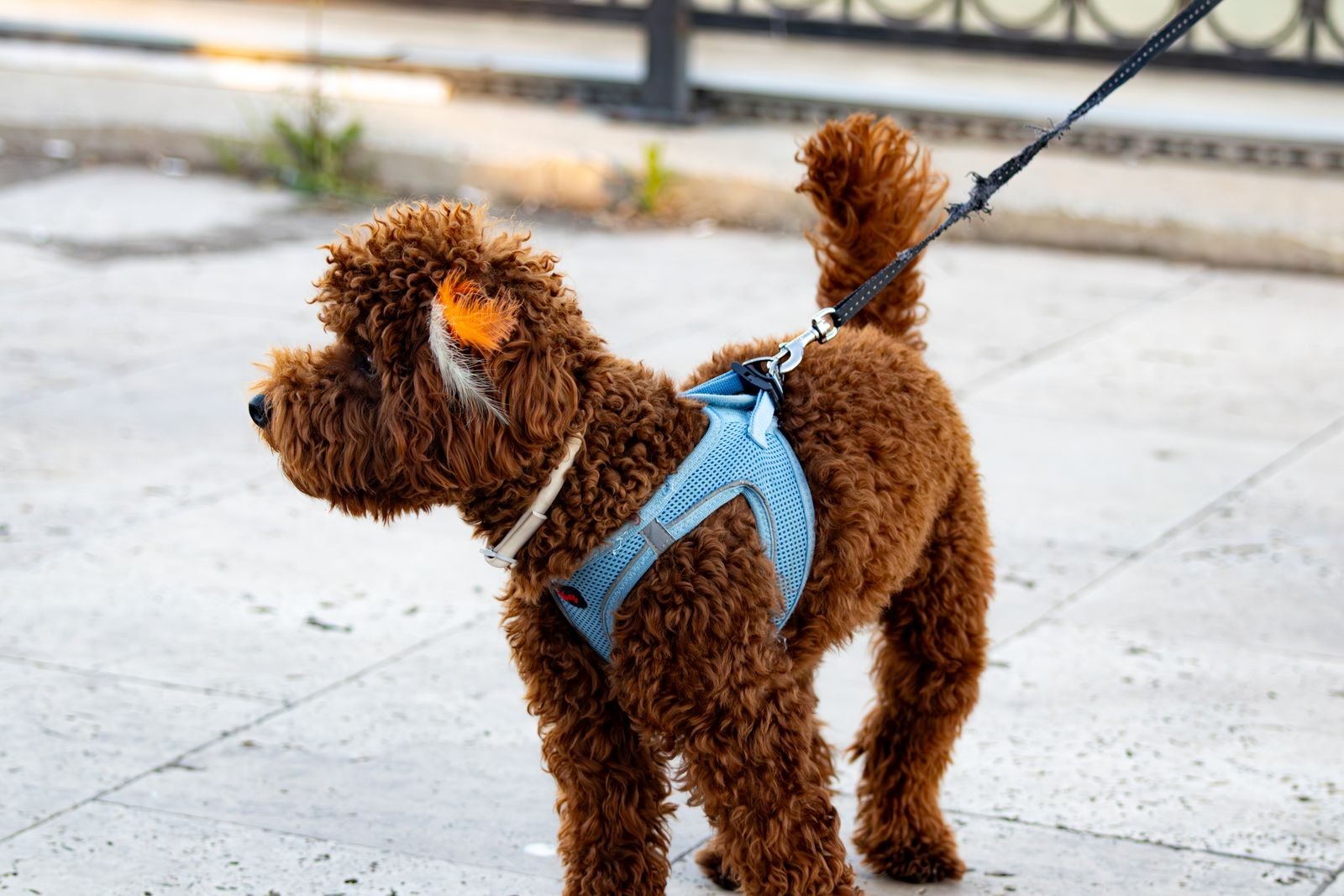
A reliable potty routine for an apartment dog comes down to three things: one chosen outdoor spot, a predictable schedule of trips, and rewards delivered within seconds of your dog finishing. Without a yard to wander into, your dog's habits are built entirely by the rhythm you create — which is good news, because a clear rhythm is exactly what dogs learn fastest.
The schedule that builds the habit
Most adult dogs do well on four to five trips a day; puppies need far more. Anchor the routine to events your dog's body already follows:
- First thing in the morning, before coffee, before anything
- After every meal — most dogs need to go within 10 to 20 minutes of eating
- After play sessions, naps, and chewing, all of which get the system moving
- Midday, especially for young, senior, or small-bladdered dogs
- Last thing at night, as late as you can manage
Puppies under six months may need trips every one to two hours while awake, plus overnight. It's intense but temporary, and consistency now buys you years of reliability.
One spot, same route, boring until it isn't
Pick a patch of grass or curb near your building and go straight there, every time. Your dog's own scent on that spot becomes the cue. Stand still, be dull, and give a quiet cue like "go potty." The moment your dog finishes, throw the party: praise and a high-value treat within two or three seconds, then a little walk as a bonus. If nothing happens in five minutes, head back in and try again in 20 minutes — the fun walk comes after the business, not instead of it.
Bridges for long gaps, without derailing progress
For workdays that stretch beyond your dog's comfortable limit, a midday walker is the cleanest solution. Puppy pads or a balcony grass patch can bridge genuine gaps — during illness, brutal weather, or a puppy's early weeks — but treat them as a backup, not the plan. Dogs raised to prefer outdoor surfaces generalize better, and an indoor option used too freely can blur the habit you're building. If you use a balcony patch, keep it in one fixed place and clean it often.
Handling accidents and high-rise realities
Accidents mean the schedule has a hole, not that your dog is stubborn — shorten the gap, add a trip, and clean with an enzymatic cleaner so the spot stops smelling like a bathroom. In high-rises, factor in elevator waits: take your puppy out before he's desperate, and consider a sling or carrier for tiny pups who can't hold it through a long lobby crossing. Watch for your dog's personal tells — sniffing in circles, pacing to the door, sudden restlessness — and treat every tell as a free training rep.
Sharing the trips without dropping one
Potty schedules collapse when roommates or partners each assume the other went. KinsLe's Care Teams let you assign each trip — morning, midday, evening — to a specific person, and every completed trip is timestamped, so anyone can glance and see the 6 p.m. outing actually happened. That shared log ends the "I thought you took him" standoff and keeps your dog's routine unbroken on busy days. Write the morning, midday, and last-out splits into the Care Teams schedule on KinsLe, assigning each outing to one roommate or walker so no trip depends on memory or assumption.