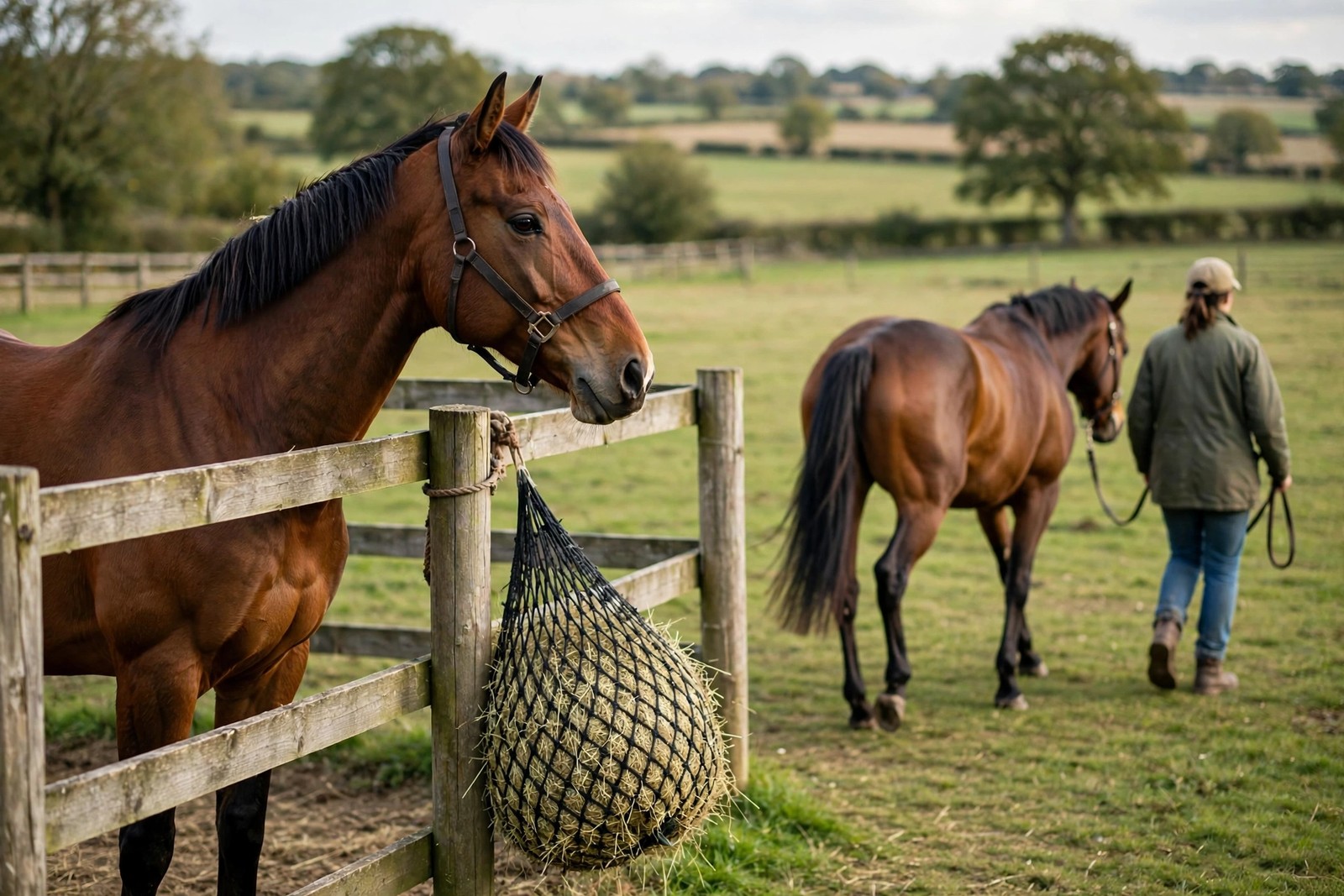
A horse that calls, paces the fence line, and works up a sweat when its field companion is led away is showing attachment, not bad manners. Horses are herd animals, and for a horse kept as part of a pair, the companion leaving can register as the herd leaving. The fix is rarely a single brave outing. Tolerance is built the way fitness is built, in small repeatable doses that end before distress peaks, so the horse learns from experience that the companion always comes back and that being left is a brief, survivable event.
Start Shorter Than You Think Necessary
Begin with separations so small they barely count. Lead the companion out of the gate, walk a short loop within sight, and return within minutes, before the anxious horse escalates beyond mild attention. Repeat that pattern on different days until it draws little reaction. Then stretch one variable at a time: a little more distance, then a little more time, then working the companion out of sight briefly while the horse at home still hears familiar yard sounds. Give the horse left behind something to do during every step, usually hay in a net or scattered in the field, because a grazing horse has a job that competes with scanning the horizon. Where fencing and layout allow, keep visual contact during early stages, with the companion in a neighboring paddock rather than vanished entirely, and remove that support only after closer separations look easy.
What to Avoid, and When to Get Help
Never punish the signs of anxiety. Shouting at a calling horse, or working it hard to tire it out of worrying, teaches nothing about the separation itself and adds a second unpleasant association to the companion leaving. Avoid flooding as well, taking the companion away for hours in the hope the horse will simply get over it, because a horse that spends that time fence-running can injure itself and often returns to the next separation just as frantic. Watch for the escalation that changes the picture: a horse that runs the fence line relentlessly, refuses hay and food entirely, or risks injury crashing at gates needs a veterinarian involved, to rule out pain and discuss whether the anxiety itself needs professional support. Bringing in a third companion is also an honest management option worth weighing. A horse left with company while one partner works is solving a different, easier problem, though a new arrival brings its own introductions and costs, so treat it as a considered choice rather than a reflex purchase.
Make the Whole Yard Work the Same Way
Separation training fails most often between people rather than within sessions. One person takes the companion out for an hour because the horse seemed fine, another brings it back at the first call, and the horse receives a different lesson every day. Write the plan down as a yard routine instead. The Care Teams schedule on KinsLe names who leads which horse out, how long the current step lasts, what the horse at home is given to eat, and what counts as a sign to shorten the session and return. Everyone at the yard follows the same steps in the same order, and each session's outcome gets noted, so duration only grows when the record shows calm behavior at the current level. Write the separation routine in KinsLe inside the Care Teams plan, naming who leads each horse so the anxious horse meets the same calm pattern whoever is on duty.