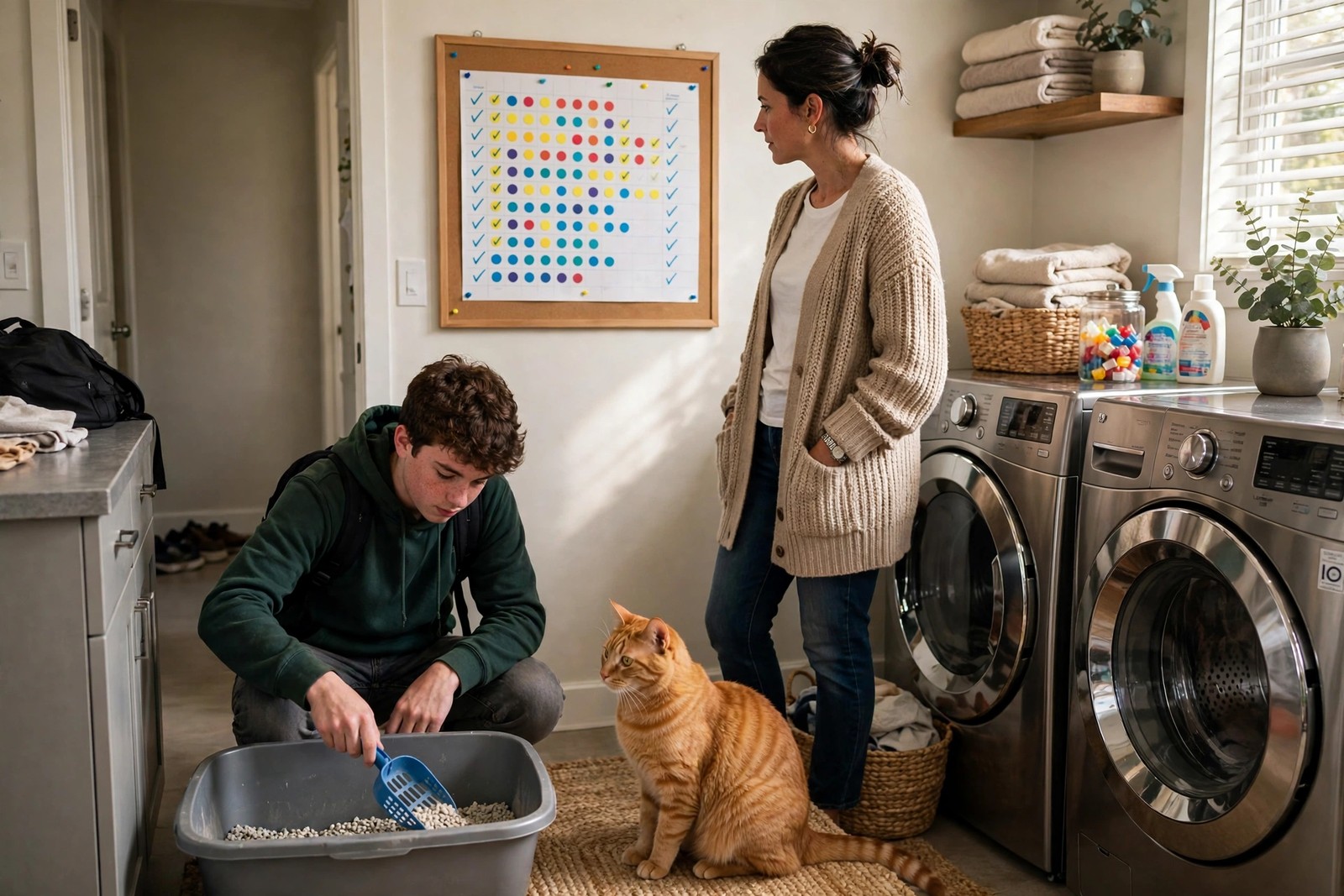
In most family homes, cat care does not split itself fairly. The fix is not nagging. It is a written system that assigns every recurring job to a named person on named days, rotates the unpopular work openly, and records what actually got done so fairness is visible rather than argued about at dinner.
Build the Schedule Around Real Availability
Sit down together and lay out a week honestly. List the jobs first: morning and evening feeding, fresh water daily, litter scooping, litter box washing on a set day, a play session, and a quick health check folded into handling, such as eyes, ears, coat, and appetite notes. Then map each job against real availability. Fair means proportionate to time at home and age, not mathematically identical, and everyone at the table should be able to say the split looks even from where they sit.
Write the weekly schedule down and post it where care happens, near the food or the litter supplies, not in a chat thread that scrolls away. Younger teenagers can own water, play, and supervised feeding; litter chemicals, medication if your vet has prescribed any, and vet-trip decisions stay with adults. The schedule is a household agreement, and like any agreement it gets renegotiated at set times rather than relitigated daily.
Rotate the Litter Job Out Loud
Name the household truth directly: the litter job is the one everyone dodges. It smells, it is daily, and it is invisible when done well, so it slides silently onto the most conscientious person unless the system prevents it. Prevent it by rotating litter duty explicitly, in the written schedule, in clean blocks: one person owns scooping Monday through Wednesday, another Thursday through Saturday, an adult takes Sunday and the full box wash, or whatever pattern fits your week, as long as the rotation is visible and nobody's block quietly becomes permanent.
Teenagers who are old enough to scoop are old enough to know why it matters: a dirty box is a common reason cats start using corners, laundry piles, and bath mats instead, and the person on litter duty is also the household's early-warning system for appetite, digestion, and urinary changes, because nobody sees a cat's health trends sooner than the one cleaning the box.
A Shared Log Makes Gaps Visible
A schedule says what should happen; a shared log shows what did. Keep it simple: a list by day with feeding, water, litter, and play ticked off, plus a notes line for anything unusual, such as a skipped meal, a hairball, or a box used outside. Its power is that a gap shows up the same day, while the bowl can still be filled and the box still scooped, instead of surfacing three days later as an argument about whose fault a hungry cat is.
Health patterns ride along for free: a week of half-eaten dinners noted by three different people is exactly the kind of record that turns a vague vet visit into a useful one. Review the log together briefly each week, thank the people whose columns are full, and fix the system, not the person, where a column keeps failing.
Reset the Split When Life Changes
No split survives contact with a new school term, a job change, exam season, or a teenager leaving for college, so schedule the reset before resentment schedules it for you. Teenagers graduate into more responsibility as they prove reliability, and handing a sixteen-year-old full ownership of weekend care, including the vet-visit notes, is both fairer and good preparation for adult pet ownership.
Keep the cat at the center of the conversation. The point of the system is not chore justice for its own sake; it is that a fed, played-with, clean-boxed cat with several attentive humans is a happier and healthier cat, and care shared visibly is care that actually happens. Parents and older teenagers in the family may be given access to that profile by its owner under KinsLe Family Sharing.