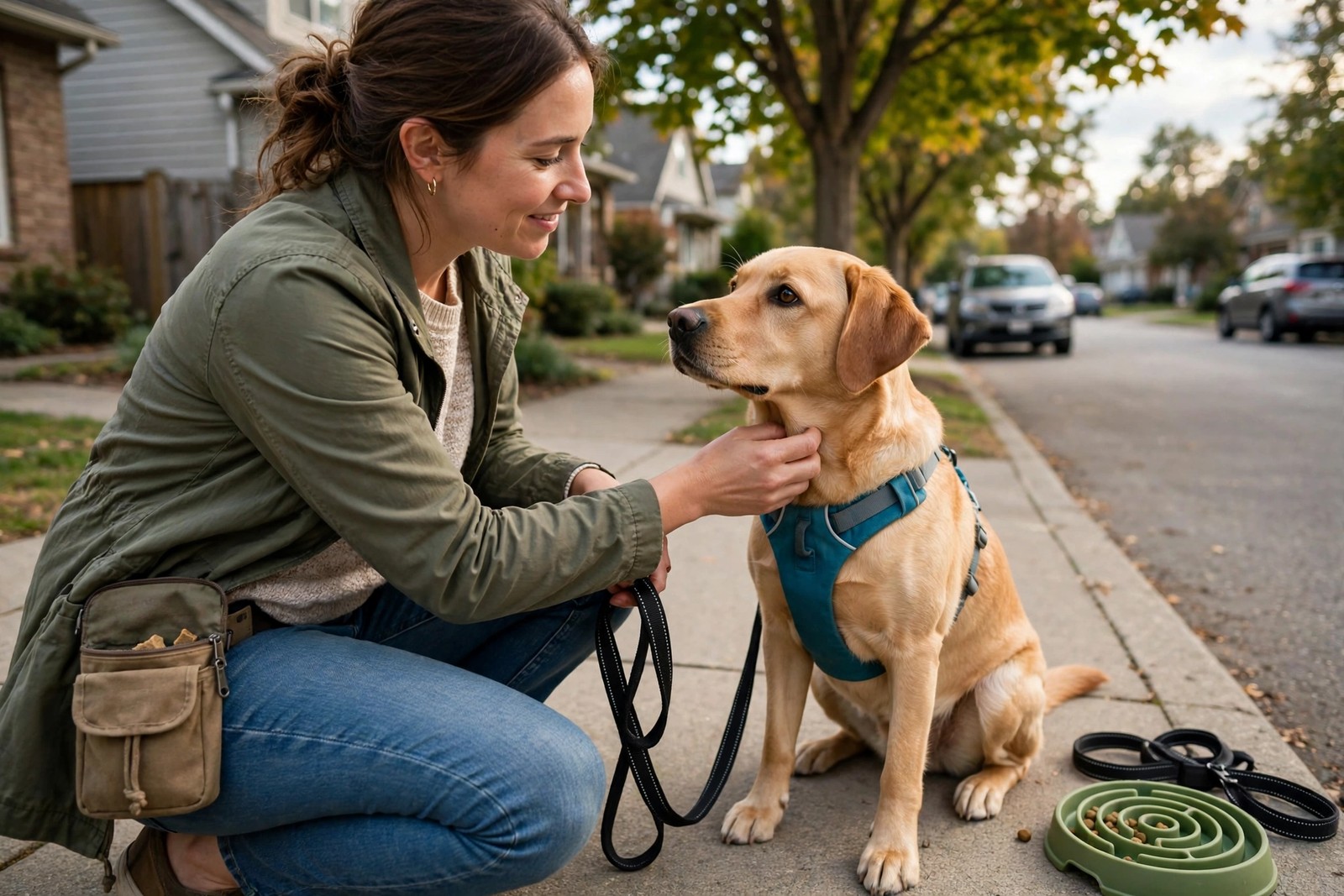
A dog who finishes dinner before you set the bowl down fully is not being greedy in a moral sense. Fast eating often reflects habit, early competition with littermates, or simple enthusiasm, and the behaviour carries real costs. Gulped food arrives with swallowed air, and owners then deal with retching, regurgitation of barely chewed kibble, and an uncomfortable dog. Slowing the meal is a mechanical problem first, and mechanical fixes work well.
Change the Shape of the Meal
A standard smooth bowl offers no resistance, and a determined gulper can sweep the whole surface in a few passes of the tongue. A slow-feeder bowl with raised ridges and channels breaks the meal into pockets that the dog must work around. Choose a pattern with obstacles suited to your dog's muzzle length, and wash the bowl daily because food residue collects in the grooves.
Household items can do the same job. Spread the ration across a muffin tin so each cup holds a small amount, and place a clean ball in some cups to add obstacles. Scatter feeding spreads kibble across a clean kitchen floor or across grass in the garden, and the dog then hunts piece by piece with the nose. Each method stretches the same ration across minutes rather than seconds without adding a single extra calorie.
Split the Ration and Remove the Audience
Divide the daily ration into three or four smaller meals during the retraining period. A smaller load per sitting reduces the volume a fast eater can take in at once, and frequent meals blunt the frantic hunger that builds before a single large dinner. Once the pace settles, many owners keep two meals and retain the slow-feeding equipment permanently.
Feed this dog alone behind a closed door or a gate. A dog who eats beside another pet often bolts food defensively, even when the neighbour shows no interest in stealing. Solitude removes the imagined race, and some dogs slow noticeably within days once the pressure disappears.
Soften, Freeze, and Puzzle the Ration
Soaked kibble takes longer to eat than dry kibble and swells before swallowing rather than after. Food frozen into a washable stuffable toy or spread across a lick mat extends the meal further and suits dogs who defeat bowls quickly. Reserve these tools for part of the ration so the full diet still arrives in measured form, and supervise any toy that a powerful chewer could break apart.
Measure progress with a clock. Time three meals before you change anything and time three meals with each new method. Owners often feel a method failed when the timer shows the meal doubled in length, and the numbers prevent you from abandoning a tool that works.
Know When Speed Signals a Vet Visit
Book a vet conversation if fast eating arrives with repeated vomiting, retching without producing food, a swollen abdomen, weight loss, or a sudden change in a dog who previously ate calmly. In large, deep-chested dogs, rapid eating and swallowed air are topics worth raising with a vet directly because that body shape carries particular stomach risks that a vet can explain for your individual dog. A vet can also investigate other possibilities behind ravenous behaviour, such as parasites or metabolic conditions, when the overall picture suggests a medical contributor.
Stay patient with the learning curve. A lifelong gulper may paw at a new bowl or bark in frustration during early attempts, and that protest usually fades as the dog learns the new puzzle pays out steadily. Keep sessions calm, praise quiet working, and end each meal with the bowl lifted away so the dog stops scanning for leftovers.
Households keep the gains when everyone uses the same slowing method at every meal, and KinsLe Care Teams records which method each feeder used, so the routine survives shift changes between family members.