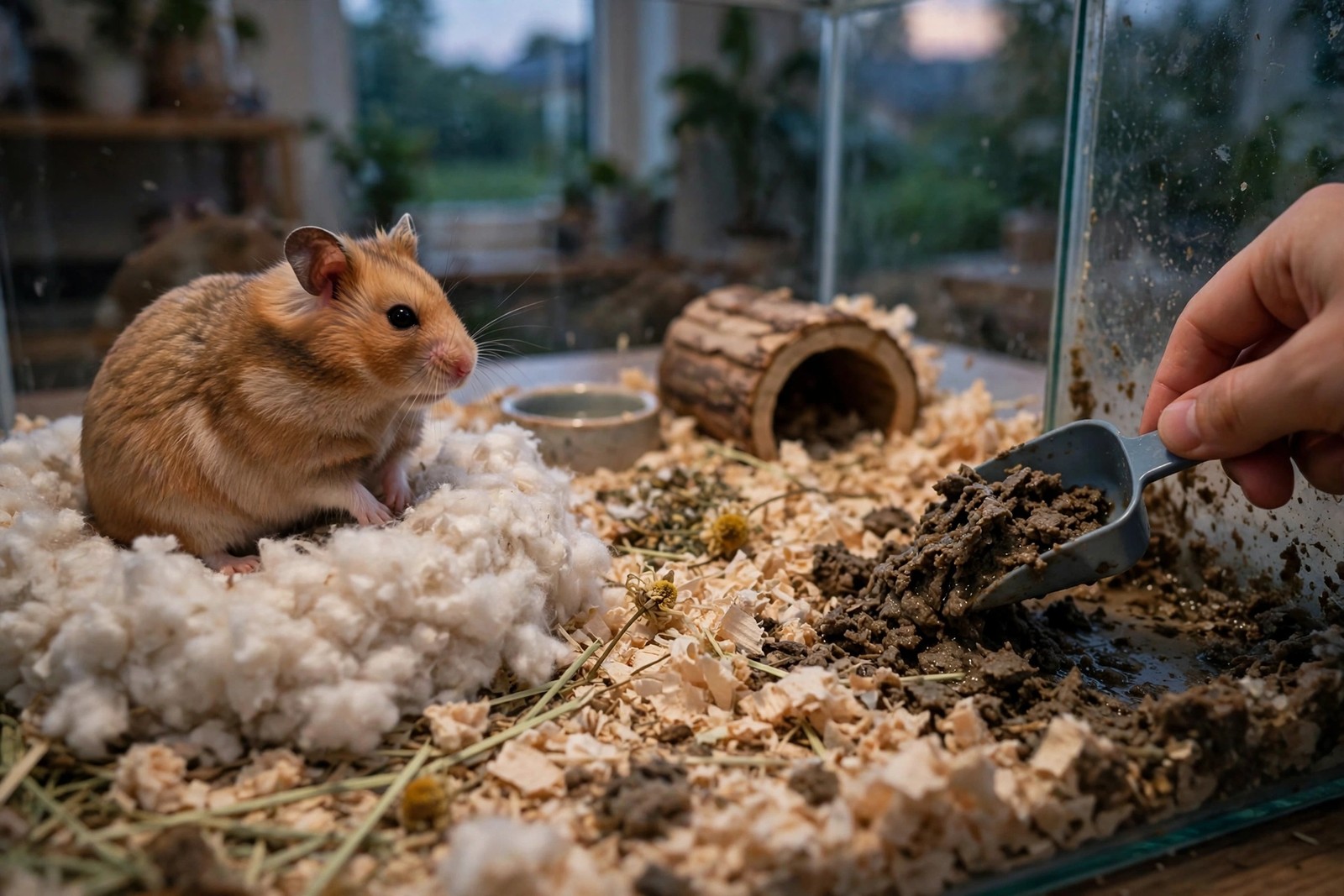
A hamster navigates her cage largely by smell, and her bedding carries a map of scent that tells her where her nest, hoard and toilet are. A full strip-out erases that map and is one of the most stressful routine events in her life. Spot-cleaning works with the map instead: a small daily removal of the genuinely dirty parts, and a cage that always smells like home.
Find Her Toilet Corner First
Most hamsters choose one corner, often far from the nest, and use it consistently. That corner is your daily job. Each evening, lift out the damp, discoloured bedding there — wet bedding clumps and darkens, and it is the main source of ammonia smell — plus any droppings-heavy patches around it. Drop in a similar amount of the same unscented bedding so textures and smells stay familiar. If she uses a small sand-filled toilet tray, sieve or replace its sand instead. Everywhere else, if the bedding is dry and smells neutral, leave it alone, however untidy it looks to you.
Time It for When She Is Awake
Clean in the evening, when she has woken and emerged on her own. Being dug out of the nest mid-sleep is frightening and is when otherwise gentle hamsters bite. If you must reach into an area she is occupying, let her climb onto your hand or into a mug and move her to a playpen with a hide and some of her own bedding for the few minutes it takes. Wash your hands before and after, keep voices low, and skip sprays or scented cleaners anywhere near the cage — strong smells are another eraser on her scent map.
Never Touch the Nest or the Hoard
Her sleeping nest and the food hoard buried near it are security, not mess. Disturbing the hoard tells her that stored food vanishes, which drives frantic re-hoarding and pouch-stuffing; breaking up the nest destroys the warm, scented burrow she rebuilt nightly. Even bedding that looks old in those areas stays, unless it is genuinely wet or soiled. The same restraint applies during the deeper clean: work in sections over different weeks, a third of the cage at a time, always keeping a portion of the old dry bedding to mix back in so the smell survives the changeover.
The Weekly Jobs Around the Edges
Once a week, wash the food bowl and sipper bottle properly with hot water, check the bottle ball still rolls freely, top up her sand bath, and wipe the wheel if it is soiled — many hamsters urinate while running. While you work, glance at what the cleaning reveals: uneaten fresh food rotting under bedding, a hoard suddenly much larger because she has stopped eating hard food, or droppings that have changed. Those details are worth noting, and a vet should see her if appetite, droppings or activity change and stay changed. Shared between family members, these small jobs are easy to duplicate or forget, and KinsLe's Care Teams helps by letting you assign this hamster's daily spot-clean and weekly bottle-and-wheel checks to named helpers, each marked done with a timestamp, so she gets exactly one gentle clean a day.