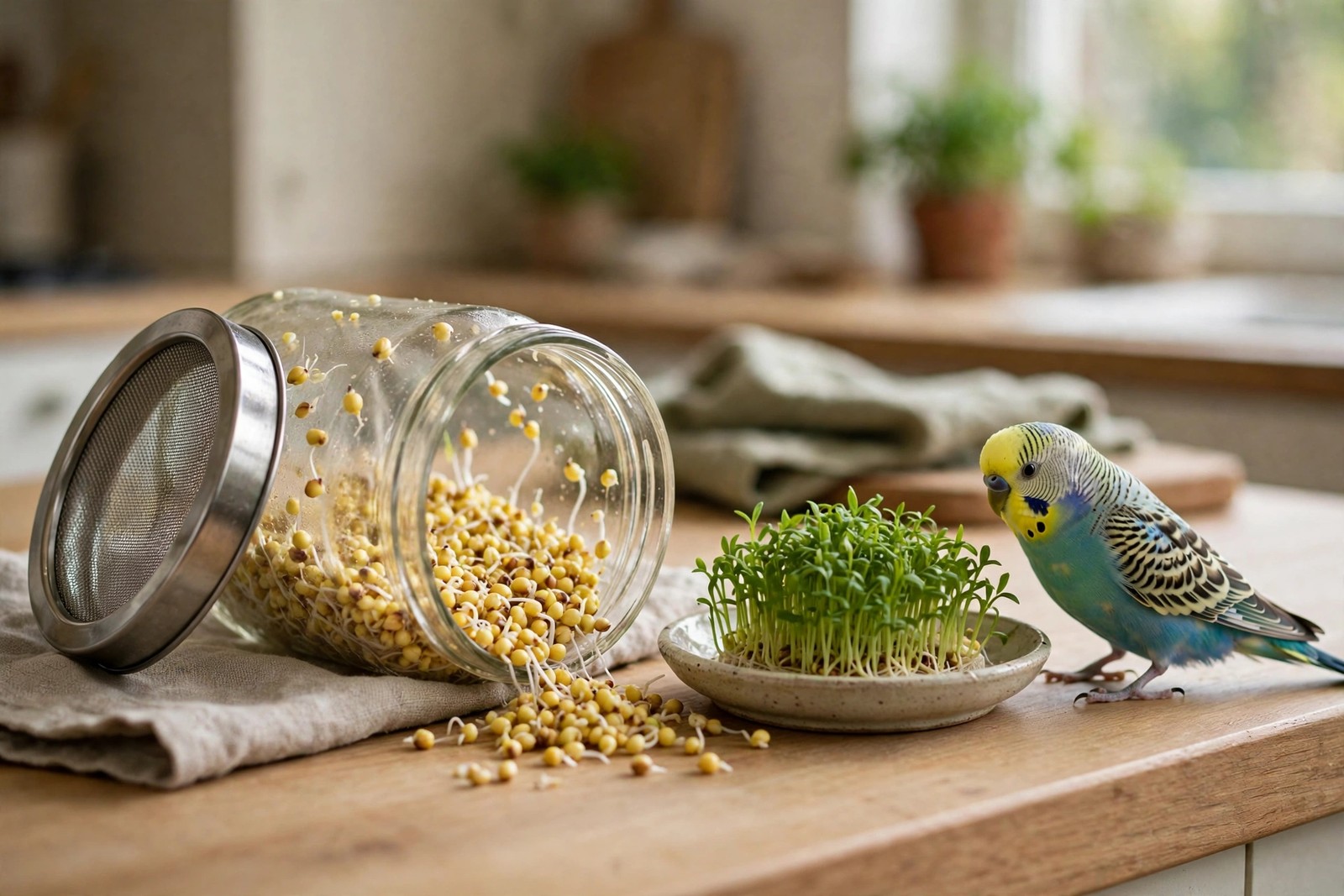
Sprouting wakes a dry seed up: enzymes switch on, starches begin converting, and the seed becomes softer, moister, and richer in some vitamins than it was in the bag. Birds usually take to sprouts eagerly, but the warm, damp conditions that germinate seed also grow bacteria and mould, so the method below is built around one principle: seeds spend their time damp and drained, never sitting in water.
Choose Seed That Is Worth Sprouting
Start with plain seed sold for birds, or a dedicated sprouting mix of small seeds such as millet, canary seed, and mung beans, which germinate quickly and evenly. The seed must be fresh and clean, with no coloured coatings or added pellets mixed in, because old, dead seed will not sprout and will simply rot in the jar. Sprout small amounts at a time, roughly what your birds will eat within a day or two, since freshness is the whole point. Wash your hands and scrub the jar or tray before every batch, and keep a separate jar for sprouting so residues from other uses never reach the seeds.
The Method, Step by Step
Rinse the seed thoroughly in a sieve under running water, picking out anything discoloured or broken. Tip it into a clean glass jar, cover it generously with fresh water, and soak for about 8 to 12 hours at room temperature; small seeds need the shorter end of that range, mung beans the longer end. Drain the soak water away completely through a mesh lid or cloth secured over the jar mouth, rinse the seeds once more, and drain again until no water pools at the bottom. Stand the jar tilted mouth-down at an angle, or spread the seeds in a sprouting tray, in a spot with air moving around it and out of direct sun. Then rinse and drain two or three times a day, every day, until the sprouts are ready: this rinsing is what washes away bacteria and keeps the batch sweet.
When Sprouts Are Ready, and When to Bin Them
Small seeds are ready as soon as a tiny white root tip, about as long as the seed itself, pokes out, which typically takes one to two days; at this just-sprouted stage they are at their most nutritious and birds find them easy to eat. Offer them promptly, mixed into the usual food or in a separate dish, and remove uneaten sprouts after a few hours rather than leaving them in the cage all day. A finished batch can be refrigerated in a clean, drained container for up to two or three days, rinsed again before serving. Judge every batch before it reaches the cage: good sprouts smell fresh and faintly sweet and feel firm, while a sour or musty smell, slime on the seeds, pink or grey discoloration, or any visible mould means the whole batch goes in the bin, no exceptions and no rinsing it back to life. If a batch fails, shorten the soak, rinse more often, improve the airflow, and start again with fresh seed. KinsLe's Care Teams lets you assign each rinse-and-drain round to whoever is home at that hour and mark it done, keeping a sprouting batch on its tight hygiene rhythm even across a busy household.