
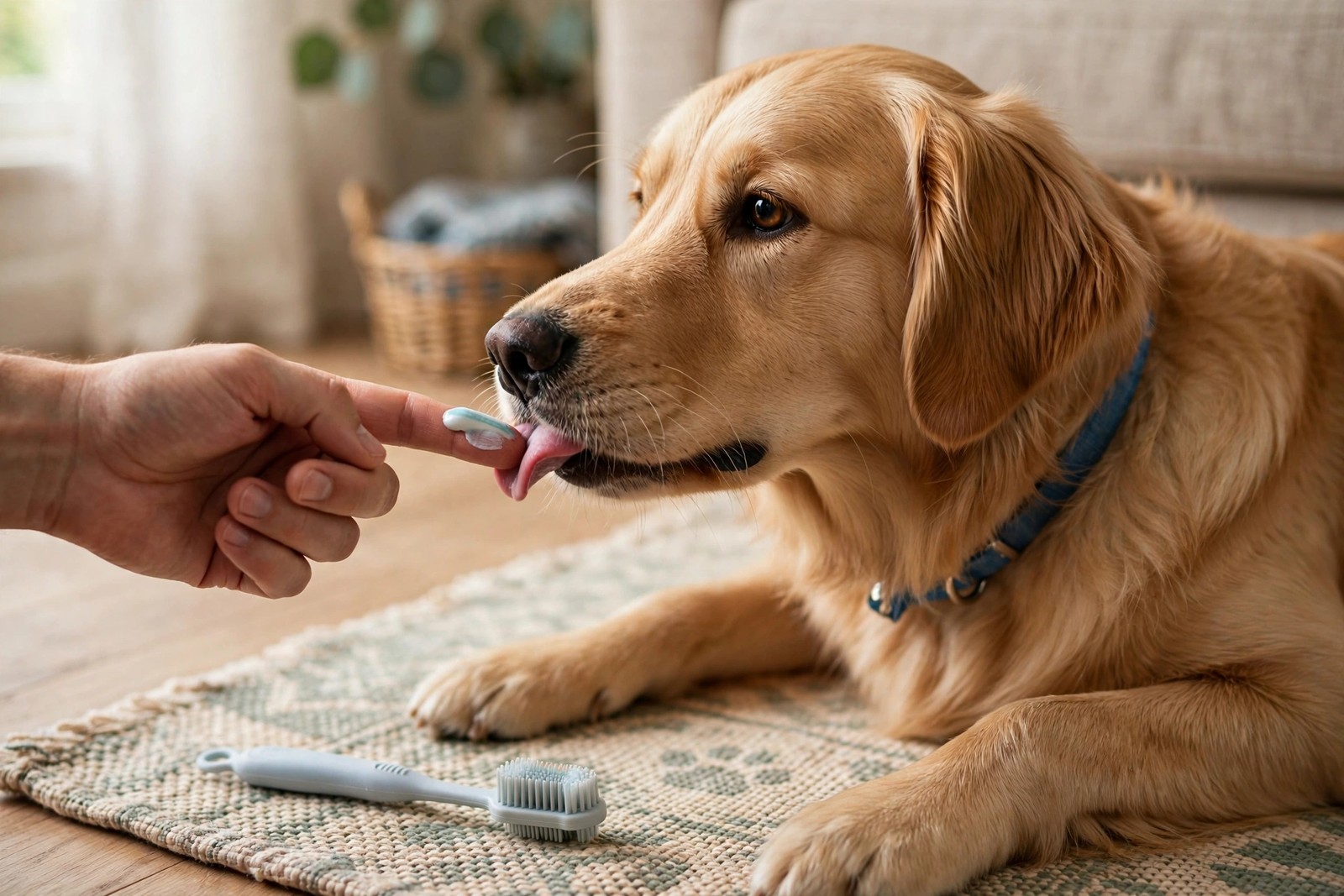
Toothbrushing works when a dog learns it in stages small enough to accept. Rushing straight to a brush in a closed mouth teaches resistance, while a slow build teaches that the paste tastes good, the handling is brief, and nothing hurts.
Stage One: Taste, Then a Finger
Begin by offering a pea-sized amount of dog toothpaste on your finger and letting your dog lick it off. Repeat for a few days at a calm time, after a walk rather than during excited play. Once the licking is eager, put paste on your finger and rub the outer surfaces of the large canine teeth and the upper back teeth, where plaque tends to build. Keep each session to seconds at first, and stop while your dog is still relaxed.
A piece of gauze wrapped around a finger makes a useful middle step. It gives slight abrasion, feels less foreign than a brush, and lets you lift the lip gently without prying the mouth open. Never force the jaws apart, and work only on the cheek-facing surfaces at this stage, because those surfaces collect the heaviest deposit and are the easiest to reach without a struggle.
Stage Two: A Brush on a Few Teeth
Introduce a soft dog brush with paste already on it, so the first contact tastes familiar. Angle the bristles gently toward the gumline and use small, light movements on a few teeth, then praise and finish. Add a few more teeth each session until you can cover the outer surfaces in about a minute, a few times a week. Daily brushing is the ideal to build toward, though several steady sessions each week still do real work.
Pick a consistent cue and place, such as the same mat after the evening walk, so the routine becomes predictable. If your dog backs away, go back one stage for a few days rather than holding the head and pushing on. Puppies can learn the taste and finger stages early, with extra gentleness around loose baby teeth, so brushing feels normal long before adult teeth need serious care.
What to Watch in the Mouth
Brushing is also a quiet mouth check. Bad breath that stays strong, visible tartar building as a hard yellow-brown deposit, and gum redness along the tooth line are the watch words, and none of them is settled by brushing harder. Bleeding, a loose or broken tooth, drooling, pawing at the mouth, or reluctance to chew belongs in a vet visit, and a vet can say whether a professional clean is needed and whether home brushing should change.
Keep the tools where the routine happens, because a brush stored in a bathroom cabinet upstairs quietly turns a nightly habit into a weekly intention. A small pot by the dog's mat or bed with the brush, the gauze, and the dog toothpaste means the stage you are on is visible at a glance, and a dog who sees the same objects in the same place learns what is coming and settles faster. Replace a frayed brush, check that the paste tube is the dog's and not a person's, and rinse and dry the brush after use so it does not become the unpleasant part of the session.
Set the household routine in writing: whose night it is, which stage the dog has reached, and any mouth note worth passing on, such as a sore-looking gum on one side. That written split keeps one person from assuming another person brushed, and it keeps the stage progression honest. On KinsLe, the Care Teams rotation puts a named person beside each brushing night, and a finished session is marked where the next person can see it.