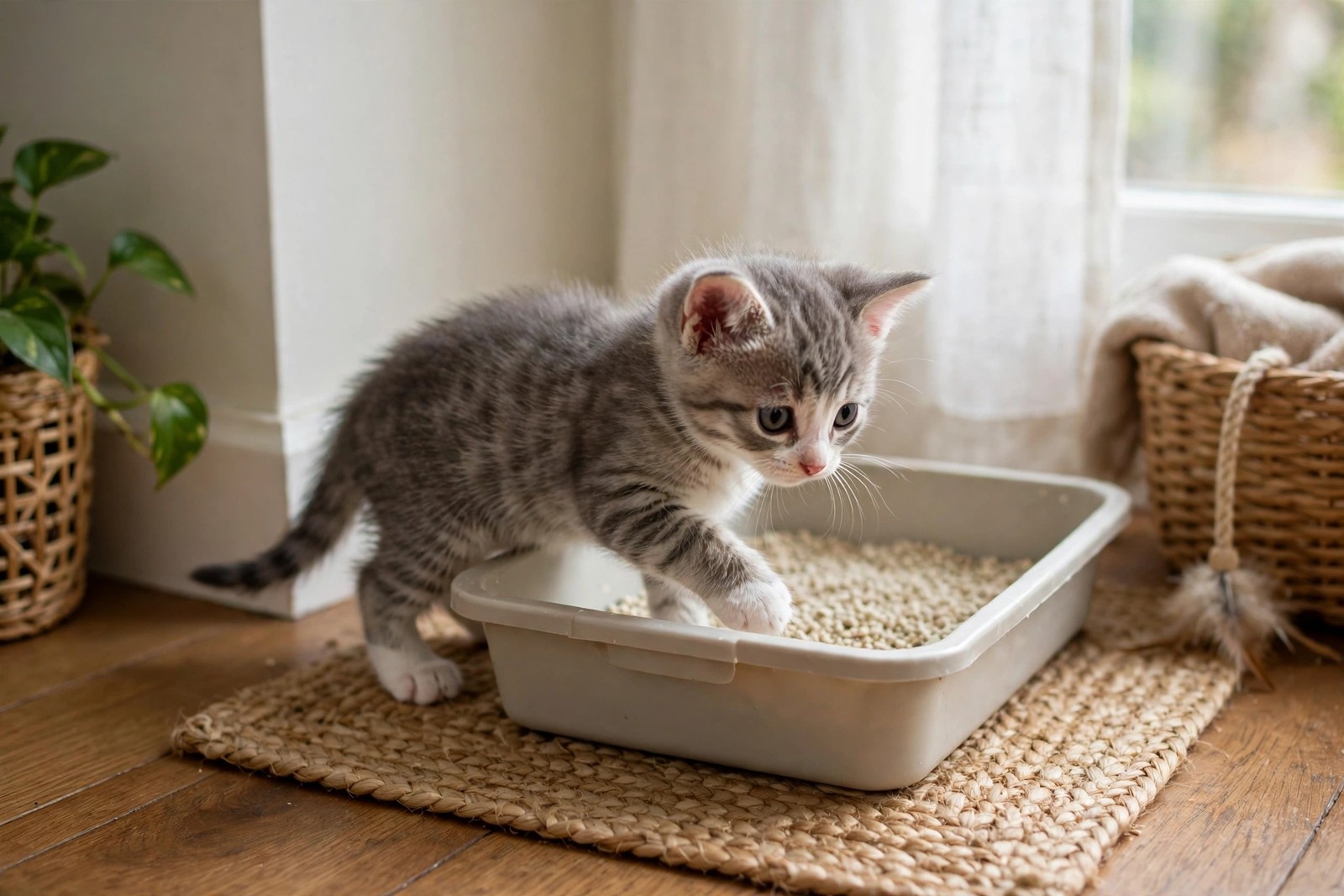
You start litter training a kitten by making the right choice the easy choice: a low-sided box in a quiet spot, set the kitten in it right after meals and naps, and praise her calmly when she uses it. Most kittens have a strong instinct to dig and bury, so training is usually about access and consistency rather than teaching a brand-new behavior.
Set up a box a tiny kitten can actually use
Choose a shallow box or a full litter box with one side cut low — a kitten who has to scale a wall to get in will simply go beside it. Fill it with two to three inches of unscented, fine-grained litter; heavily perfumed litter can put a sensitive kitten nose off, and very young kittens who mouth litter should use a paper- or pellet-style option your vet recommends until they are past the tasting stage. Place the box somewhere quiet but easy to reach — not beside the washing machine, not next to her food and water, and not a whole staircase away from where she spends her time.
Timing does most of the training
Kittens typically need the toilet shortly after eating, after waking from a nap, and after a play burst. At those moments, lift your kitten gently and place her in the box. If she hops out, do not chase or repeatedly replace her — just try again after the next meal. When she does dig, squat, and go, praise her softly and let her hop out on her own.
Young kittens who have just left their mother often get the idea within a few days. Keep expectations age-appropriate: a five-week-old will have accidents, and punishing or rubbing a kitten's nose in a miss only teaches fear.
Keep the box inviting
A dirty box is the number one reason a learning kitten chooses the carpet instead. Wash the box with mild soap and water on a regular cycle, avoiding strong-smelling disinfectants that linger in the plastic. Clean any accidents outside the box with an enzyme cleaner made for pet messes, so the spot stops smelling like a toilet to a nose far better than yours.
A simple starter routine:
- One box per kitten, plus one spare, in the rooms she actually uses.
- Place her in the box after every meal, nap, and play session.
- Scoop daily and keep litter unscented and consistent — do not switch brands mid-training.
- Praise success quietly; ignore misses and clean them thoroughly.
When misses keep happening
If a kitten who was doing well suddenly stops using the box, or strains, cries, or produces diarrhea, skip the training theories and call your veterinarian — urinary and digestive problems need a professional look, and kittens dehydrate quickly. Sudden changes in a grown pattern are information, not stubbornness.
Sharing the litter routine at home
Consistency collapses when one person scoops daily and another forgets for three days. KinsLe's Care Teams let you assign everyday duties — feeding, walks, medications, and grooming, and yes, litter-box cleaning fits right into that same rhythm — to the people helping with your kitten, and each person marks tasks complete with a timestamp so everyone can see the box was actually done. When scooping becomes a named job for one person in the household, the Care Teams record on KinsLe shows a timestamp for each finished cleaning, so nobody has to guess whether today's box care actually happened.