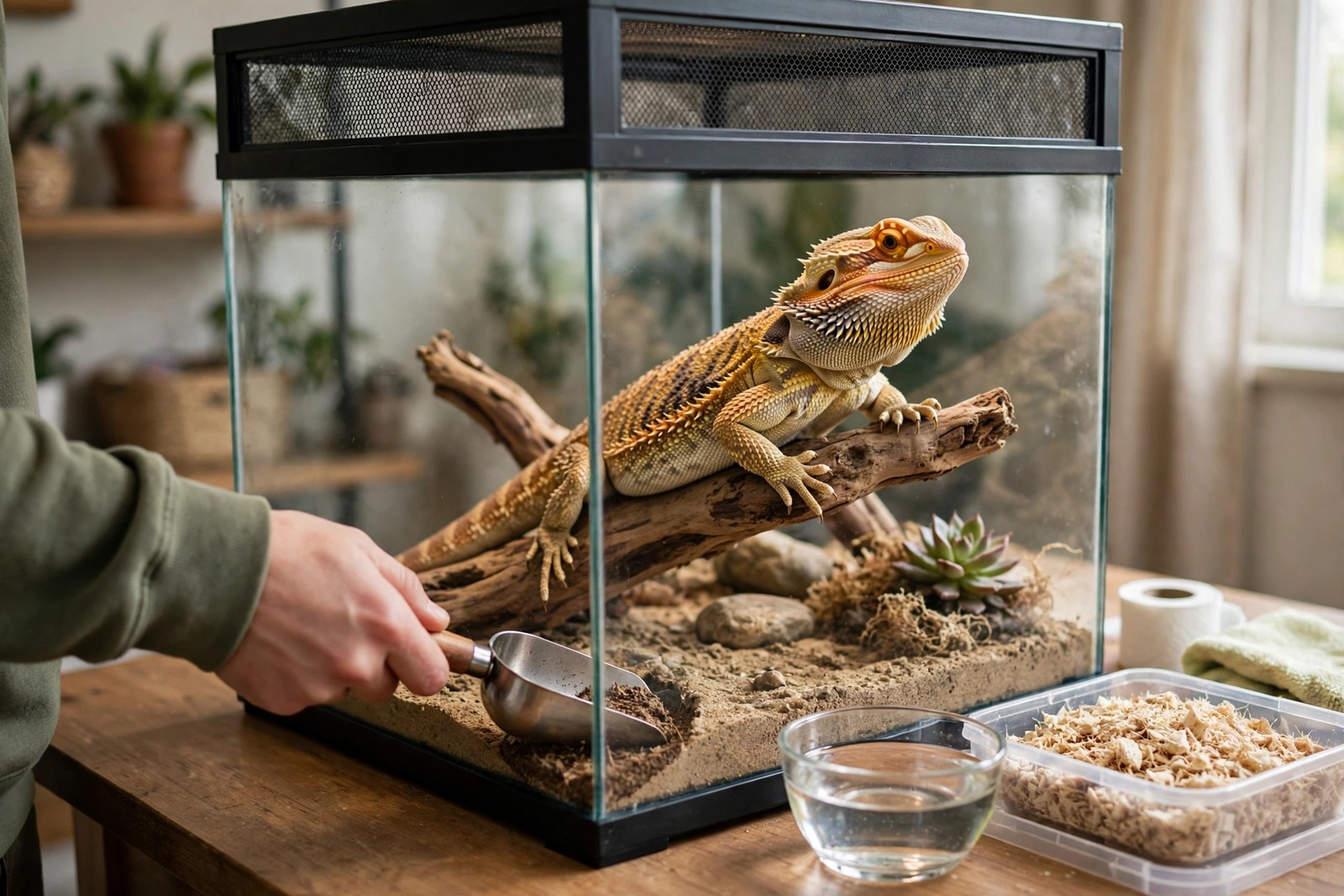
A settled vivarium should smell faintly earthy when you open the door, never sour, sharp or stale throughout the room. Persistent smell almost always traces back to one of four causes: waste left too long, uneaten food decaying out of sight, substrate that stays wet, or still air that lets odour build. Work through them in that order, and treat any sudden change in smell as information about the animal as well as the enclosure.
Remove Waste and Food Daily
Droppings and white urate deposits are the main odour source in most snake, lizard and tortoise setups. Spot-clean every day: lift out droppings, urates and soiled substrate with a scoop or gloved hand, and check the corners, hides and the area under the water bowl, where waste hides. Uneaten food is the second culprit. Remove salad, fruit and prepared food at the end of the day, and remove uneaten live insects too, because a dead feeder insect under warm substrate decays fast and can also bother a resting reptile.
Change drinking water daily and soaking water as soon as it is fouled, since many species defecate in their water, and wash bowls with hot water before refilling. For frogs and other amphibians in water-heavy setups, test and change water on the schedule your species needs, because stale water, not the animal, produces most of the smell.
Fix Substrate and Moisture
Wet substrate is where odour breeds. If the whole floor layer feels damp rather than damp only in a chosen humid hide or corner, the setup is too wet: reduce misting, let the surface dry between sprays where the species allows it, and replace the wettest sections instead of stirring them in. Keep a clear difference between a humid retreat and a dry basking and walking area. In bioactive enclosures, a cleanup crew of springtails and suitable isopods, plus leaf litter they can process, handles tiny waste continuously, but the crew only works when the substrate is moist rather than swampy and when large droppings are still removed by you.
Plan full substrate changes by setup type: simple paper or tile floors are wiped or swapped as soon as they soil, loose dry substrates are partly refreshed weekly and fully replaced on a regular cycle, and any substrate that smells sour after spot-cleaning should come out entirely rather than being perfumed or covered.
Ventilation, Cleaning and the Health Check
Enclosures need gentle air exchange. A fully sealed box traps odour and humidity, so use the vents or mesh the enclosure provides, keep vents unblocked by background panels or piled substrate, and avoid placing the vivarium in a closed, unventilated cupboard space. When you deep-clean, move the animal to a secure temporary tub, wash hard surfaces and decor with hot water and a reptile-safe cleaning approach your veterinarian or care guide approves, rinse thoroughly, and let everything dry before rebuilding, because cleaning-product residue is itself a hazard.
Finally, know the warning pattern. A vivarium that smells strongly within a day of a full clean, droppings that become runny or unusually foul, food refused repeatedly, or an animal that is less active than usual can point to illness or parasites rather than housekeeping, and those signs call for a veterinarian promptly instead of stronger cleaning. In KinsLe, Family Sharing keeps the daily spot-clean, water and deep-clean duties in one shared record, so a missed day is obvious before it becomes a smelly week.