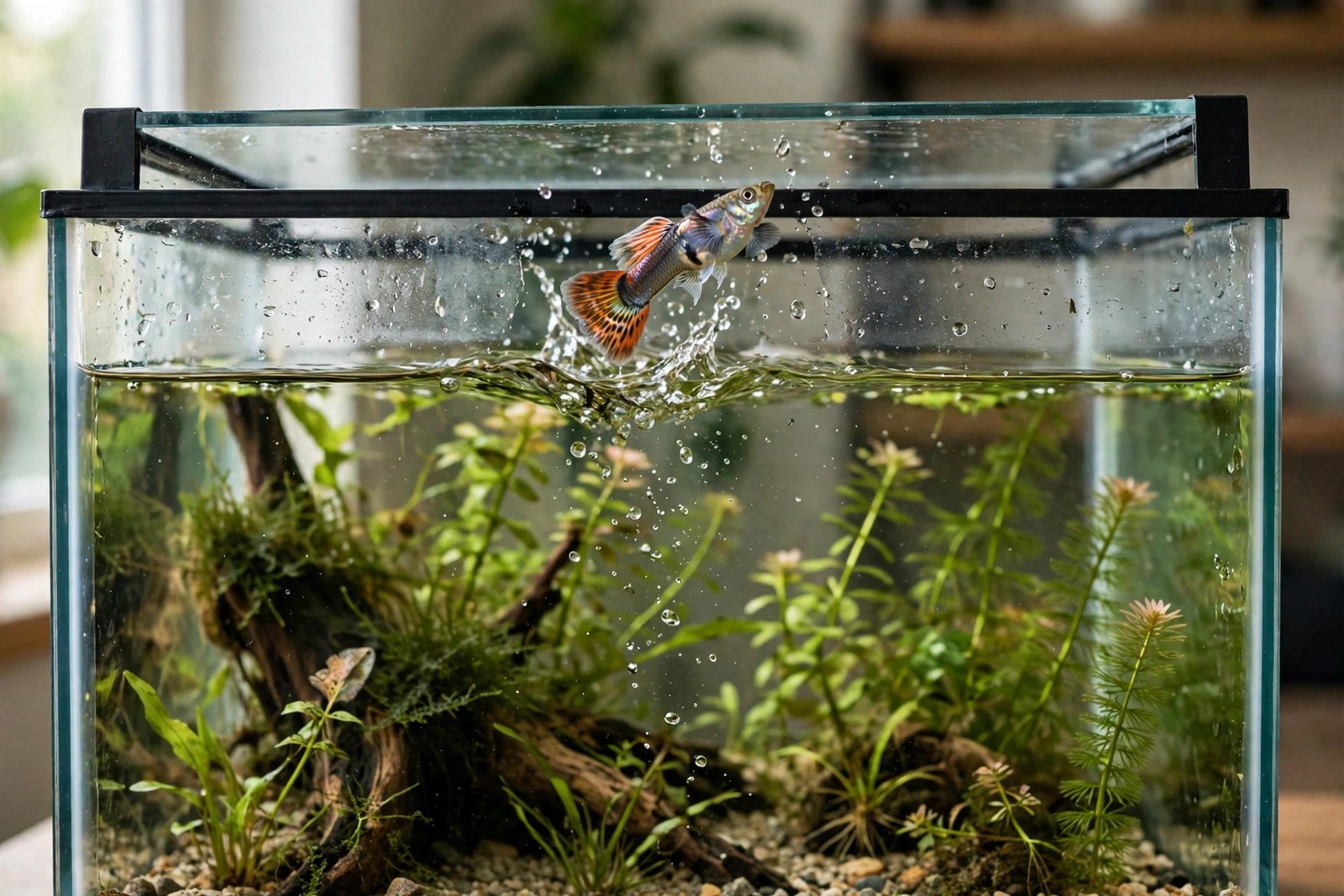
Fish rarely jump from a tank they are content in, but the fix starts with physics, not detective work: while you find the reason, make escape impossible. A lid fitted in an afternoon protects jump-prone species such as hatchetfish, many tetras, bettas and gobies tonight, and the trigger hunt that follows decides whether the jumping was habit, fright or a fish trying to leave bad water.
Cover Every Gap, Not Just the Top
A standard hood with open cutouts is not a seal. Check the gaps where filter pipes, heater cables and airline tubing pass through, the corners of sliding glass lids, and the feeding hatch left ajar after dinner. Cover openings with fine mesh, foam or cut-to-fit acrylic so no gap is wider than the slimmest fish in the tank. Glass lids also cut evaporation and hold heat in, which steadies temperature. If a fish has already cleared the rim once, assume it remembers the route and treat that exact spot first.
Lower the Waterline and Soften Startles
Dropping the water level an inch or two below the rim — more for known high jumpers — gives a leaping fish an arc that lands back in the water. Then reduce the startles that launch fish in the first place. Lights that snap from darkness to full brightness panic fish; a gradual ramp, or a room light switched on a few minutes before the tank light, calms the transition. Keep the tank out of the line of doors that bang, speakers that thump and children tapping glass, and add plants or decor near the surface so a startled fish dives for cover instead of launching upward.
Ask Why the Fish Wants Out
Persistent jumping is information. Test the water the same day: ammonia or nitrite present, a pH that has drifted, or a temperature swing all make fish desperate to leave, and in the wild jumping moves them to a better pool. Watch the tank for ten quiet minutes — a jumper is often a fish being chased, nipped or courted relentlessly, and the cure may be more cover, a rearranged territory or rehoming the aggressor. Overcrowding, a new tank that has not cycled, and lights left on far into the night belong on the same list. Fix the cause you find and note it; a pattern of jumping after water changes, for instance, points at mismatched replacement water.
If a Fish Does Get Out
Act fast and gently. Wet your hands or use a soft wet net — never dry hands, which strip the protective slime coat — and lift the fish supporting its body, returning it to the tank straight away. Many fish survive surprising minutes out of water if they are still moist. Watch the returnee over the next days for torn fins, cloudy eyes or laboured breathing, and keep the water especially clean while it recovers; a vet with fish experience is worth calling for visible injury or a fish that cannot stay upright. Keeping the lid checks and water tests that prevent the next escape on a shared rota is where KinsLe's Care Teams earns its place, assigning each weekly test and gap check for this tank to a named helper with a timestamp, so nothing rests on whoever happened to remember.