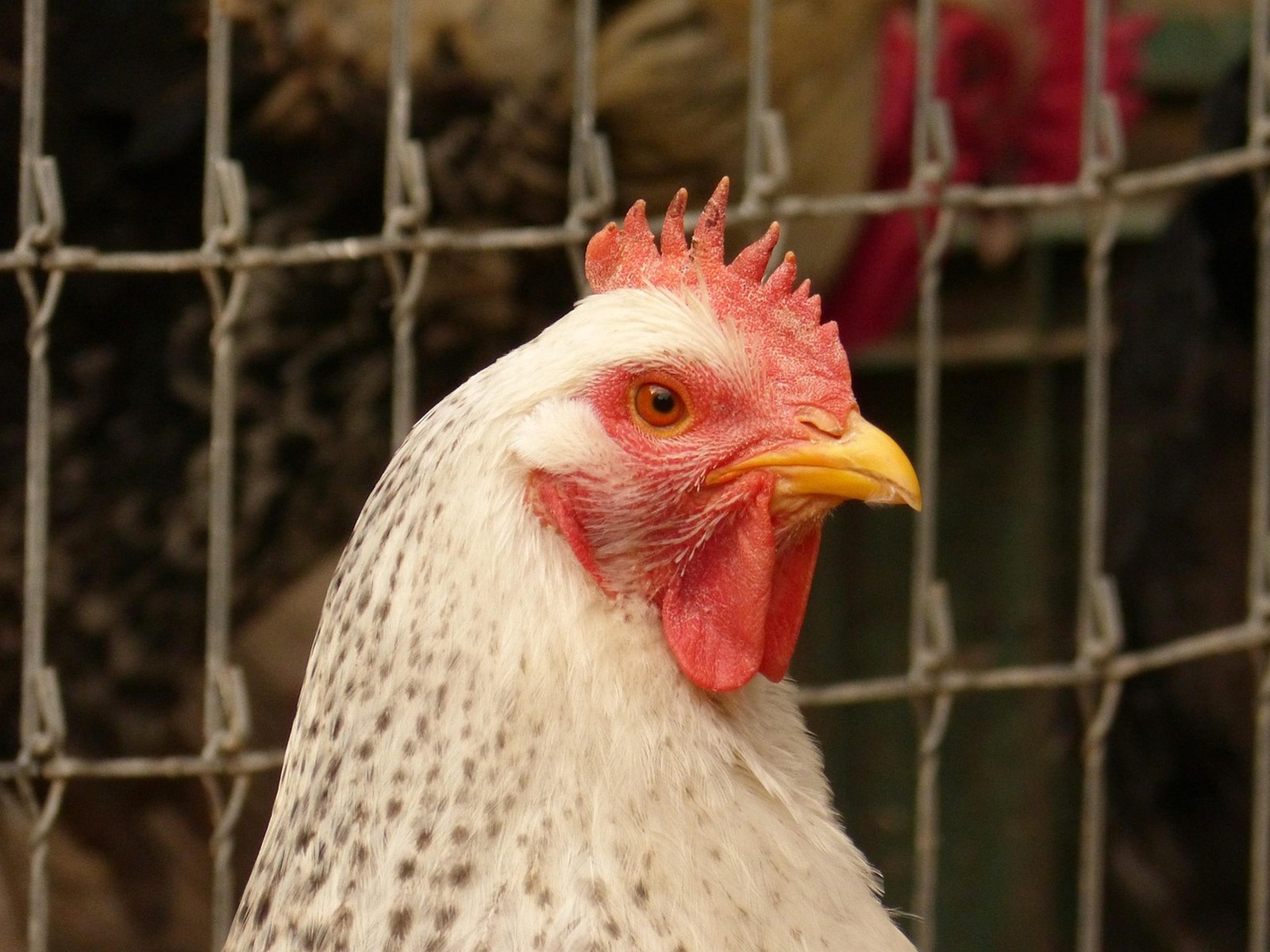
A hen rarely sets out to eat an egg. She pecks at one that has cracked in the nest, tastes the yolk, and learns a lesson she then teaches the rest of the flock by example. Stopping the habit means working on all three parts of it at once: fewer eggs sitting in the boxes, eggs that do not break, and pecking that earns nothing.
Collect Little and Often
Collect eggs two or three times a day, including a final round at lock-up, so no egg sits in a nest box long enough to be investigated, trodden on, or slept on. An egg left overnight is at real risk of being broken by morning. Clear away any broken egg and its soiled bedding the moment you find it, and wash the nest material if yolk has soaked in, because the smell and taste left behind invite repeat pecking at the same spot.
While you collect, check how many nest boxes the flock is really using. Hens who queue for one favourite box crowd it, and crowding cracks eggs. Provide enough boxes that two hens are never forced to share, fill each with deep, soft bedding that cushions the egg as it lands, and replace flattened bedding promptly.
Make Pecking Pointless and Nests Dark
Put one or two smooth fake eggs, made of ceramic, wood, or a similar hard material, into each nest box and leave them there. A hen who pecks a fake egg meets something hard that never breaks and never pays out, and that unrewarded pecking fades far faster than pecking that sometimes finds a real egg. Remove real eggs promptly so the contrast between the fake and the real stays clear.
Darken the boxes as well. Hens prefer to lay in a dim, private place, and a curtain of heavy fabric strips across the front of each box, or a box design with a hooded entrance, makes the interior gloomy enough that detailed pecking at an egg is less likely. A hen who cannot see an egg clearly is a hen who mostly leaves it alone.
For a determined eater, a rollaway nest box ends the argument: the floor slopes gently, the egg rolls away as soon as it is laid into a covered tray, and by the time the hen turns round there is nothing to peck. Many keepers use rollaway inserts in ordinary boxes rather than replacing the whole unit.
Fix Thin Shells and Find the Culprit
Eggs that break easily start the habit, so feed for shell strength. Offer crushed oyster shell in a separate dish, available at all times, so each hen can take the extra calcium she needs rather than relying on what is mixed into the feed. Check that the main feed is a proper layers ration, and review protein as well, because a hen short of either may seek what she is missing in an egg.
Watch which hen has yolk on her beak or faces the nest boxes waiting, and note when losses happen. If one bird is the confirmed eater and the fixes above have had a fair trial, house her apart from the laying flock for a while so the others cannot copy her, and ask a poultry vet for advice if the behaviour continues, since a persistent eater can teach a whole flock faster than you can retrain it.
Keep the collection rounds, box checks and oyster shell refills written down for a fortnight, so you can see losses fall rather than hoping they have. Sharing those rounds through KinsLe's Care Teams, with each collection marked complete with a timestamp, means no round quietly slips on a day when everyone assumed someone else had done it.