
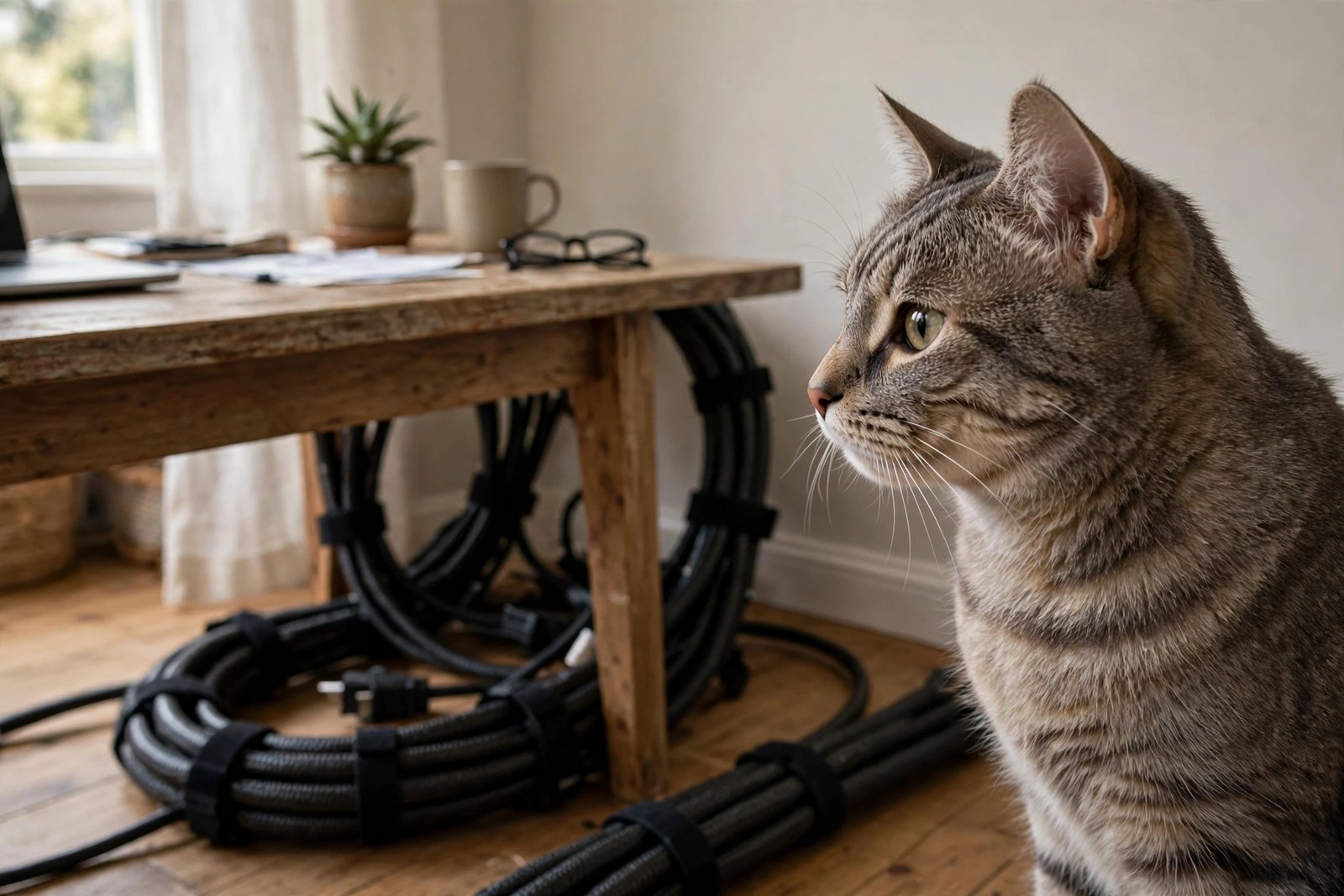
Stop cord chewing by making cords hard to reach and dull to bite — cover them with hard protectors, run them behind furniture, unplug chargers when not in use — while giving your cat safe, legal things to chew and chase instead. Chewing is rarely naughtiness; it is curiosity, teething, boredom, or the satisfying texture of a rubbery cable, and management plus redirection works far better than scolding.
Why Cats Target Cords
Cords move slightly when brushed, smell faintly of plastic and warmth, and hang at exactly cat height behind desks and televisions. Kittens explore with their mouths while teething, and bored indoor cats — especially young, energetic breeds like Bengals and Abyssinians — treat dangling cables as toys that fight back just enough to stay interesting. Some cats develop a taste for chewing non-food items generally, gnawing wool, plastic, and cardboard too; that pattern is worth mentioning to your vet, particularly if it starts suddenly in an adult cat.
Understanding the motive shapes the fix: a teething kitten needs chew toys, a bored hunter needs play sessions, and a cat obsessed with one charger by your bed may simply need that cord gone.
Making Cords Boring and Inaccessible
Work through your home room by room:
- Slip cords into hard spiral wrap or split-loom tubing, which cats find unrewarding to bite.
- Run cables behind heavy furniture, inside cable trunking, or under cord covers along skirting boards.
- Unplug phone chargers and laptop leads when not actively charging; a dead cord is far less hazardous.
- Bundle excess length with ties so nothing dangles and swings invitingly.
- Keep the highest-risk cords — behind the TV, at your desk, beside the bed — checked weekly for tooth marks.
Bitter-tasting sprays made for pets can support these steps for some cats, but they are a backup, not a system: tastes fade, and determined chewers chew anyway. Physical barriers are the reliable layer.
Giving the Chewing Somewhere Better to Go
Redirect, do not just forbid. Offer chew-friendly toys, crinkle balls, cardboard scratchers, and cat grass, and rotate them so novelty does some of the work. Two short interactive play sessions a day with a wand toy burn off the hunting energy that often fuels cable raids, especially in the evening. Puzzle feeders give mouths and brains a legitimate job at mealtimes.
If you catch your cat mid-chew, interrupt calmly, trade the cord for a toy, and then fix the access problem afterwards. Shouting or chasing teaches a cat to chew when you are out, which is worse for everyone.
If Your Cat May Have Bitten a Live Cord
This is the safety section that matters most. If a cord is chewed through or your cat shows mouth burns, drooling, pawing at the mouth, coughing, or any breathing difficulty after contact with a live cable, call your veterinarian right away — electrical injuries can affect the mouth, lungs, and heart, and signs can develop after the incident. Switch off power at the socket before handling a damaged cord, and never touch a cat who is still in contact with a live cable until the power is off. Singed whiskers or a cat who suddenly avoids a room where she got a shock also deserve a vet call.
Damaged cords should be replaced, not taped — and unplug them until they are.
How KinsLe Care Teams Turn Cord Checks Into Routine
A cord check only protects your cat if somebody actually does it, regularly. With KinsLe Care Teams, you can assign a quick cord check to whoever tidies each room: feeding, walks, medications, grooming, and household safety tasks are assigned to specific people and marked complete with a timestamp. The desk cord gets eyeballed after the weekly clean because it is on a named person's list, not on everyone's vague intentions.
Shared accountability is how small safety habits survive busy weeks. Whoever tidies the desk, the bedside, or behind the television, that person's cord check counts most when the Care Teams list on KinsLe shows it done, stamped with the time it was finished.