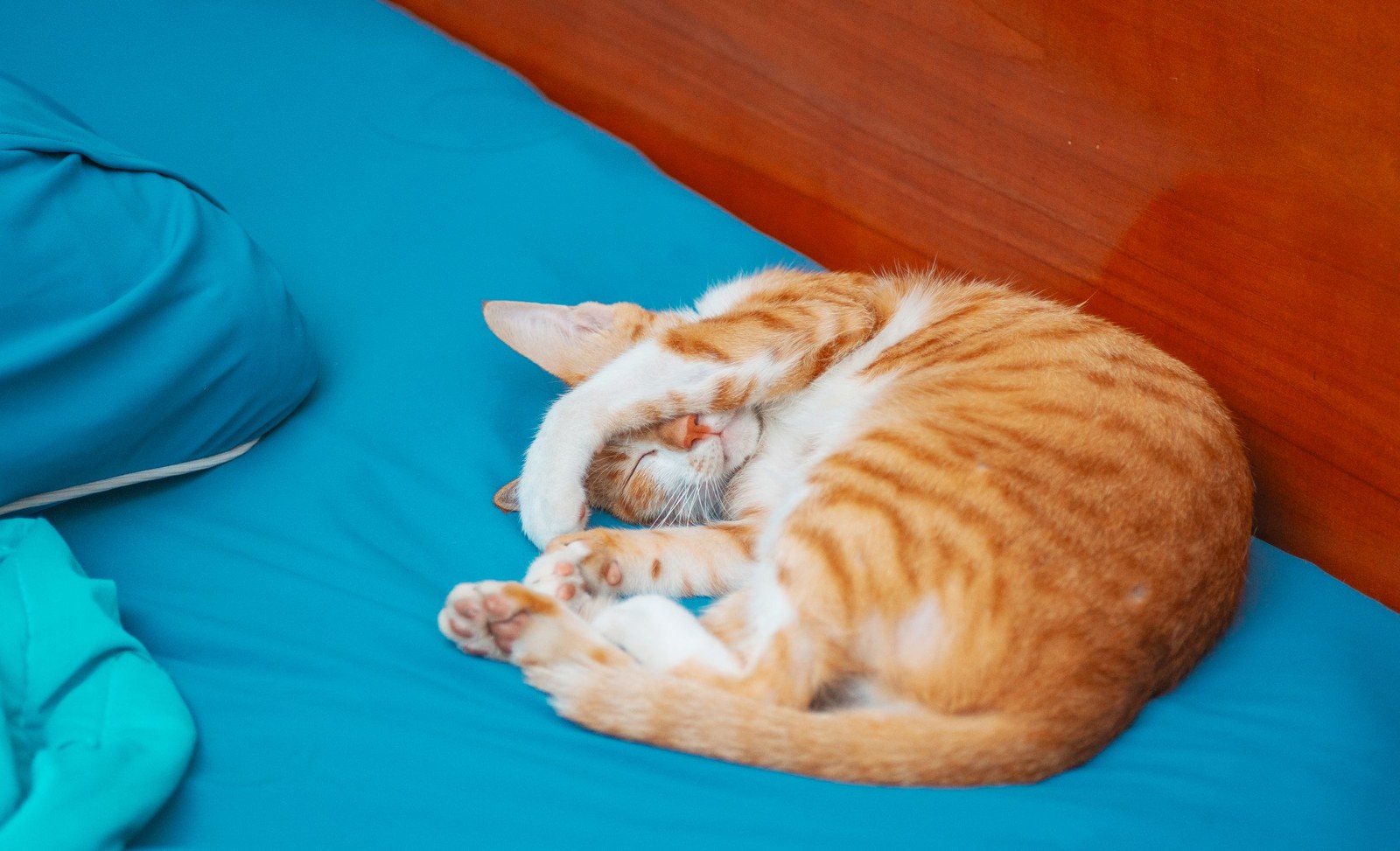
You can stop the crying outside your bedroom door by giving your cat a rewarding night life on her side of it — a late play session, a small snack, a warm bed she already likes, and something to hunt — while making the crying itself completely unrewarding. The first few nights of protest are the hardest; with everyone in the home holding the same line, most cats trade door duty for their new routine within a week or two.
Why She Cries There Specifically
Your bedroom at night concentrates everything your cat wants: you, your warmth, your scent, and the social contact she had access to all evening — suddenly cut off at the exact hour her crepuscular instincts say it is time to be active. She is not being spiteful. She is lonely, or bored, or hoping for an early breakfast service, and she knows precisely where you are.
Kittens, newly adopted cats, and cats who previously slept with their owners have the strongest door habits, because for them the door represents a change in the rules rather than the rules themselves. A cat who has always had her own nighttime territory usually settles quickly, which is good news: new routines can be learned at any age.
Build Her Night on the Other Side
Start about an hour before bed and make the rest of the home the interesting place to be:
- Play a full interactive session in the living room — wand toy, chase, catch — ending with a small late snack or measured meal, so she is exercised and fed as you wind down.
- Set up a proper night station away from your door: a warm bed or box she already likes, fresh water, a clean litter box, and a puzzle toy or a few treats hidden for midnight foraging.
- Leave low-level comfort cues — a nightlight if she is anxious in the dark, soft radio, or a worn t-shirt of yours in her bed for scent.
- If early hunger drives the crying, a timed feeder releasing a small portion an hour before your alarm can remove you from the breakfast equation entirely.
Surviving the Protest Nights
When a previously successful behavior stops working, cats escalate before they quit — louder crying, scratching, door-handle rattling, sometimes a dramatic 3 a.m. finale. This extinction burst is actually a sign the plan is working. If you open the door on the worst night, you have taught her exactly how much effort the door requires.
Practical survival tools help: earplugs or a white-noise machine, a door draft stopper to dull scratching sounds, and a household agreement that nobody — nobody — opens the door, feeds her, or goes out to scold her during the night. Keep mornings calm too; a huge fuss the moment you emerge still connects the night's performance to a payoff. If she is scratching the door itself, a temporary scratch mat or double-sided deterrent on the door can protect the paint while the habit fades — paired with a proper scratching post beside it as the legal alternative.
Never punish night crying after the fact, and do not bring her into the room 'just this once' on weekends. Inconsistency is what turns a two-week fix into a permanent 3 a.m. negotiation.
When Night Crying Needs a Vet
If crying at night is new in an older cat, or comes with pacing, appetite or weight change, increased drinking, or litter box changes, skip the training plan and book a veterinary visit first. Night restlessness and vocalizing in seniors can reflect pain, thyroid disease, or cognitive change, and those need medical answers, not earplugs.
A Bedtime Plan the Whole Household Keeps
This fix depends on the whole household doing the same thing at the same times, night after night. Agree the plan out loud before the first night — who plays with her, when the late snack happens, and the no-opening-the-door rule — so one soft-hearted housemate does not restart the cycle. Your picked relatives can open her profile through KinsLe Family Sharing without ever opening the bedroom door at night.