
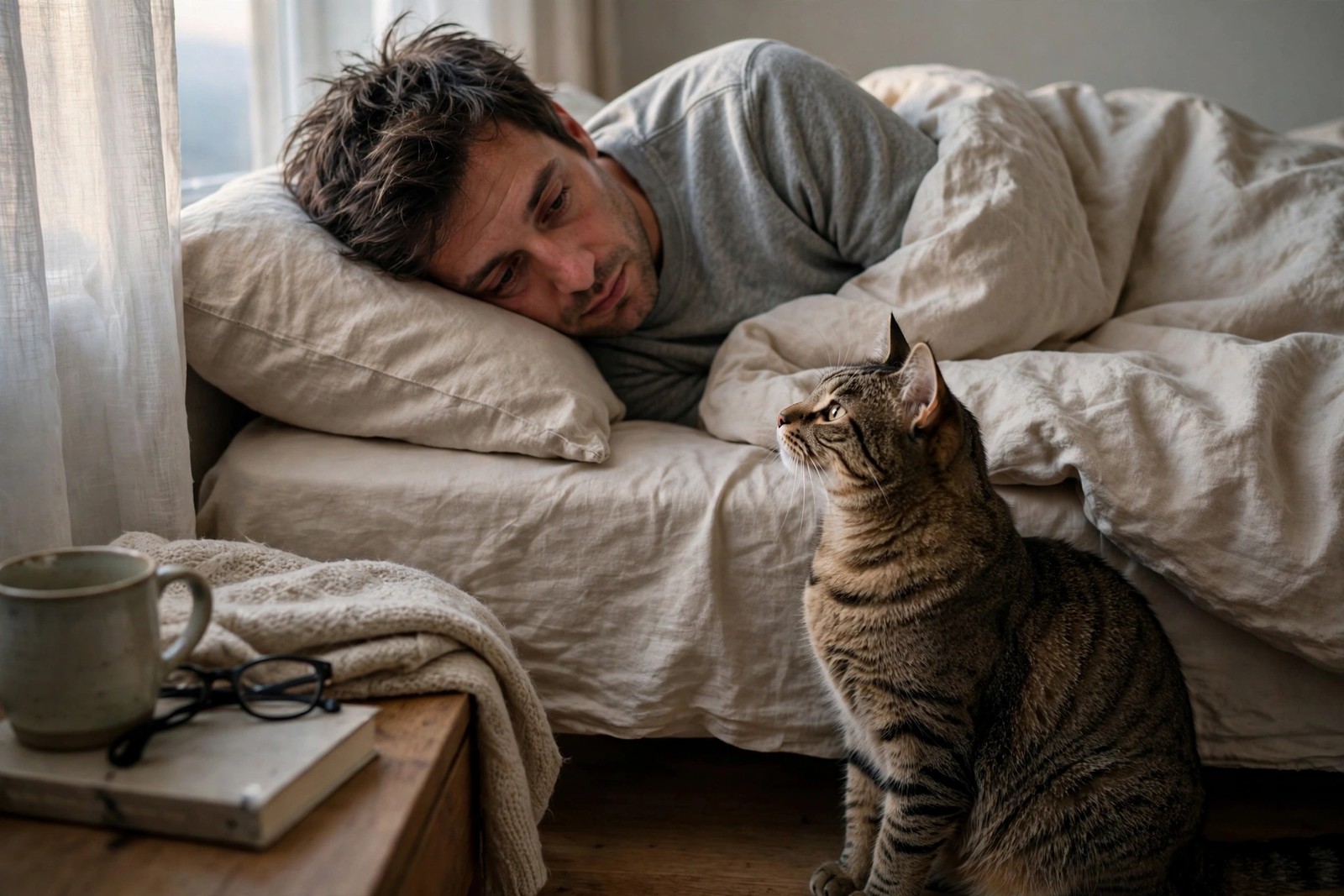
You can stop the 4 a.m. wake-ups by making that hour completely unrewarding — no food, no play, no cuddles on demand — while giving your cat a fuller evening routine instead. Cats who learn that yowling, pawing, or sitting on your chest produces breakfast will simply set their alarm earlier. When the payoff disappears and their needs are met the night before, most cats adjust within one to two weeks.
Why Cats Become Early Risers
Cats are crepuscular, meaning they are naturally most active at dawn and dusk, not truly nocturnal. Your cat's body clock is genuinely telling her that 4 a.m. is a reasonable time to hunt, eat, and socialize. That instinct gets stronger if breakfast has ever followed an early wake-up, even once or twice.
Hunger is only part of it. A cat who slept most of the afternoon and evening may simply be bored and lonely at dawn. Older cats and very young cats can also wake earlier because they need the litter box sooner, feel chilly, or have not yet learned the household rhythm. Before assuming it is pure habit, notice whether the wake-ups are new, louder than usual, or paired with restlessness — a sudden change in a senior cat deserves a veterinary check for pain, thyroid issues, or other age-related causes rather than training alone.
Reset the Evening Routine
The fix starts the night before, not at 4 a.m. Build a predictable wind-down about an hour before your bedtime:
- Play actively for 10 to 15 minutes with a wand toy, letting your cat stalk, chase, and finally catch the toy.
- Follow play immediately with her main evening meal or a measured late snack, mimicking the hunt-catch-eat pattern cats are wired for.
- Leave a puzzle feeder, a few treats hidden in a cardboard box, or a catnip mouse out overnight so dawn has something to do besides wake you.
- Keep water and a clean litter box accessible outside the bedroom if your door stays closed.
An automatic feeder set for a small early portion can also break the link between you and breakfast, though it works best alongside the evening routine rather than instead of it.
What to Do at 4 a.m.
This is the hard part: do nothing interesting. Do not feed her, talk to her at length, or launch a play session to tire her out — all of it teaches her the alarm worked. Keep interactions flat and brief if you must get up, and do not give the delayed breakfast the second she finally quiets in a way that still connects crying to food; a short calm gap helps.
Expect an extinction burst. For two or three nights she may meow louder, knock things off the dresser, or add door-scratching, because the old trick has always worked before. If everyone caves on night three, she learns persistence pays. Earplugs, a closed door, and consistency are unglamorous but effective. Never punish, spray, or shut her in a bathroom — fear makes night anxiety worse.
When to Check With Your Vet
Book a visit if early waking is brand new in an adult cat, if she is losing weight, drinking more, using the box more often, or seems unsettled rather than simply demanding. Cats hide discomfort well, and night restlessness can be an early sign that something physical has changed.
Keep Everyone on the Same Rule With KinsLe
The plan fails if one person secretly feeds her at 4 a.m. while everyone else holds the line. Agree the rule out loud with everyone who sleeps in the house — no early breakfast — so nobody undoes the training by accident on a tired morning. Write the evening routine down where the household keeps its notes, where a sleepy early riser cannot miss it. Her profile in KinsLe Family Sharing stays visible only to relatives you personally pick, even on mornings when the whole house is short on sleep.