A conure that erupts the second you walk out is not being spiteful. In the wild, conures stay in near-constant voice contact with the flock, and a sudden silence from you reads as danger. The scream is a contact call that has learned a powerful lesson: keep calling, and eventually the flock member comes back. Your job is to teach a new lesson without removing the comfort of contact altogether.
Answer the Call, Not the Scream
Keep a short, calm contact sound — a soft whistle or a phrase like "I'm here" — and use it once from the other room when your conure first calls. One answer tells your bird you are alive and nearby. What you must not do is answer scream after scream, hold a conversation through the wall, or drift back into the doorway to check. Repeated answers turn into a shouting match your conure will happily win, and appearing in person is the biggest prize of all.
If the screaming is already full volume, wait it out out of sight. The moment there is a pause — even two or three seconds — that is your window. Walk in, speak warmly, and offer attention or a small treat for the quiet. At first you are rewarding very brief pauses. Over days, wait for five seconds of quiet, then ten, then longer stretches before you return, so your bird learns that quiet, not volume, brings you back.
Build Departures in Tiny Steps
Do not start by leaving for an hour. Practice micro-departures your conure can succeed at:
- Step just out of sight for a few seconds, answer one contact call, and return during a pause.
- Add ordinary leaving cues — picking up keys, putting on shoes — without actually going, so those cues stop predicting a long absence.
- Lengthen the time out of the room gradually across sessions, over days rather than in one afternoon.
- Keep sessions short and end while things are still calm, not after a meltdown.
Expect a temporary spike in volume early on. When a behaviour that used to work stops working, birds often try it louder and longer before giving up on it. That spike is a sign the old reward is truly gone, not a sign to give in — giving in at the loudest point teaches your conure exactly how loud to be next time.
Give the Beak a Job Before You Go
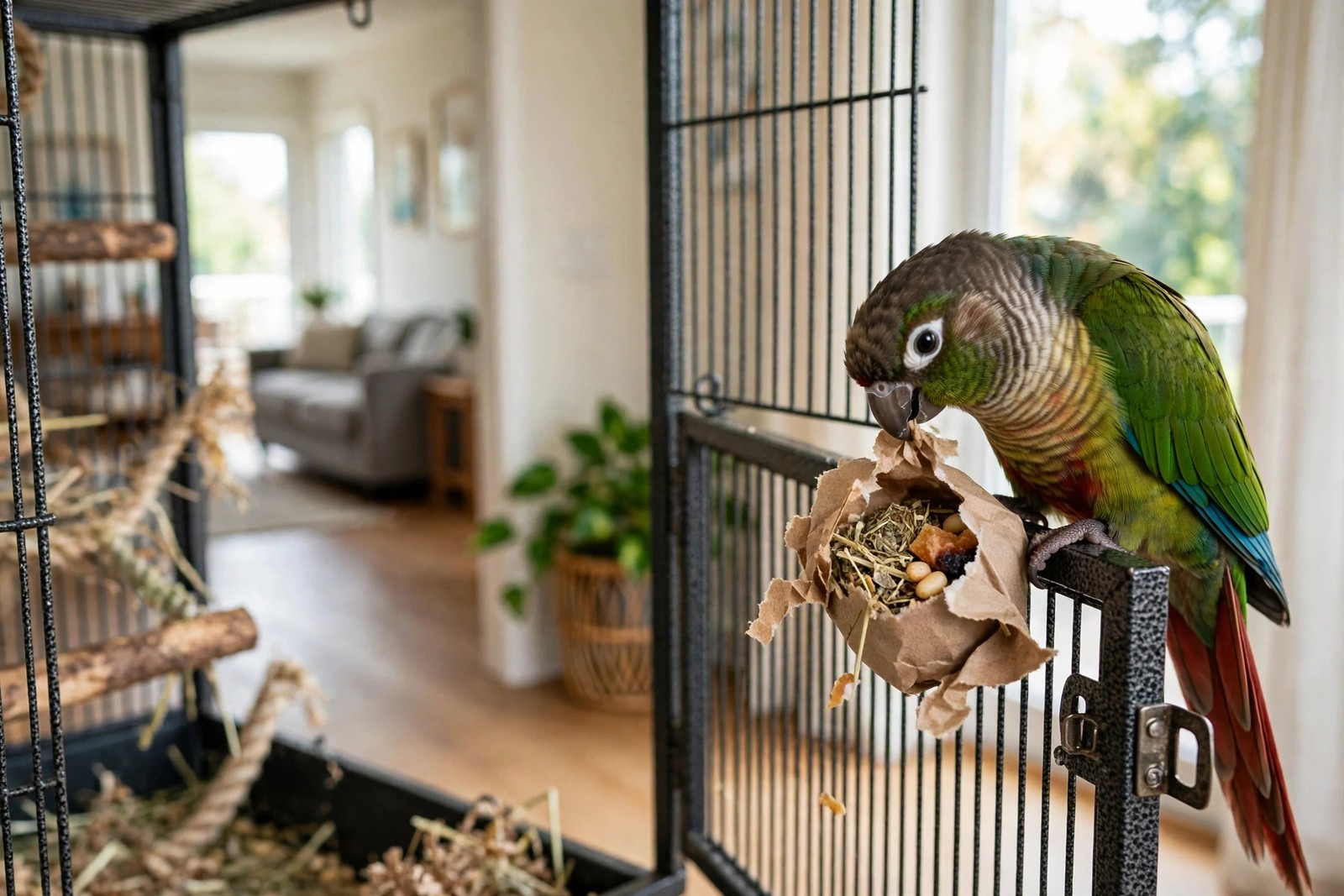
A busy conure screams less. Right before you leave the room, refresh a foraging opportunity: a favourite food wrapped in plain paper, pieces tucked into a woven toy, or a new shreddable item placed in the cage. Rotate these so they stay interesting, and time them to your departure so leaving predicts something good arriving. Covering the cage or shutting your conure away in silence usually backfires, because it removes contact without teaching anything.
When to Get Help
See an avian veterinarian promptly if screaming is new in an older bird, comes with reduced appetite, changed droppings, feather damage, or fluffed, lethargic behaviour, since pain and illness can drive sudden vocal changes. If the pattern is purely behavioural but stuck after several consistent weeks, a certified parrot behaviour consultant can watch your timing, which is often where the fix lives.
Progress holds when every person in the home follows the same rules about answering, waiting, and returning, and KinsLe Care Teams lets you assign those departure-practice turns and foraging refreshes to specific people, with each completed task timestamped so gaps in the routine show up fast.