
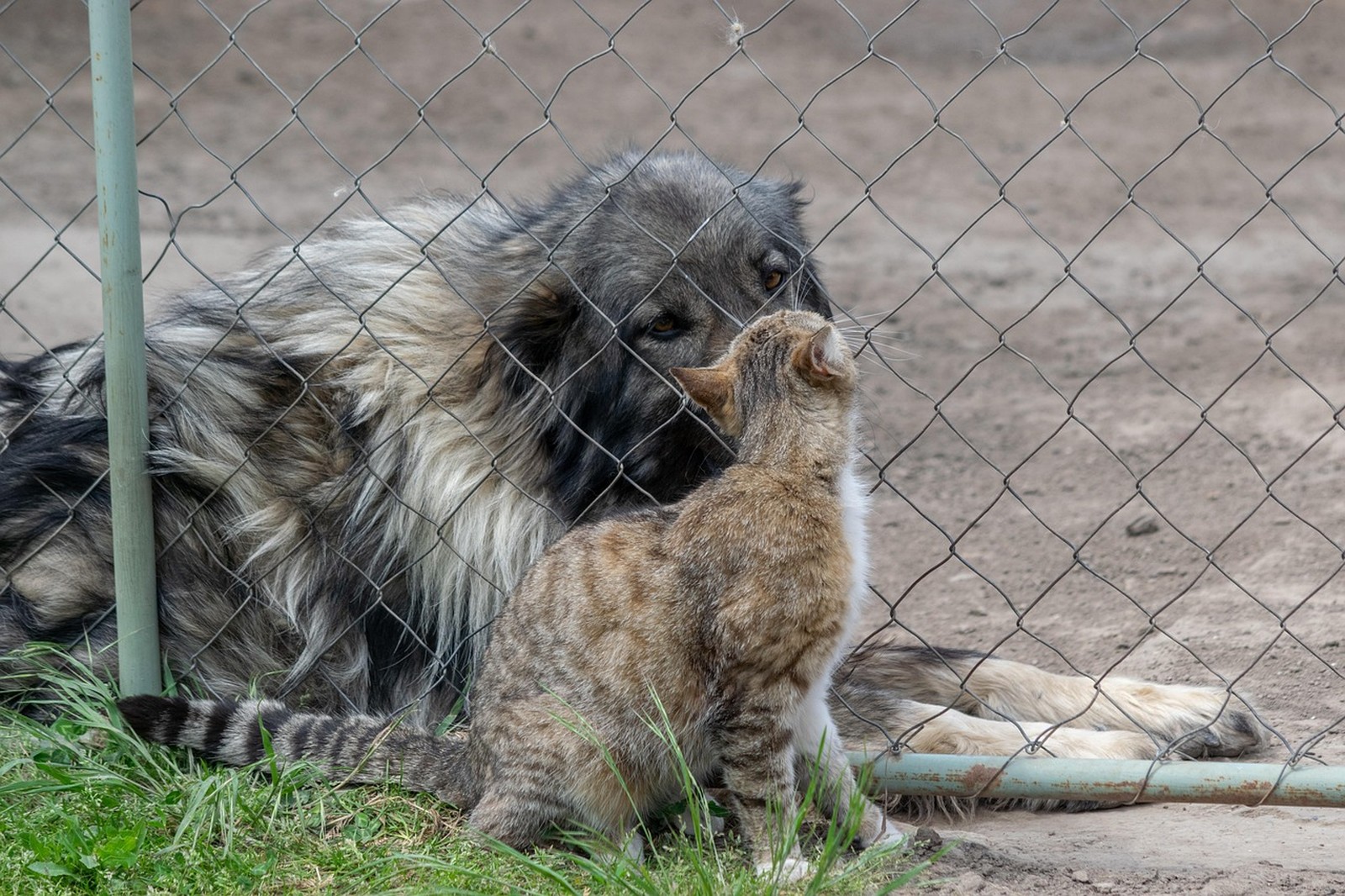
Why your dog targets everyone else's bowl
To a dog, another animal's food is not stolen property; it is simply available, and it often smells stronger than his own ration because cat food is richer in protein and fat, and a housemate's different kibble is novel. Free-feeding makes the problem permanent: bowls that sit out all day give a wandering dog hours of unsupervised chances, and a pet who eats little and often never gets a protected window to finish. There is a medical wrinkle too — cat food eaten regularly unbalances a dog's diet, a medicated or prescription diet eaten by the wrong animal wastes its purpose, and a puppy's growth food in an adult dog's stomach adds calories nobody counted.
Replace grazing with scheduled, separated meals
The single change that does most of the work is structure. Give every animal set mealtimes, serve each one in a different space, and stay nearby while they eat. Feed the cat on a counter, a cat tree platform, or in a room protected by a gate with a cat-sized opening or a door strap that admits a cat and excludes a dog. Feed dogs in different rooms or in crates if one inhales his food and goes hunting while a slower housemate is still chewing. When the slowest eater has finished or walked away, pick up every bowl, including the cat's, and wash or store leftovers out of reach. Most animals adapt to two or three defined meals within days, and the house becomes a place where unattended food simply does not exist.
Manage the determined food thief directly
Some dogs need more than closed doors for the first weeks. Keep your dog on a lead at feeding time if he makes raids while you are setting bowls down, and use baby gates rather than willpower as the barrier between him and the cat's station. Store all pet food — his included — in sealed containers inside a cupboard he cannot open, because a dog who can raid the supply bag has no reason to respect the bowl rules. Teach leave it with low-value practice items first and reward heavily for turning away, then use it as a backup at mealtimes, not as your only defence. If animals eat at different times because of work shifts, write the order and locations down so a partner or pet sitter runs the same separation you do.
Protect the animals on the receiving end
A cat who is chased from her bowl or a small dog who is shouldered aside may start eating too fast, hiding to eat, or missing meals entirely, and that stress is easy to miss while you focus on the thief. Watch that every animal is finishing a sensible amount in peace, and weigh the quieter pets now and then, because weight loss in the animal being robbed is often the first sign the system is failing. If a pet guards food aggressively against animals or people, rather than simply stealing opportunistically, ask your veterinarian or a qualified behaviourist for help, since guarding needs a different plan.
A routine everyone in the house can run
Separation only works when every feeder follows it, including the teenager home first and the sitter covering a weekend. Put each pet's food type, amount, room, and finishing time where helpers can see them, and mark meals as done so nobody serves a second dinner to a dog who claims he has not eaten — a classic multi-pet scam.
That shared routine is exactly what KinsLe Care Teams holds for a multi-pet home: a separate feeding duty for each animal, with its place and amount, ticked off with a timestamp so the cat, the slow eater, and your dog all get precisely their own meal.