Bathing more often is rarely the answer to a dog that smells again three days later — over-bathing can strip the coat and make the skin produce more oil, not less. Between-bath odour has specific sources, and each one has a specific fix that takes minutes.
Work the Coat Itself
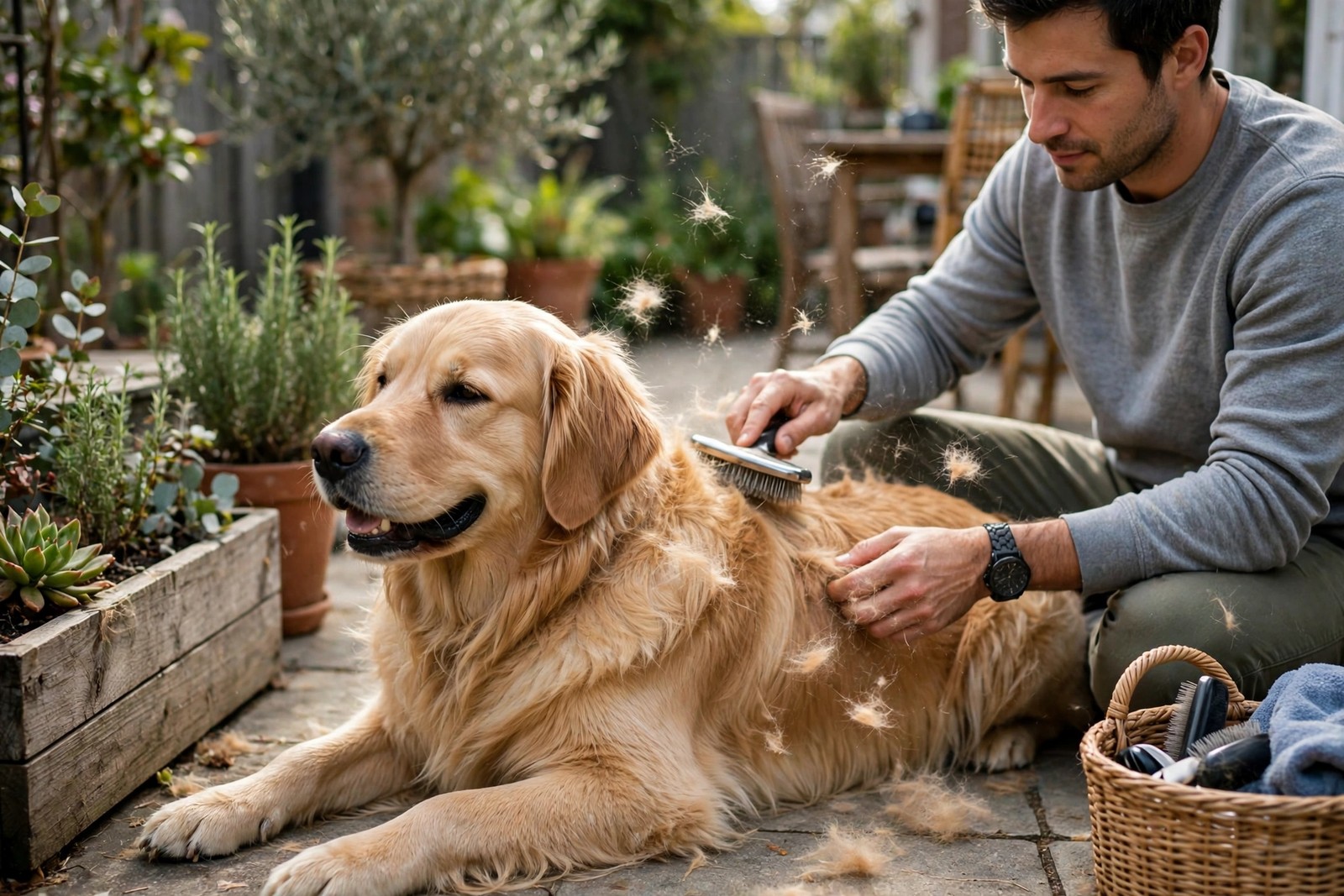
Brush two or three times a week, outdoors if you can, working through the full coat rather than skimming the top. Dead undercoat, trapped dirt, and loose dander are what hold the stale smell, and they are exactly what a brush removes; double-coated breeds and long coats need the undercoat reached, not just the guard hairs smoothed. After wet or muddy walks, wipe paws, legs, and belly down and dry the coat properly — a dog that stays damp for hours develops that familiar musty 'wet dog' smell even indoors, and damp chests and armpits are prime spots for it. A quick dry-off matters more than any spray, and scented sprays mostly layer perfume over the problem for an afternoon.
Wash the Bed, Not Just the Dog
Bedding is the most skipped cause in the whole routine. Your dog sleeps in the same bed for eight or more hours a day, shedding oils, dander, and outdoor dirt into it, then climbs back in clean from a bath and re-applies the smell overnight. Wash bedding, blankets, and removable covers weekly on a hot wash where the fabric allows, and rotate two sets so one is always clean. Do the same for soft toys that get chewed daily, and vacuum the sleeping area rather than just the bed itself.
Check the Places That Signal a Problem
Sniff with intent once a week: ears, skin folds, armpits, groin, and around the tail. Healthy ears smell fairly neutral; a sweet, yeasty, or sharp odour from an ear, especially with head-shaking, scratching, or dark wax, points to an ear problem that needs a vet, not a wipe. Wrinkled breeds need their folds cleaned and dried gently on a regular rhythm, because trapped moisture in a fold turns sour quickly. A fishy smell usually comes from the rear end rather than the coat — full or irritated anal glands are a common cause and are a vet or groomer job, not something to squeeze at home without being shown how.
Teeth count too: breath from dental disease drifts over the whole dog at close range, so lift the lip weekly and look for heavy tartar or red gums. Diet and general skin health sit underneath everything — a dog whose coat is greasy, flaky, or thinning as well as smelly has a skin issue worth a vet visit, because no grooming rota fixes an allergy or infection from the outside.
Build the fixes into one short weekly circuit — brush-outs on set days, bedding in the wash on a fixed morning, ears and folds checked on the same day each week — and divide those jobs in KinsLe's Care Teams, where each completed task is timestamped, so the routine that keeps the coat fresh is shared and visible instead of relying on one person's memory.