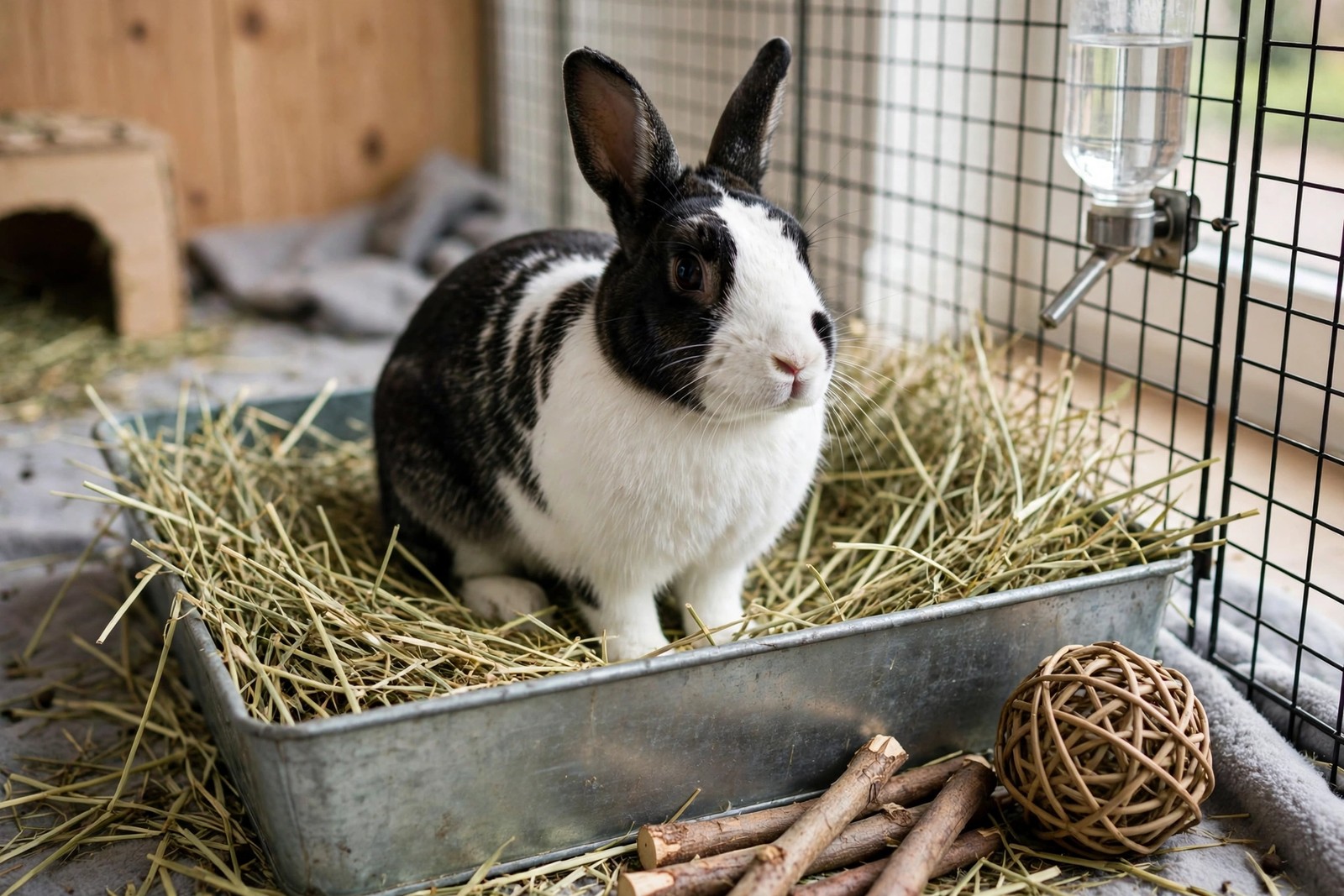
A rabbit parked in the litter box, methodically working along its plastic rim, is following a non-negotiable biological instruction: rabbit teeth grow continuously, and chewing is how they are worn down. The litter box is simply the most available gnawing surface — rabbits spend long, relaxed stretches sitting in the box, and the rim is right there at mouth height. You will not train a rabbit out of chewing. You change what is within reach so the chewing lands on things that are safe to swallow.
Why the Plastic Box Itself Is the Problem
Gnawed plastic is not just cosmetic damage. Rabbits cannot vomit, and sharp or bulky plastic fragments that are swallowed can injure the gut or contribute to a blockage, a serious and sometimes life-threatening problem in rabbits. A box that is already rough with tooth marks also gets harder to clean properly, holding bacteria in the grooves. If your current box is being eaten, retire it rather than coating it in bitter sprays, which rarely stop a determined rabbit and can put them off the litter area altogether.
Practical replacements include a metal baking or roasting tray of suitable size, a heavy ceramic or enamel tray, or a sturdy box whose rim is protected by a fitted metal or untreated wood guard that is itself safe to gnaw and easy to replace. Low-entry designs suit older or less mobile rabbits, who should not have to hop high to toilet. Whatever you choose, weigh it down or size it so it cannot tip when a rabbit leans on the edge.
Use Hay to Redirect Chewing Into Eating
The most elegant fix is to make the litter box a dining room. Heap a generous pile of hay at one end of the box — rabbits naturally graze while they toilet, and a mouth busy pulling and chewing hay is not chewing the tray. Top the hay up at least daily, because a flattened, soiled remnant stops competing with the rim. Placing the hay rack directly over or beside the litter box achieves the same thing and is why so many rabbit setups put hay and litter together on purpose.
Build a Chew Station Beside the Box
Give the chewing drive approved targets within a hop of the box: willow balls and tunnels, apple or willow sticks, seagrass mats, and plain cardboard pieces to shred. Rotate them so there is regularly something new, and notice which textures your rabbit prefers — some commit to willow, others to cardboard — then stock more of the winners. If chewing suddenly escalates alongside eating less, smaller droppings, or a hunched, quiet posture, skip the behaviour work and contact your veterinarian promptly, as dental pain and gut slowdown both change chewing patterns and need same-day attention in rabbits.
Keeping the hay heaped and the box clean is a small daily rhythm the whole household can share, and KinsLe Care Teams lets you assign morning hay top-ups and litter changes to named family members, each marked complete so the box never sits empty and tempting.