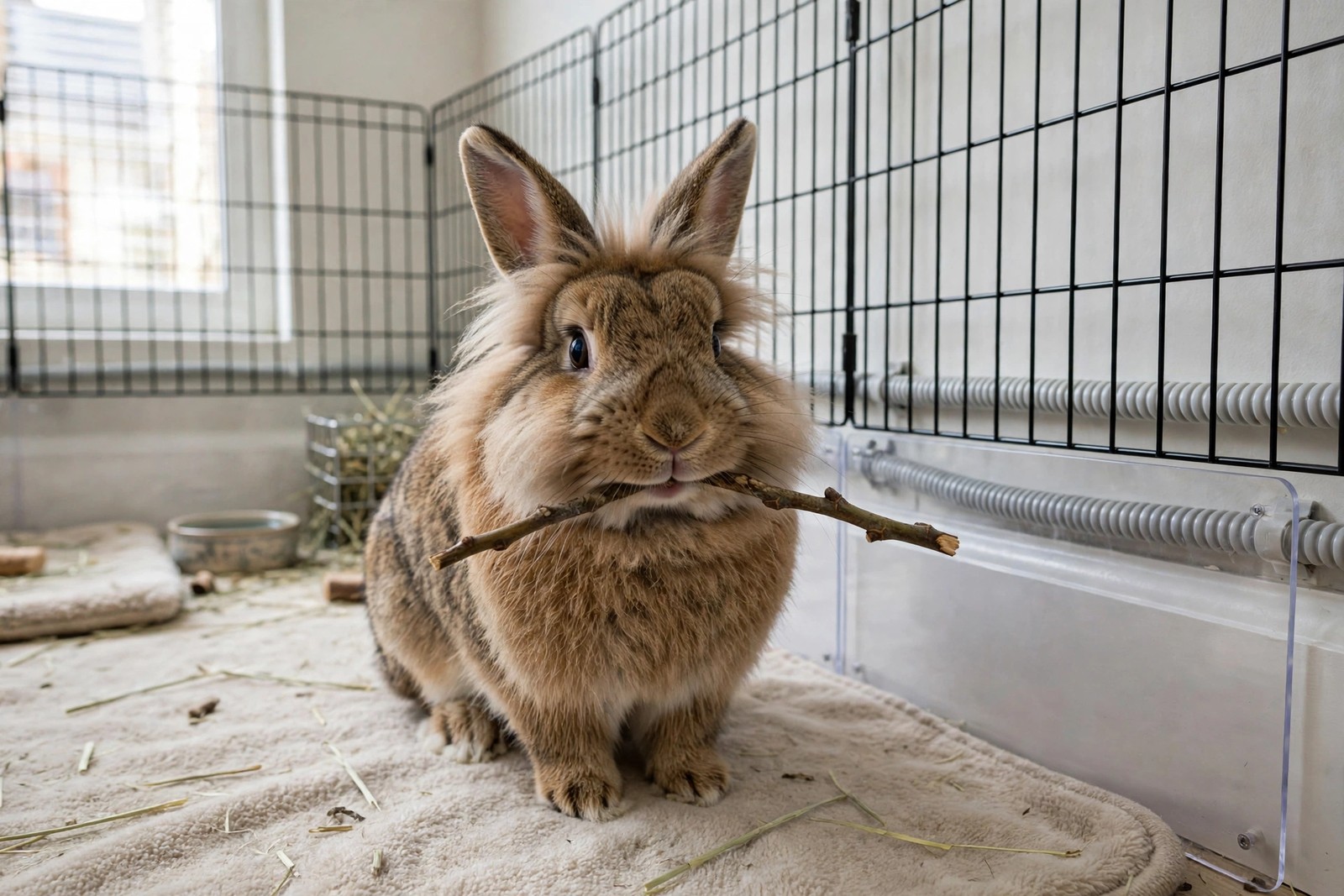
This is a safety project, not really a training one. A rabbit explores the world mouth-first, its teeth grow continuously, and a cable lying along a skirting board looks, feels, and resists exactly like the roots and woody stems rabbits are built to cut. One bite can sever a cord in a fraction of a second — before you can cross the room — and a live electrical cable can cause severe burns or electrocution. Swallowed rubber coating and plastic also carry a gut blockage risk in an animal that cannot vomit. So the rule is absolute: no rabbit free-roams in a room where it can reach an unprotected wire.
Proof the Wires Properly
Work around each room your rabbit uses, at rabbit height, on your knees if necessary:
- Thread every reachable cable — chargers, lamps, router leads, extension cords — through hard split-loom tubing or a rigid cable cover. Flexible spiral wrap alone is often chewable; choose the hard kind and inspect it.
- Wherever possible, remove the temptation entirely: lift cables off the floor, run them behind heavy furniture the rabbit cannot get behind, or unplug and remove chargers when they are not in use.
- Block the gaps behind televisions, desks, and appliances with panels, storage boxes, or exercise-pen sections so the cable zone is simply unreachable.
- Re-check weekly, because covers slip, new chargers appear, and rabbits are diligent auditors of your work.
Defend the Baseboards
Skirting boards get chewed because they are wooden, fixed, and at perfect height along every wall a rabbit patrols. Protect them with clear rigid guards, pen panels set a few centimetres off the wall, or sacrificial lengths of untreated wood fixed over the board that your rabbit is welcome to gnaw and you can cheaply replace. In rental homes, the panel-off-the-wall approach is usually the safest for the deposit as well. Move furniture to cover the most targeted stretches and put the rabbit's own furniture — a cardboard castle, a willow tunnel — against the walls it favours.
Make Legal Chewing the Easy Option
Proofing works best alongside abundance. Keep unlimited hay available, since long chewing sessions on hay satisfy much of the drive, and scatter the exercise area with apple sticks, willow balls, seagrass, and cardboard for shredding. Rotate items to hold interest, and praise the choice only in the rabbit sense — being near your rabbit, offering a herb or a head rub when it settles to an approved chew, builds the association without any scolding for the wrong one. Never punish chewing after the fact; your rabbit cannot connect the two, and the next unsupervised minute will undo you anyway.
If you ever find a freshly bitten live cable, scorch marks, drooling, pawing at the mouth, or a rabbit that stops eating afterwards, contact your veterinarian urgently — mouth burns and gut slowdown both need prompt care, and rabbits deteriorate quickly when they stop eating.
Bunny-proofing only stays proof if someone keeps inspecting it, and KinsLe Care Teams lets you assign the weekly cover-and-barrier check and hay restock to specific family members, each confirmed with a timestamp so nothing is assumed.