
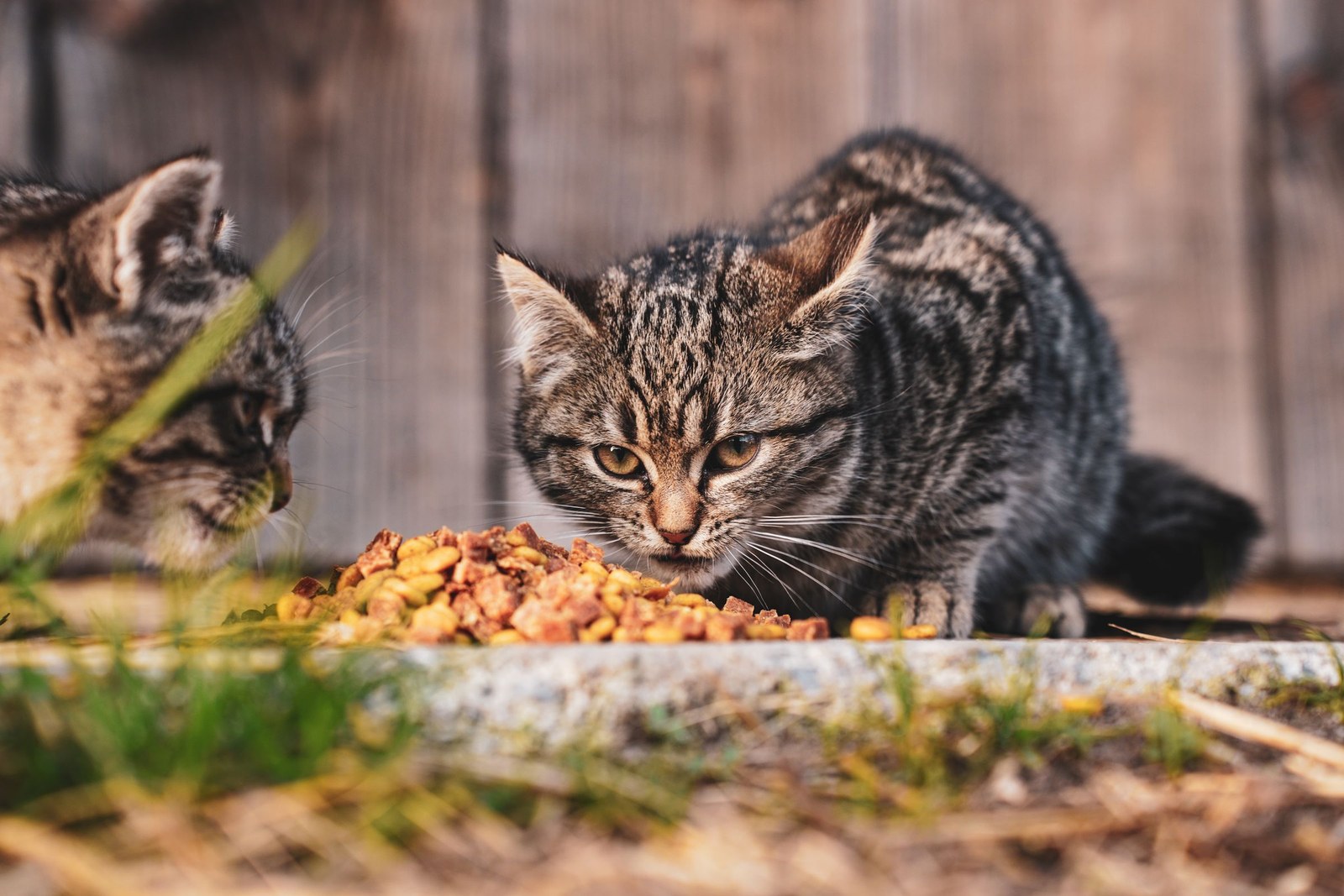
Switch your cat to a new food gradually over seven to ten days, mixing a little more of the new food and a little less of the old each day. A slow transition gives her gut time to adjust, dramatically reduces loose stools and food refusal, and lets you spot exactly which step of the mix she objects to if problems appear.
A Simple Seven-to-Ten-Day Schedule
A typical pattern looks like this:
- Days 1–2: about three-quarters old food, one-quarter new food.
- Days 3–4: half and half.
- Days 5–6: one-quarter old, three-quarters new.
- Day 7 onward: all new food.
Treat these proportions as a guide, not a contract. Cats who are picky, elderly, or known to have sensitive stomachs often do better over ten to fourteen days, lingering an extra day or two at each step. If you're changing both flavour and format — say, from dry chicken to wet fish — go even slower, because you've changed two variables at once.
If Stools Loosen or She Refuses the Mix
Loose stool at a new step usually means 'too fast,' not 'bad food.' Go back to the last proportion she handled well, hold there for a couple of days, then advance in smaller increments. A single soft stool on day one is common and not a reason to abort the whole transition.
Refusal is trickier. First, check the obvious: is the new food fresh, at a temperature she likes — many cats prefer wet food at room temperature rather than fridge-cold — and served in a clean bowl? Warming wet food briefly releases aroma and wins over many sceptics.
Never let a cat, especially an overweight one, simply not eat for a day or more while you wait her out. Cats who stop eating can become seriously unwell. If she will eat the old mix but not the new step, retreat a step and slow down. If she stops eating entirely, vomits repeatedly, or seems lethargic, contact your veterinarian. And if she flatly rejects a food after a fair, slow trial, accept the verdict — the best food is a good food she will actually eat consistently.
Wet, Dry, and Texture Personalities
Many refusals are about texture, not taste. Cats form strong early preferences: a cat raised on kibble may find pâté baffling, and a wet-food cat may ignore dry food entirely. Shredded, pâté, chunks in gravy, and kibble shapes are genuinely different experiences to a cat.
If you need a specific format — for example, adding wet food for hydration — you can transition flavour first within the familiar texture, then transition texture later as a second, separate project. One change at a time is the theme of every successful switch.
Special Cases: Prescription Diets and Kittens
If your veterinarian has prescribed a therapeutic diet for a condition like urinary or kidney disease, ask how strict and how fast the switch should be. The medical benefit may outweigh a leisurely transition, and your vet may suggest appetite strategies or a different formulation if your cat resists.
Keeping the Schedule Straight With KinsLe Messenger
In homes where more than one person feeds the cat, transitions fail when Tuesday's feeder doesn't know Monday reached the half-and-half step. KinsLe Messenger, the per-pet communications hub in KinsLe, lets you keep the transition schedule in your cat's hub so everyone feeding her follows the same mix — today's ratio, how yesterday went, and when to advance. No more guessing or double-advancing. Post each day's ratio in the KinsLe Messenger thread on KinsLe, and the next feeder can see which step her stomach handled before advancing the mix.