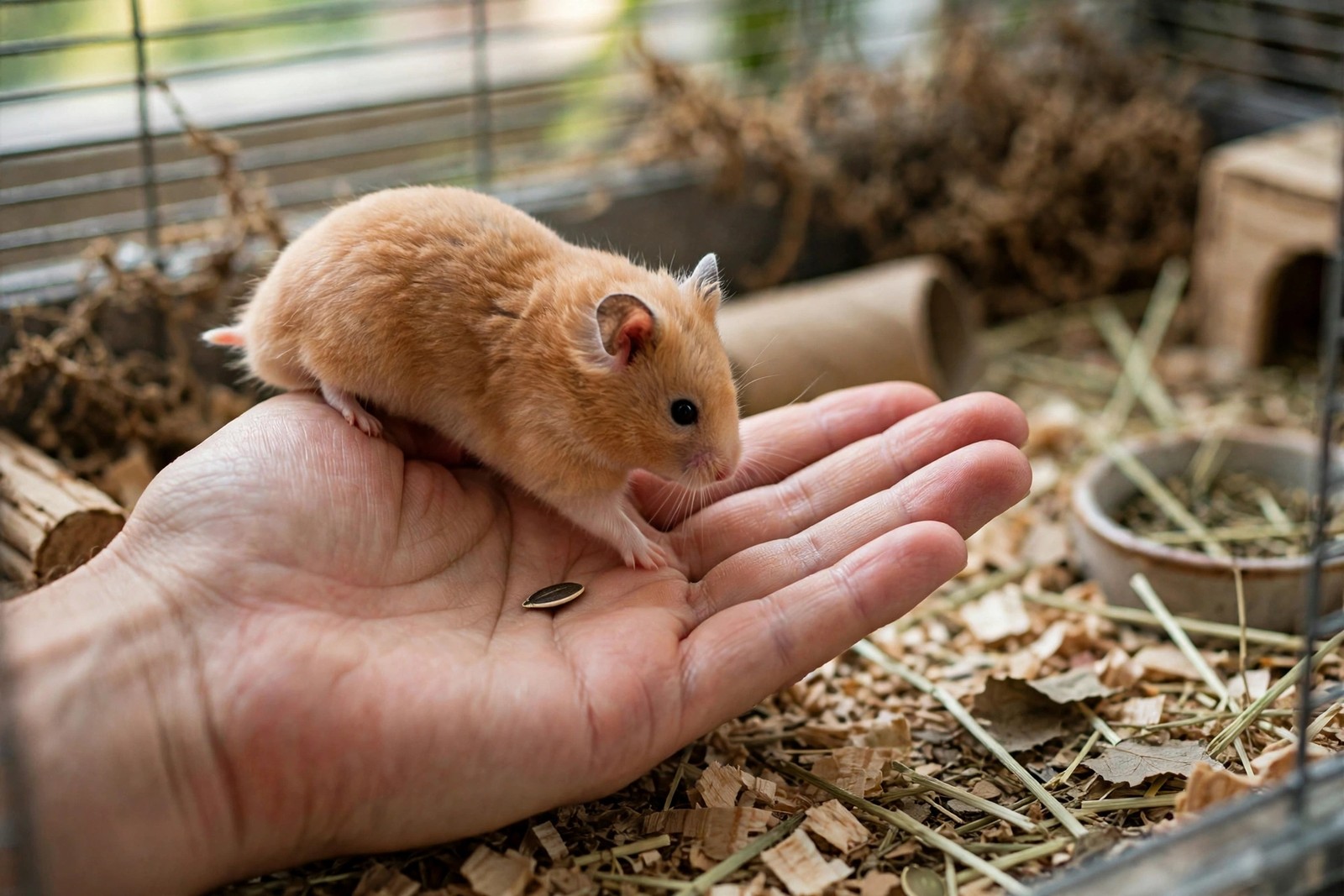
A young hamster arrives in your home as a prey animal in a strange-smelling box, and nearly every mistake in taming comes from moving faster than that fact allows. Work in stages, in the evening, and let the hamster's behaviour tell you when to advance. Most youngsters are climbing onto a steady hand within one to two weeks; dwarf hamsters, being smaller and quicker, often need the longer end of that range compared with a larger, slower Syrian.
Stage One: Leave the Hamster Alone
For the first two or three days, do nothing beyond food, water, and quiet. The hamster needs to map its cage, build a nest, and learn that the giants outside the bars do not reach in. After that settling period, spend time sitting beside the cage in the evening, talking or reading aloud in a low voice, so your scent and voice become background rather than events. Never wake a sleeping hamster for a session: hamsters are active at dusk and through the night, and a hamster startled out of deep sleep is the one most likely to bite. Wash your hands before handling to remove food smells, and keep sessions in the same calm place away from loud television and other pets.
Stage Two: Treats From Fingers, Then a Flat Hand
Offer a small, high-value treat, such as a tiny piece of plain cooked egg, a mealworm, or a small cube of carrot, first through the bars and then through the open door, holding it still and letting the hamster take it from your fingers. When it takes treats confidently, rest your hand flat and motionless on the cage floor with a treat on the palm. The hamster will likely sniff, retreat, return, and eventually put paws on your hand to reach the food. Stay still through all of it. Let this stage repeat over several evenings; a hamster that climbs onto a hand that has never grabbed it learns that hands are furniture that sometimes provides snacks.
Stage Three: Scooping and Short Holds
Lift by scooping, never by reaching down and closing fingers around the body, which mimics a predator strike and is the classic cause of taming setbacks. Slide one hand under the hamster as it sits on your palm, or let it walk into a mug or small box and lift that, then tip it gently onto your hands. Hold the hamster low over the cage or your lap, seated, so a sudden leap is a short drop onto something soft rather than a fall to the floor. Keep early holds to a minute or two, return the hamster before it gets restless, and finish with a treat so the session ends well. A dry bathtub lined with a towel, or a secure playpen, makes an excellent next classroom: sit in it with the hamster, let it climb over you freely, and practise the scoop between its explorations.
What Replaces a Vaccination Schedule
New owners sometimes ask what paperwork a hamster needs, and the honest answer is that hamsters have no routine vaccination schedule at all. The records that do help are simpler: the date the hamster came home, where it came from, the food it was already eating, and notes on its taming stage and appetite, which give any vet a useful history if the hamster is ever unwell. KinsLe's Family Sharing lets everyone in the household see those notes and the current taming stage in one shared place, so a second family member never restarts the process from grabby day one.