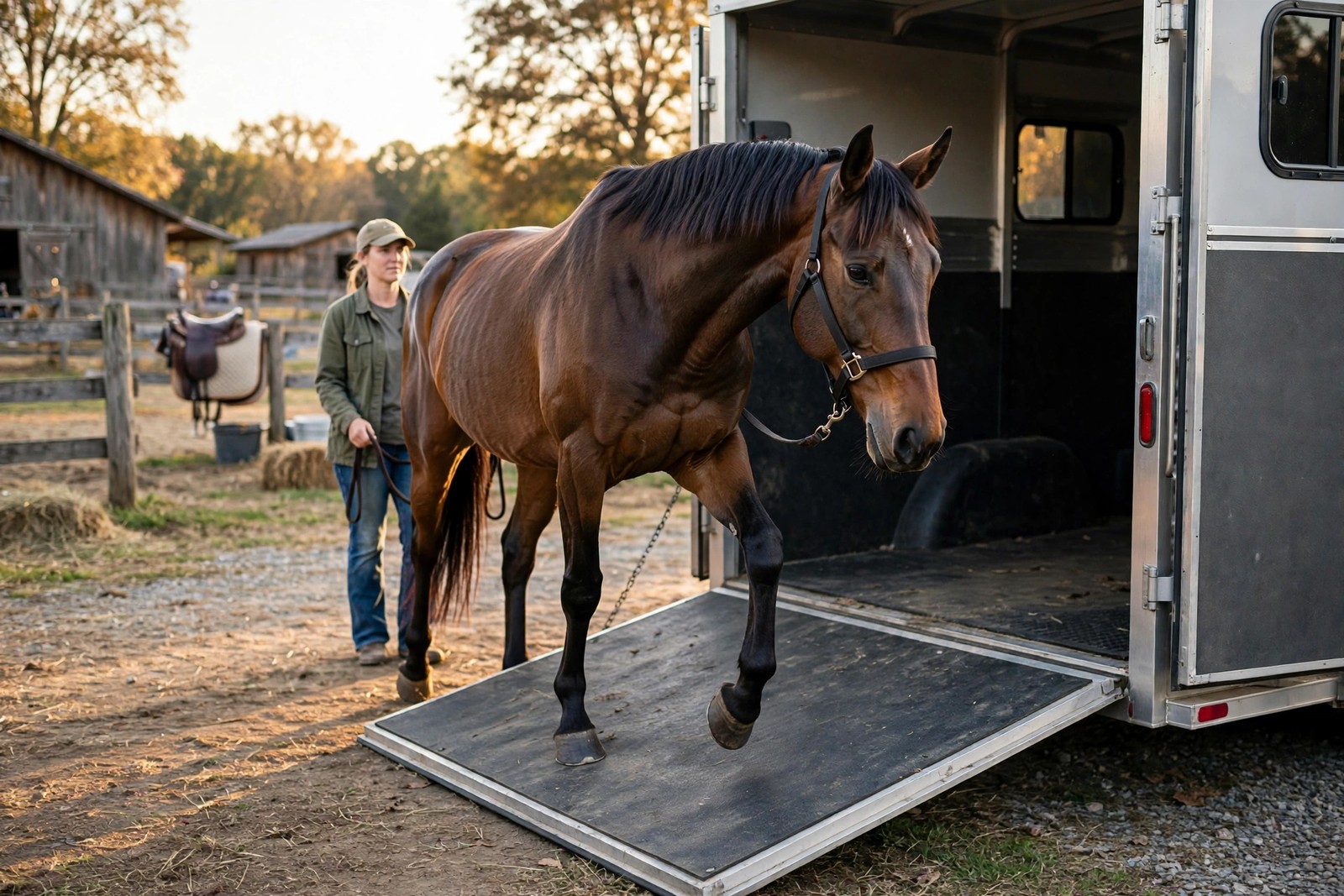
Trailer loading fails when it is first attempted on the morning it matters, with a clock running. A horse is being asked to walk into a dark, echoing metal box that moves — every instinct says no — so the answer is to make loading a rehearsed, rewarded routine long before travel, where each session ends while the horse is still calm and nothing is ever forced to a finish.
Groundwork Comes Before the Ramp
A horse who will not load usually has gaps on the ground first. He should lead forward from light pressure, stop when you stop, and back up willingly and straight, all without leaning on the rope. Practise walking over tarpaulins, between barrels and across boards or a low bridge if you have one; each strange surface crossed calmly teaches him that novel footing is safe and that pressure always releases the instant he tries. Keep sessions short — fifteen to twenty minutes is plenty — and end on an easy win. Check the trailer itself before blaming the horse: sound floorboards, working lights and brakes, non-slip ramp, no wasp nests, and a breast bar and partitions set for his size.
Approach, Retreat and Pressure-Release at the Trailer
Park the trailer somewhere familiar, ramp down, doors open for light, bedding on the floor. Lead the horse toward it with no agenda beyond the ramp: when he stops, hold gentle steady pressure, and the moment he takes one step forward, release completely, rub him and let him stand. If he needs to back away, let him — retreat is part of the method, and a horse allowed to leave and return learns faster than one cornered at the ramp. Reward steps onto the ramp, then two feet on, then standing on it, across as many sessions as it takes. Never wrap the rope around a hand, stand directly behind him, or let helpers push from behind; a frightened horse kicks and rushes backwards, and position is your safety.
Make the Trailer Itself Pay
Once he will walk in, feed him there. Serve his normal hard feed, or the best hay, inside the parked trailer for a run of days, letting him stand, eat and walk out in his own time, so the box predicts dinner rather than journeys. Practise the full sequence in pieces: partitions swung, breast bar across, ramp raised and lowered behind him, a helper moving around outside — each new element introduced while he is eating and free to be observed rather than all at once on travel day. Load a calm, experienced companion first if one is available and your trailer layout allows; many nervous horses follow a settled one in with a fraction of the worry.
Close Up and Travel Only When It Is Boring
When loading, standing and unloading are all unremarkable, do the first trip: fully closed up, engine on, a short smooth drive of a few minutes, home, unload, done. Build distance gradually and drive like the cargo is a full mug of tea — slow corners, gentle braking, no rushing. Warning signs to respect rather than push through include pawing and rocking in the box, sweating while standing still, scrambling on corners, and rushing backwards off the ramp; each says slow the programme down a step. A horse who has been genuinely frightened in a trailer, or who reacts dangerously, is a job for an experienced professional trainer in person. Steady practice needs steady organisation, and KinsLe's Care Teams helps by letting you assign each groundwork and loading session for this horse to a named handler, record the step reached, and timestamp it, so nobody restarts from the ramp battle the last session already solved.