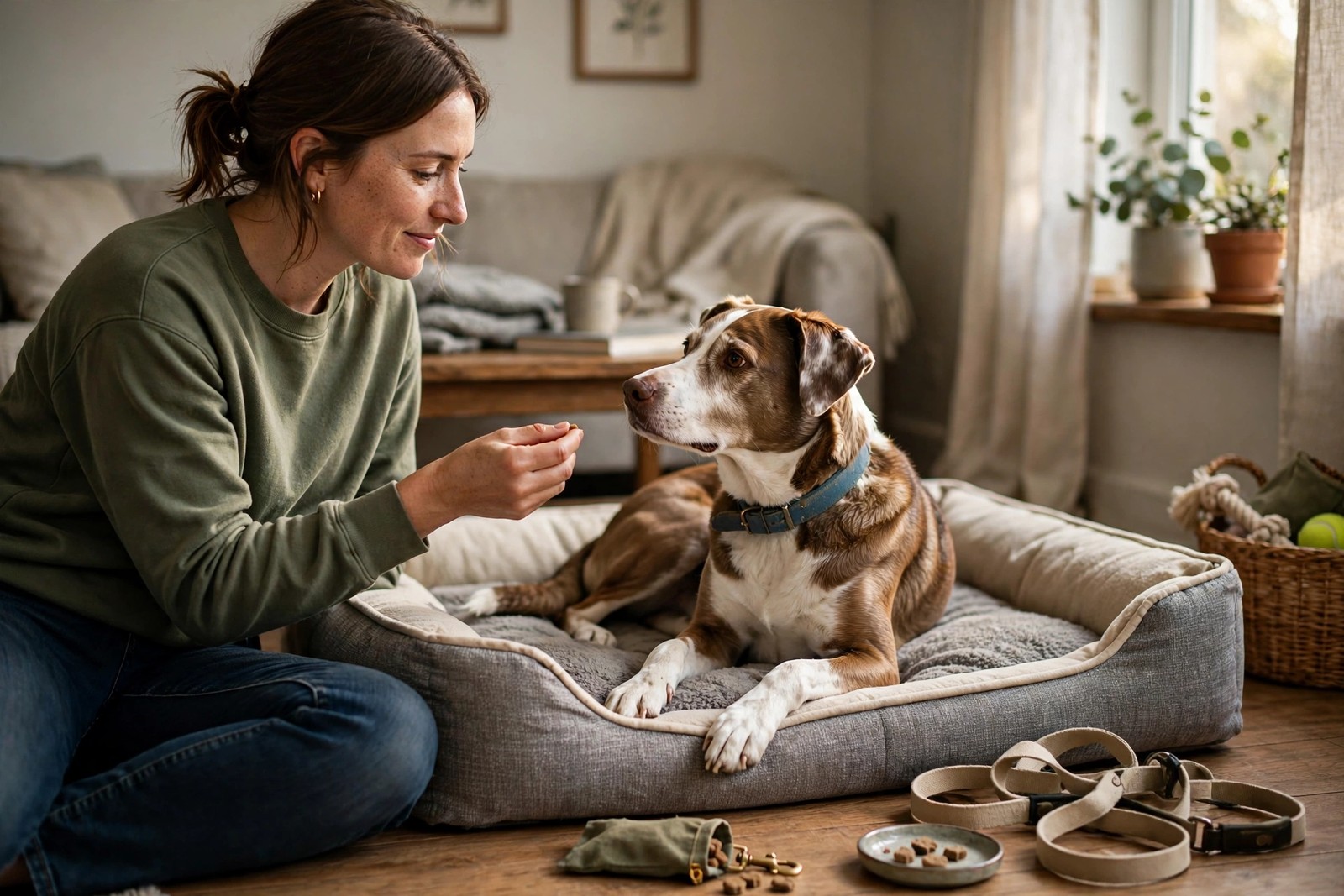
An adult rescue dog is not a blank page, and that is fine. Your dog arrives with habits, gaps, some skills nobody has discovered yet, and possibly no experience of living in a house at all. Teaching manners from scratch simply means assuming nothing, teaching each basic skill as if for the first time, and letting routine do the heavy lifting while trust builds. Adult dogs often learn the mechanics quickly; what takes longer is believing the household is predictable and safe, and manners settle fastest in dogs who believe exactly that.
Let the Dog Land Before Lessons Begin
Give the first several days to decompression: the same feeding times, the same walking route, the same resting place, and very little novelty. Keep visitors few, handling gentle and optional, and let your dog approach people rather than being gathered up for introductions. Set up a defined rest space, a bed or crate your dog can retreat to unmolested, and take your dog outside frequently, on waking, after meals, after play and at least every couple of hours at first, praising warmly on the spot when toileting happens outdoors. Accidents in the house are information about schedule, not character; clean them without comment and shorten the interval.
Have your veterinarian see your dog early: a health check, a review of any vaccination and parasite records the rescue provided, and a baseline for weight and teeth. Pain, poor eyesight or an unsettled stomach all masquerade as stubbornness in a new home, and ruling them out makes the training plan fair.
Teach the Core Skills in Short Sessions
Work in sessions of about five minutes, several times a day, indoors first. Teach the name as a paid look-at-you: say it once, reward eye contact, and never use it for scolding. Lure and reward a sit, then a down, then settling on the bed with a chew. Practise recall as a game between two people in the house long before it is needed outdoors, and start lead walking indoors and in the garden, paying for a loose lead and for checking in, before expecting anything on a street full of smells and other dogs.
Choose one cue word and one hand signal per behaviour and have every person in the house use the same ones. Pay with food your dog actually values, delivered promptly, and end each session on a success. If a skill falls apart outdoors, it has not been disobeyed; it has been under-taught for that level of distraction, so rebuild it at an easier level without frustration.
Manage the Home While Habits Form
Management carries the load while training is young. Keep food off counters, shoes and laundry behind doors, bins lidded or cupboarded, and provide legal chewing, stuffed food toys, lickable mats and cardboard to shred, so the dog's needs are met by allowed objects. Supervise free time in the house and use gates to grant rooms gradually as housetraining and chewing prove reliable. Feed at set times, walk at roughly set times, and keep greetings and departures low-key, because predictability is itself a manners teacher for a dog whose life has been unsettled.
Expect the honeymoon effect honestly: many rescue dogs are quiet for the first weeks and show their full, boisterous selves once they feel at home, so a behaviour appearing at week four is not a training failure but a dog finally relaxed enough to be himself. Plan on several months for manners to become habits, and involve a qualified trainer or behaviourist early if you meet fear, guarding of food or space, or aggression, rather than struggling alone. In KinsLe, Care Teams keeps your rescue's feeding schedule, toilet routine, cue words and weekly progress in one shared plan, so every family member teaches the same dog the same rules and marks each day's tasks done with a timestamp.