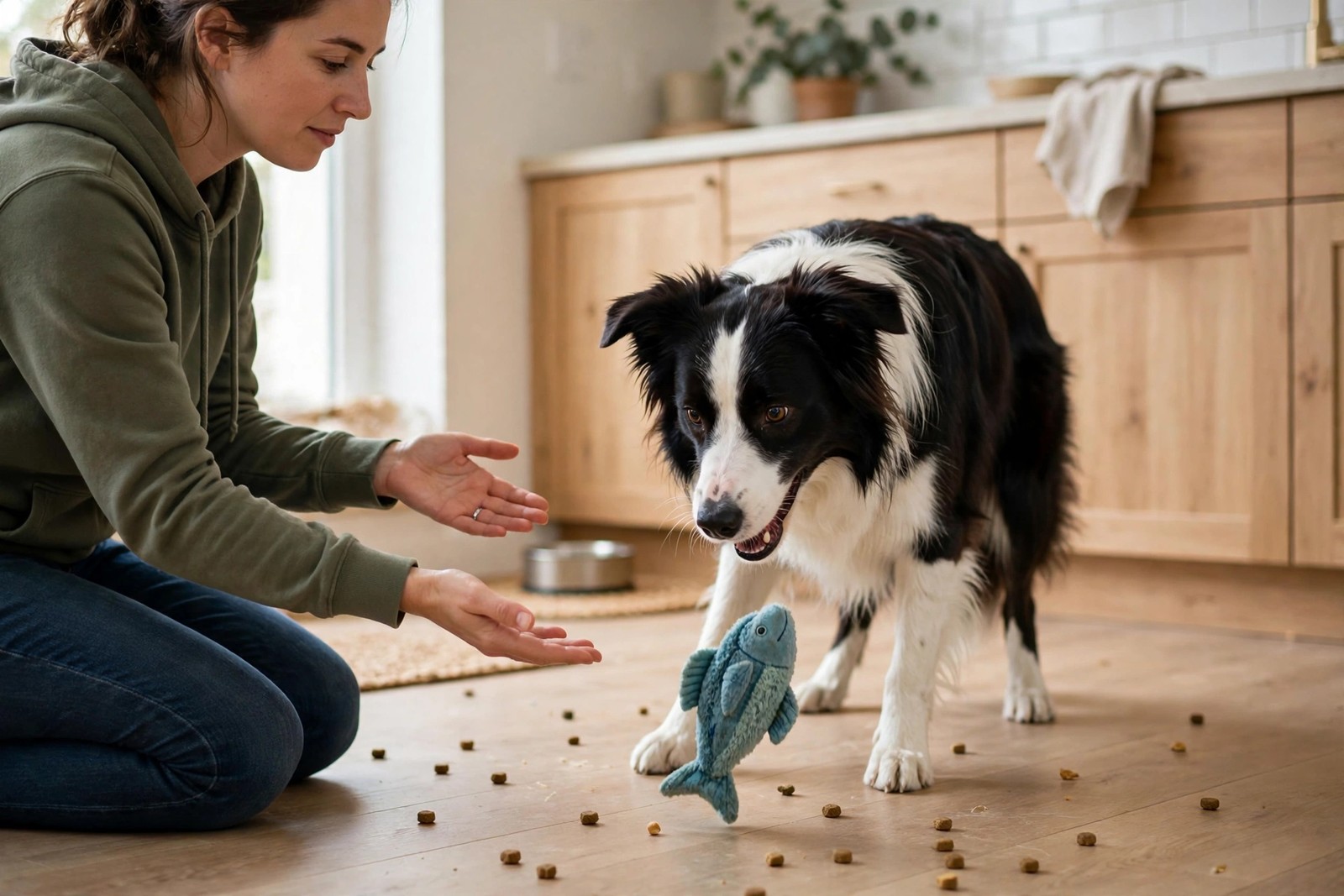
A drop-it fails with high-value items when the dog has learned that dropping means the good thing vanishes and a lesser thing appears. Reliability comes from reversing that history: in training, dropping must pay better than holding on, and the item must come back often enough that letting go feels safe. You are not bribing a dog out of theft; you are building a reflex that survives the day the item really matters.
Start Where Dropping Is Easy
Begin with an object your dog will pick up but barely cares about: a plain rope toy or a spare ball. Let your dog take it, say "drop it" once in a cheerful voice, then scatter a small fistful of excellent food on the floor so your dog has to leave the item and hunt for the food. While your dog eats, pick the item up calmly, then offer it back and play again. That return is the lesson's engine. A dog who gets the toy back learns that your cue starts a bonus round; a dog who loses the toy every time learns to turn away, run, or swallow faster. Practise in four short sessions a week of three minutes each, and finish every session with the dog winning the item one last time.
Pay With Something Better, Not Just Bigger
The trade must genuinely outrank what is in your dog's mouth, so match the payment to the item. For a dull toy, a few pieces of your dog's favourite training food may be plenty. For a beloved toy or a long chew, pay with food your dog almost never gets otherwise, delivered as a scatter rather than a single piece, because searching the floor keeps your dog occupied while you collect the item. Present the food after the cue, not before it: waving payment in advance teaches a dog to wait and inspect the offer, while paying generously after the drop teaches a fast, unthinking release. If your dog will not leave an item for your best food, that item is above today's rung, not evidence that the cue is broken.
Climb the Value Ladder One Rung at a Time
Move up only when the current rung looks boringly reliable: a dull toy, then a favourite toy, then a new toy, then a long-lasting chew, then a food-like item you have staged yourself, such as an empty wrapper that smells of dinner. Change one thing at a time, and also change rooms, gardens and quiet outdoor spots as the ladder rises, because a drop-it that works in the kitchen often evaporates on grass. Practise the cue with different family members too, since a dog who trades happily with you may guard the prize from a teenager who once chased and grabbed. If a rung fails twice, step back down, rebuild the easy win, and climb again more slowly.
Keep Real Life Honest
Never chase your dog for an item, and never prise jaws open for anything except a genuine emergency, because both moves teach guarding and gulping. In daily life, manage the gap while training climbs: pick up shoes and children's treasures, use doors and gates, and keep prized chews for supervised spots. If your dog begins guarding items with a hard stare, a frozen body or a growl, stop home training around that item and work with a qualified behaviour professional, and see your vet if the guarding appeared suddenly, since pain can sit behind a new protectiveness.
With KinsLe's Care Teams, the ladder stays orderly between people: assign each of the four weekly practice sessions to whoever is free, and the timestamped log shows which rung your dog last mastered, so nobody jumps ahead to the best chew before the toy stages are solid.