
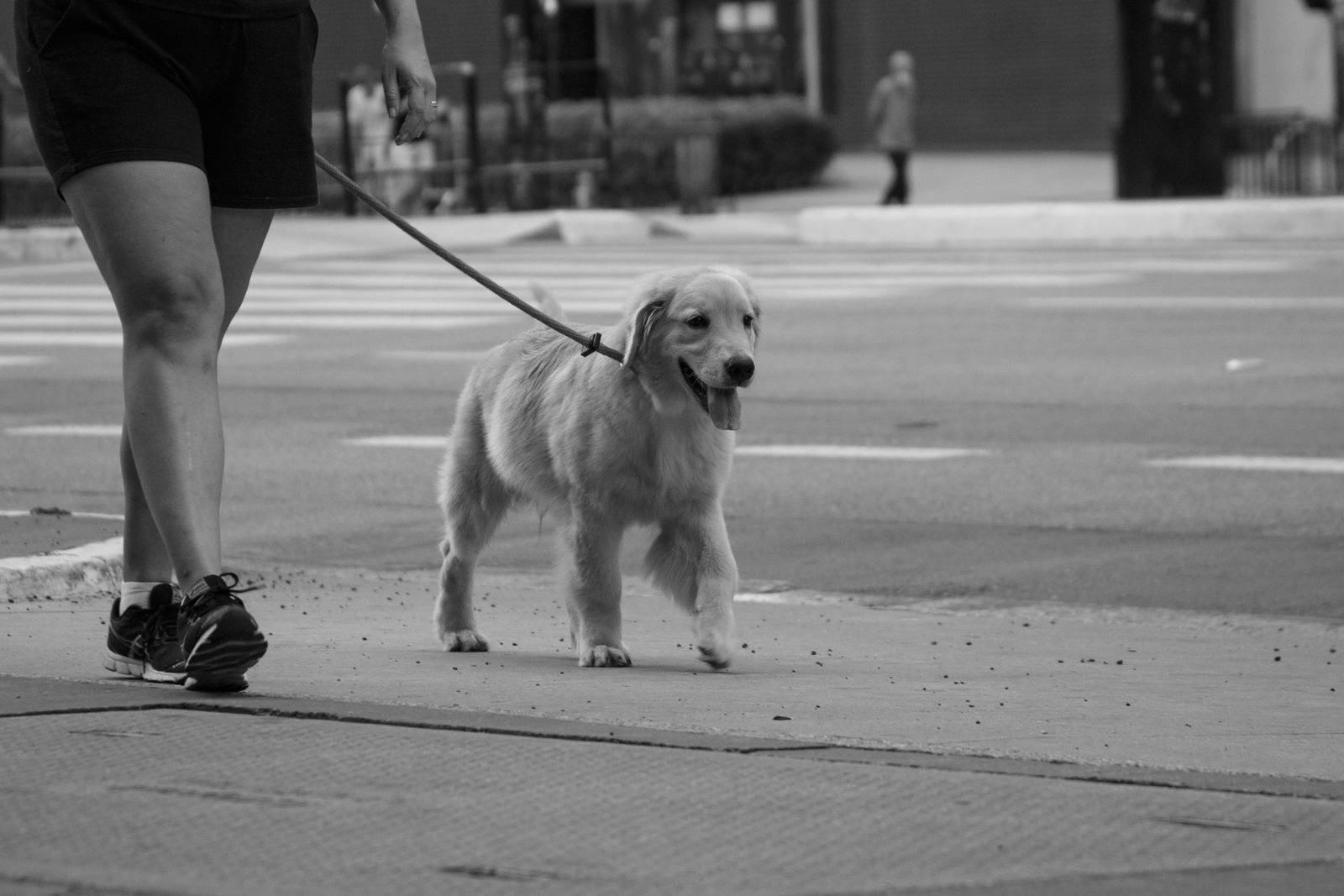
Calm greetings are taught, not hoped for: the hello itself becomes the reward for stillness. Set up training walks on purpose, ask admirers to pause while he settles, and allow contact only while every paw stays grounded. If he bounces, smile, add distance, and begin again — dogs learn quickly that stillness brings people closer while jumping pauses the fun, and that lesson, repeated kindly, sticks.
Why dogs greet like a celebration
Most jumping is friendliness with no brakes. People bend over, make eye contact, and use excited voices that reward the bounciest behavior. Springer spaniels and labradors are famously physical greeters, and adolescents of any breed are wiggly. The goal is not a dog who dislikes people — it is a dog who can be delighted, keep his feet down, sit for a pat, and move on without knocking over a child or older neighbor.
The four-paws rule, step by step
Set up greetings rather than hoping they go well. A helper — a friend, neighbor, or fellow dog walker — makes this far easier than relying on strangers.
- Stop at a distance where your dog notices the person but can still sit and take treats.
- Ask for a sit, feed a treat or two, and let your helper approach slowly while your dog stays settled.
- The moment paws leave the ground, your helper stops or steps back and you gently increase distance. No scolding needed; the consequence is built in.
- When four paws are down again, the approach resumes. The greeting itself — a brief pat and friendly voice — becomes the final reward.
- Keep it short. A three-second hello and a cheerful "let's go" prevents the excitement from rebuilding into jumping.
Practice on quiet streets first, then busier sidewalks, pet-store entrances, and park paths. Bring treats worth working for, and keep training walks short enough that you finish while he is succeeding.
Managing real-world encounters
Not every admirer will follow instructions, so step off the path, ask for a sit, and scatter treats in the grass while people pass. It is fine to say, "We're training — please ignore him today, thank you!" Avoid letting him pull toward people on a tight leash; tension rehearses the launch you are retiring. Create space early, before he is over threshold.
Safety and courtesy for everyone
A large, exuberant dog can knock down a toddler or someone unsteady, so teach children in your family to wait for the sit, too, and never let a child hug an unfamiliar dog during a greeting. If your dog is worried rather than bouncy — ducking, barking, or lunging — get help from a qualified trainer instead of practicing closer greetings.
Practicing With Helpers You Know
Good practice partners make progress faster, so recruit a neighbour, a friend, or a fellow walker you already know to stage patient greetings: they approach only while four paws stay down, step back the moment he bounces, and keep each hello to a few seconds. Rotate helpers and locations once the quiet-street version is reliable, so he learns the rule is about his own feet, not about one familiar person.
Separate from greeting practice, the wider safety layer in KinsLe sits behind the alert system for lost pets: its Circle of Love spans Pet Lovers, families and businesses at no cost.