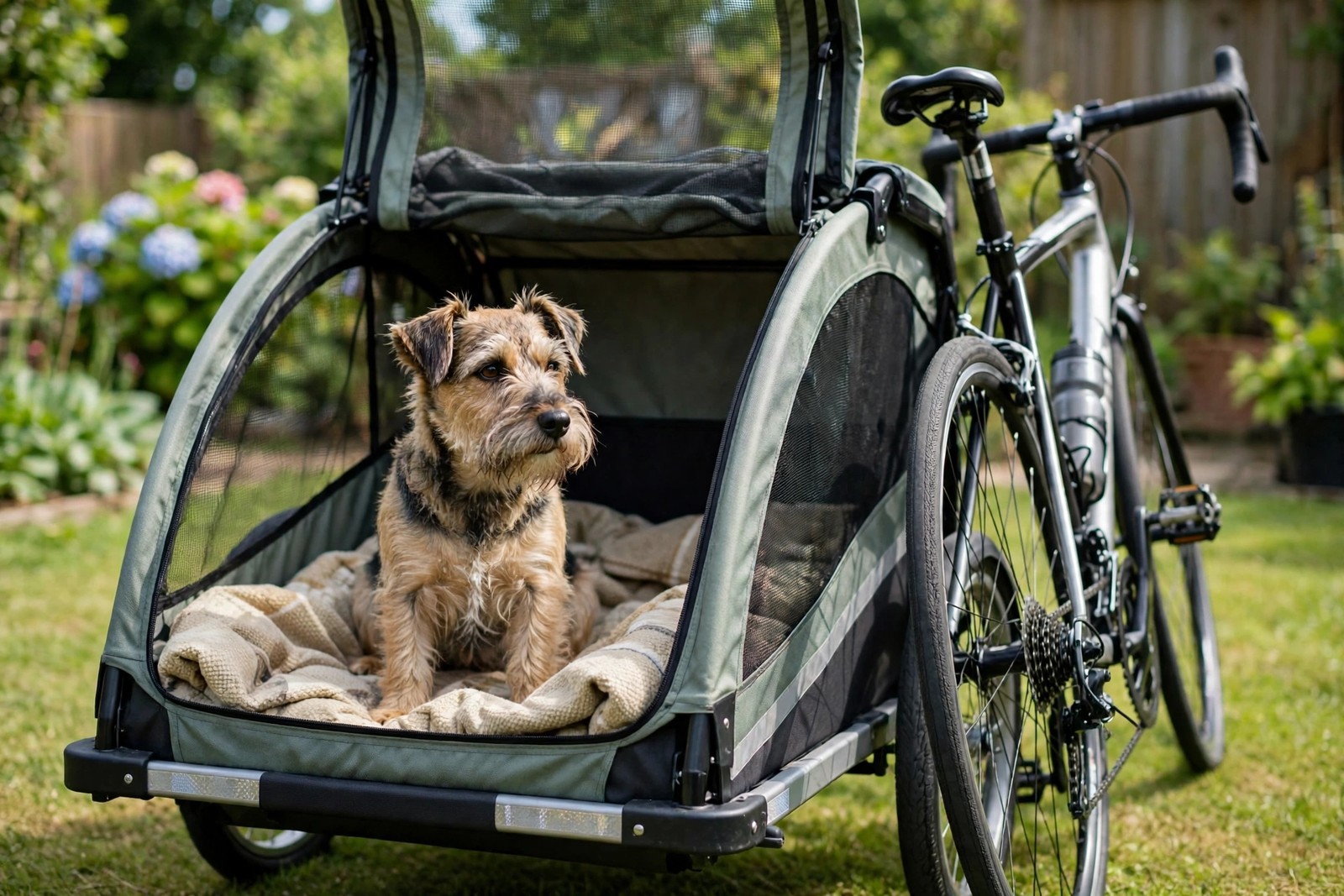
A bike trailer combines everything a dog might reasonably object to: a strange box, a moving floor, road noise close behind a bicycle, and no way to leave. Dogs who ride calmly were almost never simply put in and towed; they were introduced to the trailer as a place first and as transport second, in stages small enough that no stage felt like a trap. Work through the stages at your dog's pace and the trailer becomes the dog's own travelling den.
Let the Trailer Be Furniture First
Park the trailer somewhere your dog already relaxes, such as the garden or the garage, with the wheels chocked so it cannot roll, the doors open, and familiar bedding inside. Scatter treats in and around it and let your dog investigate without any invitation to climb in; curiosity you allow works better than enthusiasm you manufacture. Once your dog steps in freely, feed a meal inside, then a chew, with the doors still open and the trailer still motionless. Practise in five-minute sessions daily at first, ending before your dog wants out, so every session closes with the trailer still feeling like a good idea. Check the fit honestly at this stage: your dog should be able to sit, turn and lie down fully, and the trailer's stated weight limit must cover your dog with room to spare.
Add Movement in Metres, Not Miles
Movement arrives in slices. First, rock the trailer gently while your dog eats inside and step back. Next, roll it a few metres across the garden with your dog aboard, stop, feed, and let them hop out. Then tow it by hand around the garden, then attach it to the bike and walk the bike, so the sounds and sight of the bicycle join the picture before any riding happens. Your first real ride should be a single quiet street or a loop of a park path, ridden slowly, ending while your dog is still relaxed. A dog who panics at any slice goes back one slice for the next session, not forward out of hope, because one frightening ride can cost weeks of careful staging.
Set Up Riding Comfort and Safety
Clip your dog's harness, never a collar, to the trailer's anchor point, with enough slack to shift position and lie down but not enough to climb out or tangle. Keep bedding dry and grippy so your dog is not sliding on corners, use the trailer's cover and ventilation as the weather demands, and never leave your dog shut in a parked trailer in the sun, where heat builds fast even on mild days. Plan rides around your dog: a toilet break before loading, water and a rest stop on longer outings, and a check-in look back every few minutes on the first rides. Dogs who will ride for family trips also need practice with the family picture itself: children nearby, helmets appearing, bikes being wheeled, so ride day contains no brand-new sights.
Build Trip Length Like Training, Not Transport
Grow rides gradually across outings: a park loop, then a ride to a cafe, then a half-day trip with real breaks, watching your dog's body for the difference between interested and overwhelmed. A relaxed rider changes position, sighs, watches the world or sleeps; a stressed one pants without heat, drools, whines or scrabbles at the mesh, and those signs mean the next ride gets shorter and quieter, not longer. Some dogs, especially seniors and dogs with joint pain, should have a vet check before trailer riding, since the sitting posture and road vibration are a real physical load even though the dog is not running.
In KinsLe, Care Teams turns the staging into a family rota: assign the daily five-minute sessions to whoever is free, record which stage your dog passed in the duty notes, and each completed session is timestamped, so the first family trip only happens once every stage has genuinely been logged.