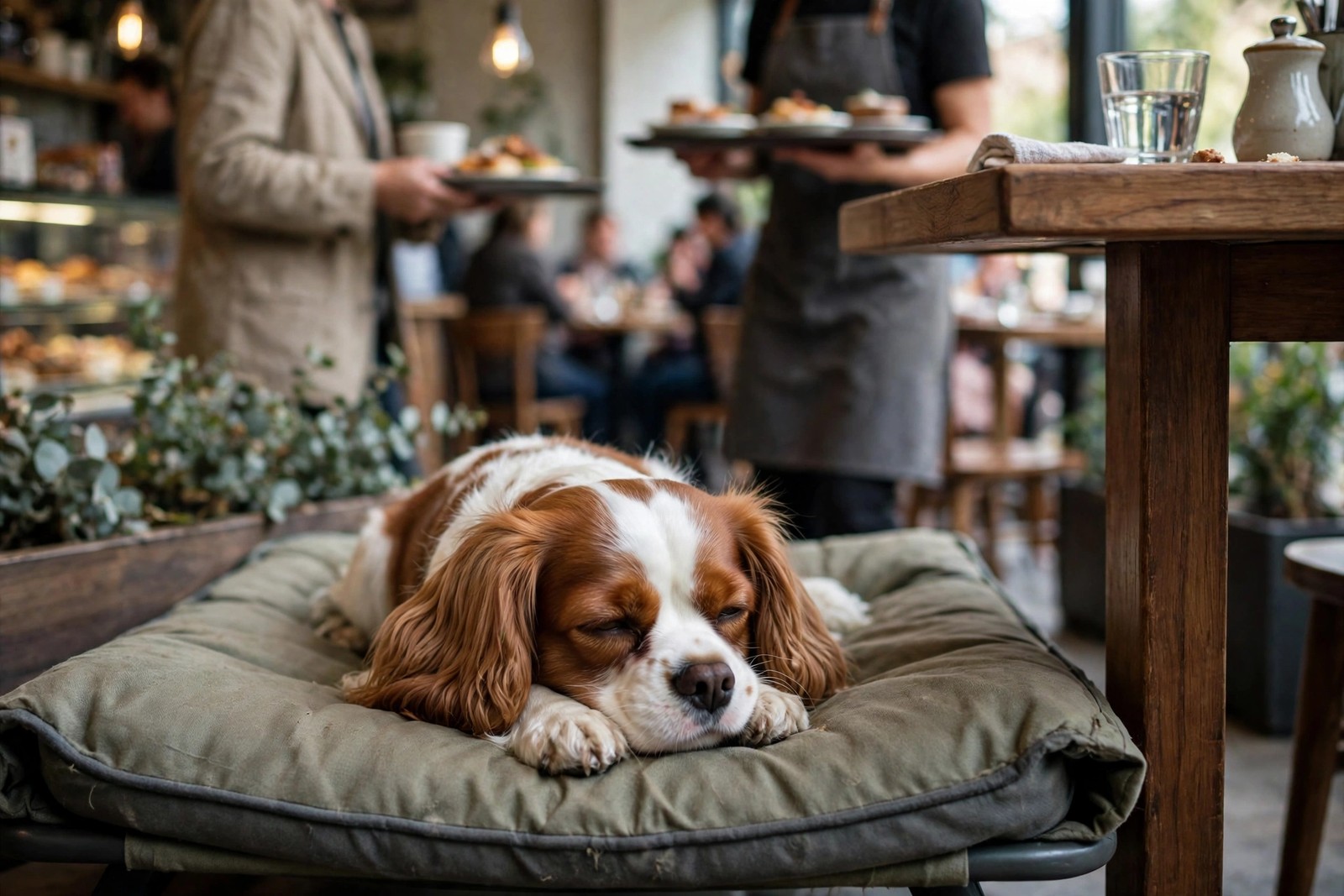
An hour is a long time to ask a dog to do nothing in a room full of moving food, strangers and dropped crumbs. Dogs who manage it were not born patient; their owners built the duration somewhere easier first, then stretched it in a real cafe in small, honest jumps. The bed is the anchor for the whole skill: one portable mat that means the same thing at home, in a garden and under a cafe table.
Build the Full Hour at Home First
Teach the settle where failure costs nothing. Put the bed beside your own table at mealtimes and pay your dog in small drops of food for staying on it while people walk past, plates are carried and conversation happens. Start with whatever duration your dog can do without creeping off, often just a few minutes, and release your dog before that limit rather than after it is broken. Add a long chew once the basic picture holds, and practise the cafe details at home too: chairs scraping, bags being set down, someone standing up and leaving the room. When your dog can lie through a relaxed family meal at home, including the clearing-up, the cafe version is a change of scenery rather than a new behaviour.
Choose the Right Cafe and the Right Corner
Your first venues decide how fast this goes. Pick a dog-friendly cafe with space between tables, go at a quiet off-peak time, and take a corner or wall seat where your dog's bed sits out of the walkway, away from the counter queue and the door's draught of arrivals. Lay the bed down before your dog is invited onto it, keep the lead slack and looped where it cannot tangle legs or chair feet, and order for yourself promptly so waiting does not eat your dog's budget of calm. Toilet your dog before you go in, and bring water and a familiar chew. A dog set up in the busiest aisle at lunchtime is being examined, not trained.
Stretch Visits in Small Jumps
Start cafe visits at fifteen minutes, and add about five minutes per visit as your dog stays relaxed, until a full hour looks ordinary. Pay calm in a slow drip rather than a feast at the start: a small piece of food for a sigh, a head resting on paws, a glance at a passing waiter followed by a glance back at you. If your dog fidgets, whines or fixates on a neighbouring table, that visit was your last comfortable length, not this one; finish your drink, leave kindly, and repeat the previous duration next time. Leaving early on a hard day protects the habit, while enduring a meltdown teaches your dog that cafes are where arousal lives. Dogs usually need a run of successful short visits before the long one stops being an event.
Feed Calm Without Feeding From the Table
Keep the food story clean: your dog is paid from your treat pouch for settling, never from your plate for watching you eat, because plate-fed dogs learn to monitor every forkful for a full hour. Dropped food on the floor is part of the lesson, so rehearse a leave-it at home with boring crumbs before a cafe floor tests it for real. Between pays, let your dog simply watch the room; quiet observation is the behaviour you want, not a dog frozen in a down-stay staring at you for the next instalment. When staff or other customers want to say hello, a brief stroke for a settled dog is fine, but decline gracefully if your dog is near their limit, because your job is the settle, not the socialising.
In KinsLe, Care Teams makes the duration build a shared record instead of a guess: log each cafe visit as a duty with the minutes your dog managed written in the note, timestamped on completion, so you and anyone who takes your dog out can see the fifteen minutes becoming an hour, one honest visit at a time.