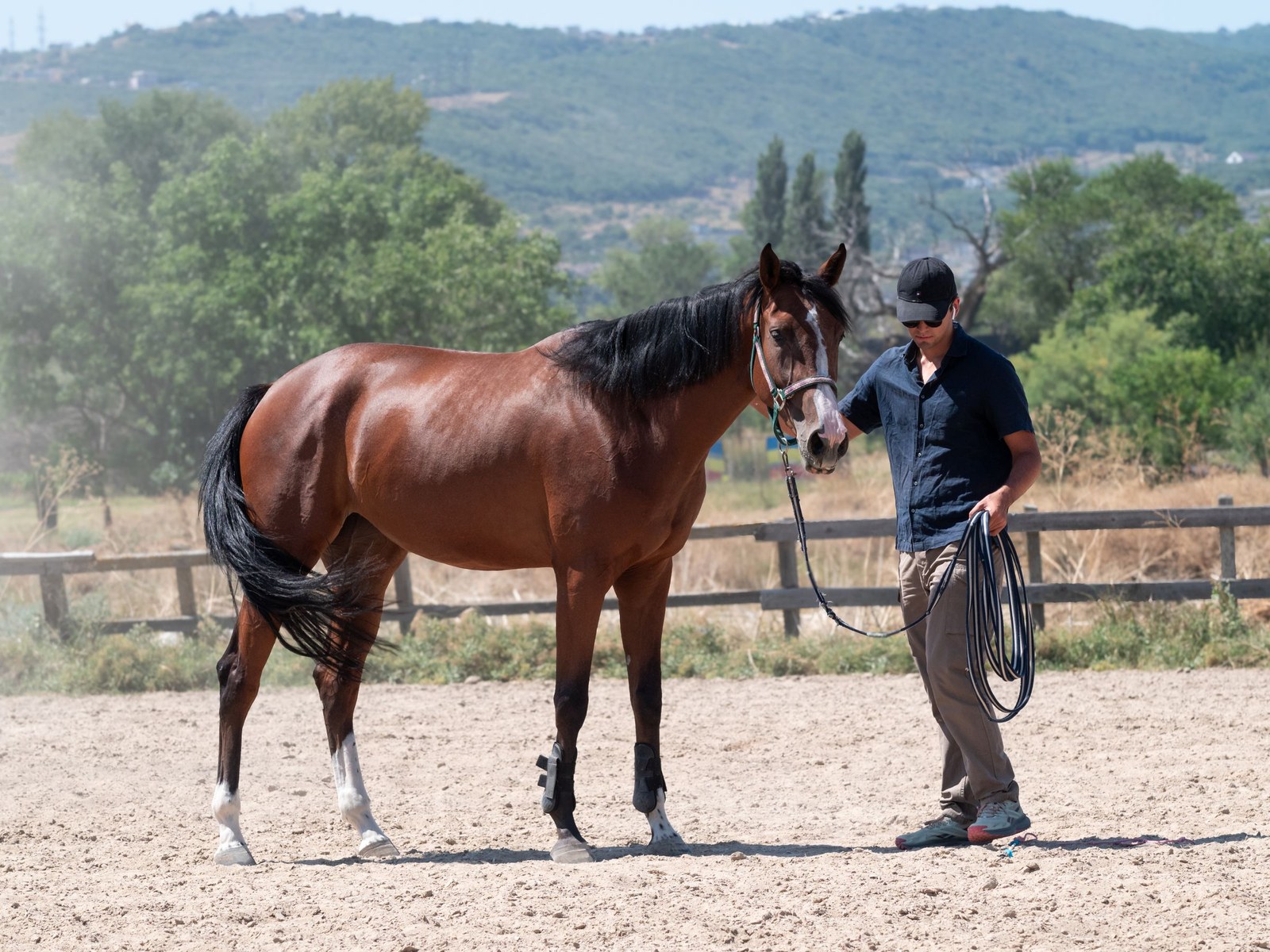
Good ground manners are taught through consistency: ask for the same behavior, the same way, every time, reward calm responses promptly, and calmly reset when your horse crowds, rushes, or pulls. Short, regular sessions on leading, standing, backing, and yielding to pressure build a horse who is polite and safe to handle — no force required, and no battles either.
The Core Skills Every Horse Should Have
Focus first on the handful of behaviors you'll use every single day:
- Leading politely at your shoulder, matching your pace, stopping when you stop
- Standing still for grooming, tacking up, and the farrier
- Backing up from light pressure when asked
- Yielding the hindquarters and forequarters — moving over when you ask, instead of into you
- Tying quietly without pawing, pulling back, or fidgeting through the whole session
A horse who does these reliably is safer for everyone: you, your farrier, your vet, and any friend who leads him in from the field.
How a Good Session Runs
Keep sessions short — ten or fifteen focused minutes often accomplishes more than an hour of drilling. Work in a familiar, low-distraction area first, with a properly fitted halter and a lead rope you can handle comfortably.
The rhythm is simple: apply light pressure, and the instant your horse responds correctly, release and reward — a scratch at the withers, a kind word, a moment of rest. Timing is everything. A release that comes two seconds late teaches nothing; a release right on the correct try tells the horse exactly what earned it.
When your horse gets it wrong, don't escalate. Calmly reset to where you started and ask again, a little more simply if needed. Always try to end on a genuine success, even a small one, so the session closes on a good note and the lesson settles.
Common Mistakes That Undo Progress
The fastest way to stall ground manners is inconsistency between handlers. If you let your horse drag you to the grass but the barn manager insists he walk politely, the horse learns the rule depends on the human — and tests everyone.
Other frequent pitfalls:
- Letting a horse crowd into your space because he seems affectionate
- Feeding treats by hand constantly, which can teach mugging and nipping
- Skipping the basics with a young or new horse because he's "usually fine"
- Punishing after the fact, when the horse can't connect it to the behavior
Young horses deserve extra credit for short attention spans: ask less, reward more, and quit while you're ahead.
Keeping Everyone Handling Him the Same Way
Ground manners stick when every person who handles your horse uses the same cues, the same boundaries, and the same rewards. That coordination is where KinsLe's Care Teams come in. Care Teams let you assign care duties — feeding, walks, medications, and grooming — with timestamped completions, and they give your circle a shared place for handling notes, so everyone leads, ties, and works around your horse the same consistent way.
Write the notes the way you'd want to receive them: "Backs from a light touch on the chest," "Stands best tied on the left side," "No hand-feeding — treats go in the bucket." Specific beats general, every time.
A mannerly horse is a pleasure to be around and a safer partner for everything else you do together. Set your horse up with KinsLe Care Teams, and find more horse training answers waiting on KinsLe.