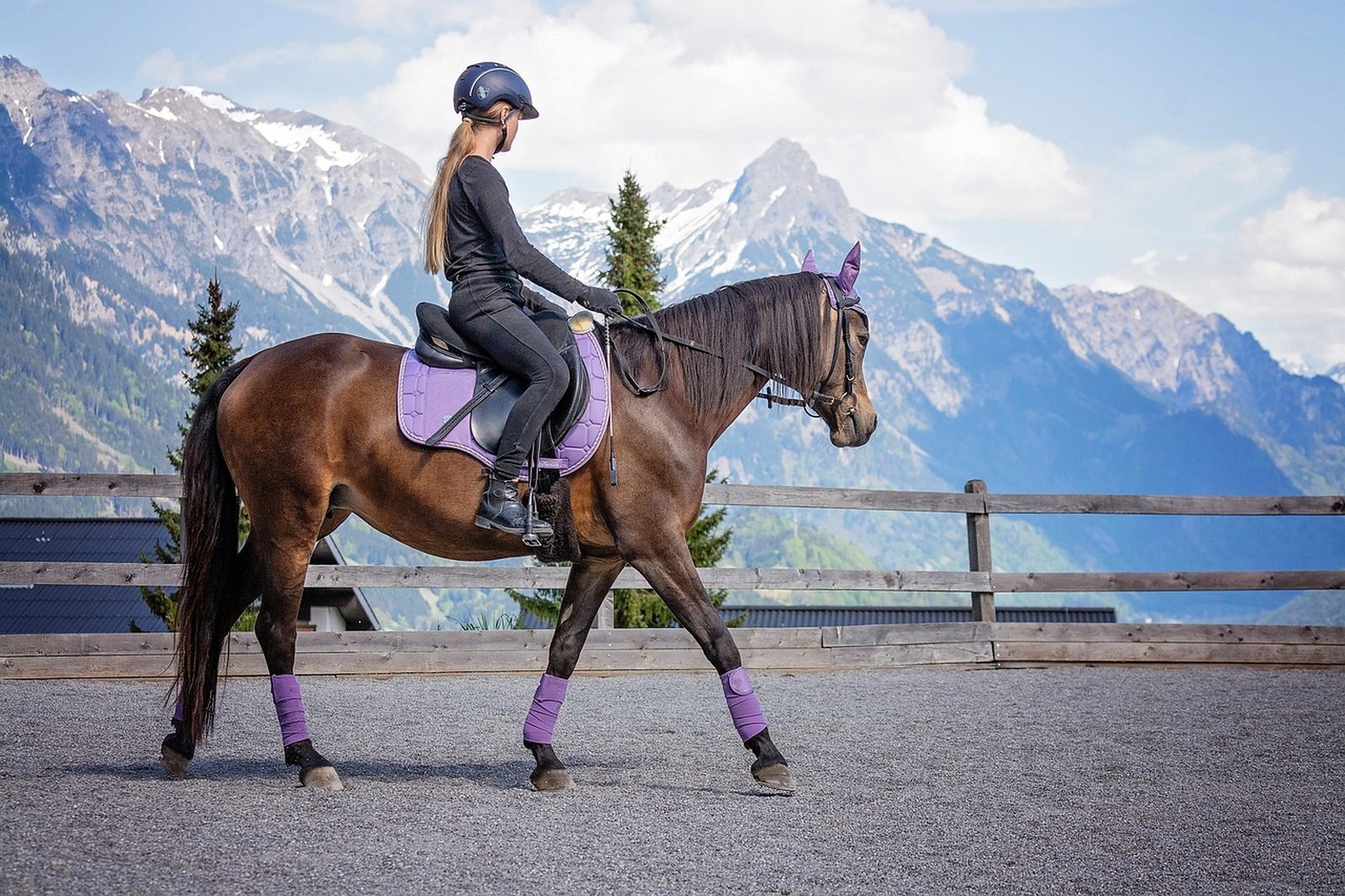
A horse who walks off during mounting is rarely being difficult. He has learned that the block means work begins, he may be anticipating a girth pinch or an unbalanced landing, or nobody ever taught him that standing still at the block is a job in itself. Teach it as a separate lesson, at a quiet time, with no ride following until the standing is solid.
Stage One: Standing at the Block Is the Lesson
Lead your horse to the mounting block in his normal tack, position him alongside it as if you were about to get on, and ask for a stand. Reward stillness after a few seconds, using a scratch at the withers, a calm word, or a small treat if you use them, then lead him away, circle, and repeat. Several short repetitions teach more than one long stand, and leading away between attempts stops the lesson becoming a test of patience for you both.
Work from both sides if he will ever be mounted from the right, so the stillness belongs to the cue rather than to one corner of the school. If he swings his hindquarters away from the block, reposition him quietly each time without scolding; the swing usually fades once standing itself starts paying.
Stage Two: Add the Pieces of Mounting
When he stands relaxed while you climb onto the block and step down again, add the pieces one at a time, rewarding after each stage and only moving on when the current stage is boring to him:
- Stand on the block and rest a hand on the saddle, then lean a little weight into it.
- Take up the reins with normal contact and gather them as you would to ride.
- Press down in the near-side stirrup with your hand, then tug the saddle gently from side to side.
- Rest your foot in the stirrup with a little weight, without swinging up.
- Finally, mount, sit quietly for a moment, reward, dismount, and lead him away.
That last detail matters: mounting and then immediately walking off teaches him that your foot in the stirrup is the starting pistol. Sit still, let him stand, and only then ask for walk, so the pause after mounting becomes part of the routine he expects.
Use a Helper, and Reset Without Drama
During the early stages, have a calm helper stand at his head on the opposite side from the block, holding the lead rope or rein loosely and rewarding stillness too. The helper is a safety net and a second source of praise, not a clamp; a horse held rigidly learns to lean against the hold rather than to stand. Fade the helper out once he stands through the full sequence several times in a row.
When he steps away mid-stage, do not punish him and do not haul him back by the reins. Lead him in a small circle, bring him back to the block, and repeat the last stage he did well. Frequent stepping away at the same stage is information: he may find that stage worrying, or something may hurt.
Rule Out Pain Before Repeating the Lesson
A horse who suddenly starts moving off at mounting, after previously standing well, deserves a check before more training. Saddle fit, a pinching girth, back soreness, or discomfort in a hock or stifle can all surface at the moment your weight goes into the stirrup. Ask your vet to examine him, and have the saddle fit checked, if the behaviour is new, one-sided, or paired with ear pinning, tail swishing, or reluctance under saddle. Training through pain teaches a horse that the block predicts discomfort, which is the opposite of the lesson you want.
Keep each session short and practise on non-riding days too, so the block stops predicting work. Writing down which stage you reached and how he settled in KinsLe's Care Teams means a helper picking up the next session continues from the right stage instead of starting again.