
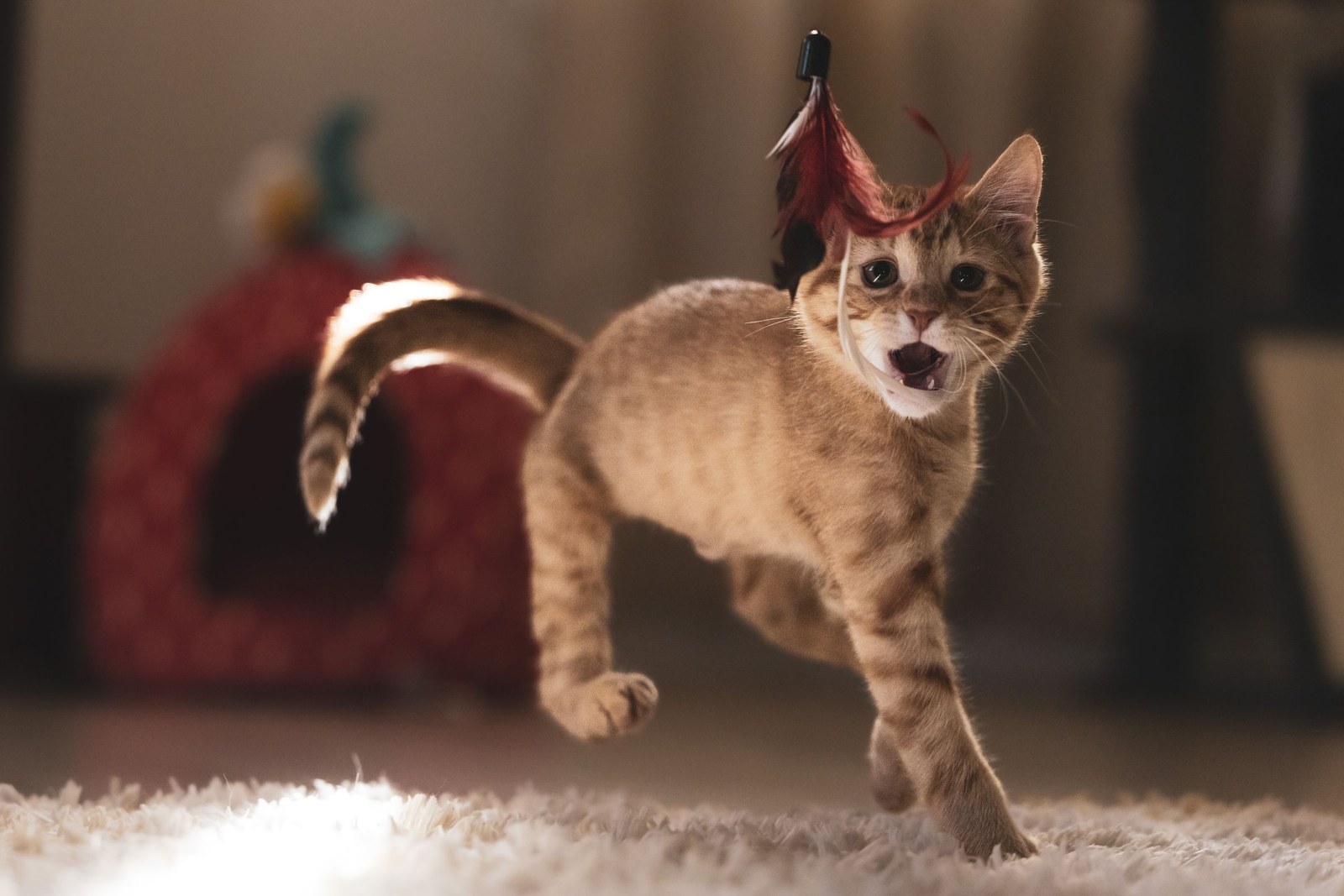
Stop play the moment your kitten's teeth touch skin, then redirect her to a toy she is allowed to attack — hands should never be the toy. That single, consistent rule is what teaches a kitten that biting ends the fun, while claws and teeth aimed at a wand, a kick stick, or a crinkle ball keep the game going.
Why Kittens Bite Hands in the First Place
Play biting is not meanness. Kittens learn to hunt by pouncing on moving things, and a wiggling hand under a blanket looks exactly like prey. Littermates teach each other limits through squeals and walking away; once a kitten comes home at eight to twelve weeks, that job falls to you. The trouble starts when people wrestle back, use fingers as teasers, or laugh at tiny bites. What feels harmless at two pounds becomes a hard, startling bite from a ten-pound adult who never learned another way to play.
Overstimulation matters too. A kitten who is fine for three minutes can flip to ears-back, tail-lashing arousal at minute five, and hands are the closest target.
The Redirect Routine, Step by Step
- Keep a wand toy or kick stick within reach of every play spot — sofa, bed, desk.
- When teeth or grabbing paws land on you, go still, say a calm "ow" once, and withdraw your hand slowly. Jerking away triggers the chase reflex and makes the bite tighter.
- Pause for twenty to thirty seconds. No scolding, no pushing her off with the same hand — just a boring break in the action.
- Restart play with the toy, dragging it along the floor and away from your body so her focus shifts to movement at a distance.
- When she attacks the toy instead, praise her and let the game continue.
Building Better Play Habits
- Use long wand and fishing-rod toys that keep a clear gap between your hand and the action.
- Offer kick sticks and stuffed prey toys for the bunny-kicking style of play she would otherwise practice on your forearm.
- End sessions before she is wound up, and finish with a small meal or treat to mimic the hunt-catch-eat cycle, which settles most kittens noticeably.
- Ask everyone in the house to follow the same rule. One person secretly playing hand-wrestling undoes a week of good teaching.
What Not to Do
Never flick her nose, spray her, scruff her, or "bite back." Punishment during play teaches a kitten that hands are unpredictable and a little scary, which can turn playful biting into defensive biting.
When Biting Needs Extra Help
If play biting stays intense, happens outside play, or comes with hissing, growling, flattened ears, or avoidance, something else may be going on. Pain, fear, and frustration can all raise a kitten's bite threshold, so a veterinary check is a sensible first step. If the vet clears her health and the habit persists, a professional trainer or behavior-minded professional can watch her body language in person and build a plan for your household.
That is exactly the kind of help you can find through the Pet Services Directory on KinsLe, which helps you locate local groomers, vets, sitters, and trainers in your area. For stubborn play biting, the Pet Services Directory listings on KinsLe point you toward a trainer nearby who can watch her body language in person.