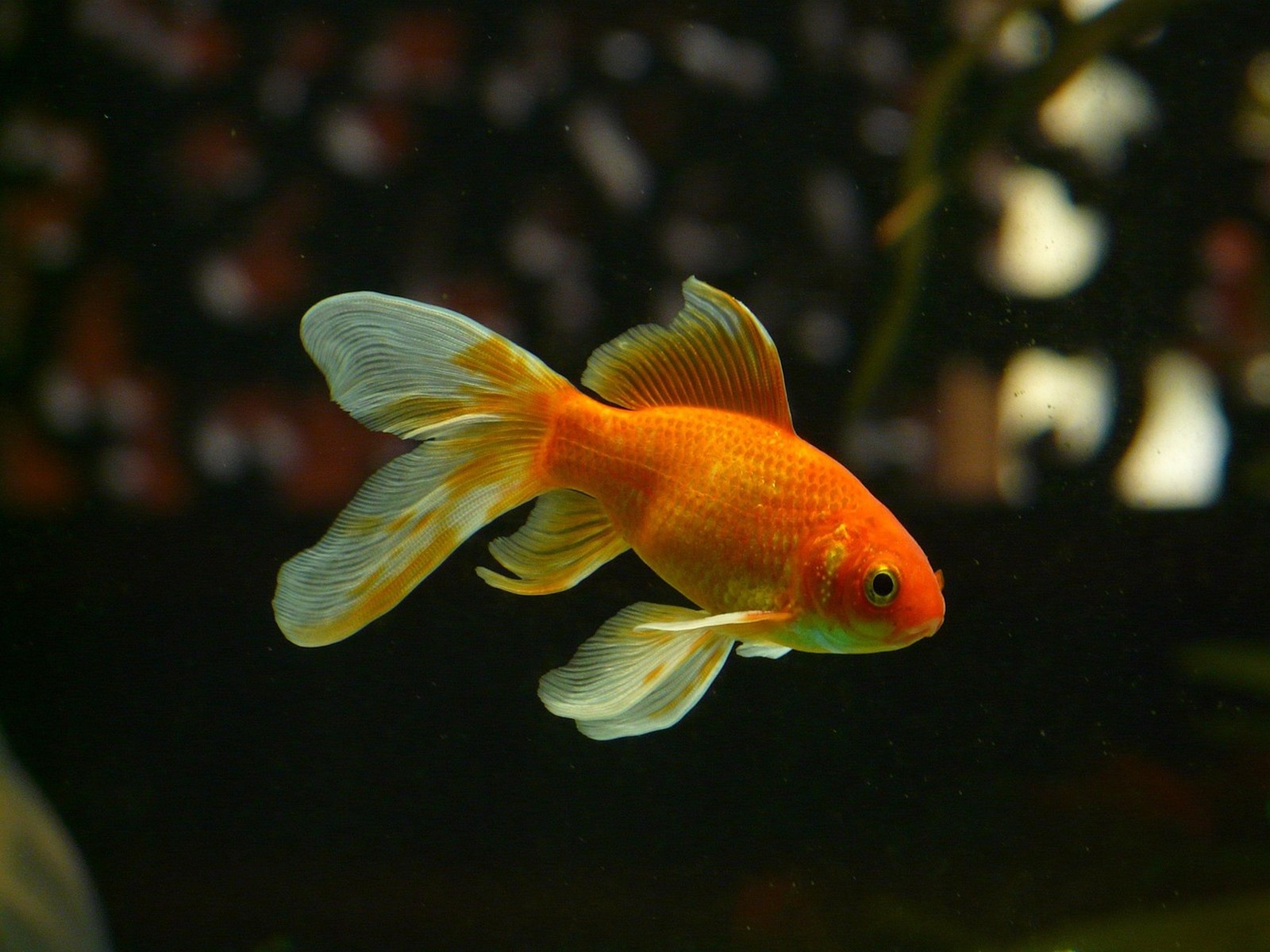
Sexing a goldfish depends far less on a single glance than on timing. A young goldfish, or an adult outside the breeding season, may show almost no reliable difference at all, while the same fish in season can be straightforward to read. Work through the male signs, the female signs and the fish's behaviour together, and be willing to leave the answer open until the season gives you enough evidence to judge.
The male signs that appear in season
As the water warms and breeding condition builds, a mature male develops breeding tubercles: small, firm, white bumps that feel slightly rough, like fine sandpaper, to a gentle fingertip. Look for them first on the gill covers, then along the front edge of the pectoral fins, where they are usually clearest. A male also tends to stay slimmer and more streamlined through the body than a female of the same variety and age, because he is not carrying eggs. Tubercles are a dependable sign on their own, so if you can see and feel that rough white speckling on the gill covers of a mature fish, you are very likely looking at a male. Males out of season lose the tubercles again, which is why a fish sexed confidently in spring can look completely unmarked a few months later.
How a mature female differs
A female in breeding condition carries her eggs in the belly, so she looks rounder and fuller than a male when you compare the two from the side, and often slightly lopsided when you look down on her from above, with one side of the belly bulging a little more than the other. Her vent, the small opening just in front of the anal fin, also changes: in season it protrudes slightly and looks rounded, while a male's vent stays smaller, flatter and more oval. Compare fish of the same variety whenever you can, because a deep-bodied fancy female and a slim single-tailed male differ for reasons that have nothing to do with sex, and variety alone can mislead you badly if it is the only thing you compare.
Behaviour, and the cases that stay uncertain
Behaviour adds a useful supporting clue. In season, males chase females persistently, nudging at the belly and driving the female among plants or into corners, and a group of males may chase one rounder fish for long stretches. Chasing alone is not proof, because excited fish also chase tankmates over food, but steady chasing aimed at one fuller-bodied fish fits the breeding pattern well. Some cases honestly stay uncertain: juveniles show none of these signs until they mature, round-bodied fancy varieties such as fantails look plump in both sexes, and a lone pet gives you no comparison fish and no breeding behaviour to watch. Never squeeze a goldfish to try to express eggs or milt. That can injure the fish, and it tells you nothing that patient observation in season would not tell you safely.
Checking calmly, then recording what you find
Do your checking from outside the glass first, watching shape from the side and from above while the fish swims normally. If you need a closer look at the gill covers or the vent, lift the fish briefly in a soft, wet net over a container of its own tank water, keep the handling to a short moment, and return it straight away. Comparing clear photographs taken a few weeks apart often settles a borderline fish, because the belly fullness and the tubercles build gradually rather than appearing overnight. Once the seasonal signs settle the question for your fish, add the result to its KinsLe Pet Pass, so its sex sits alongside its variety and age in a record anyone caring for it can read at a glance.