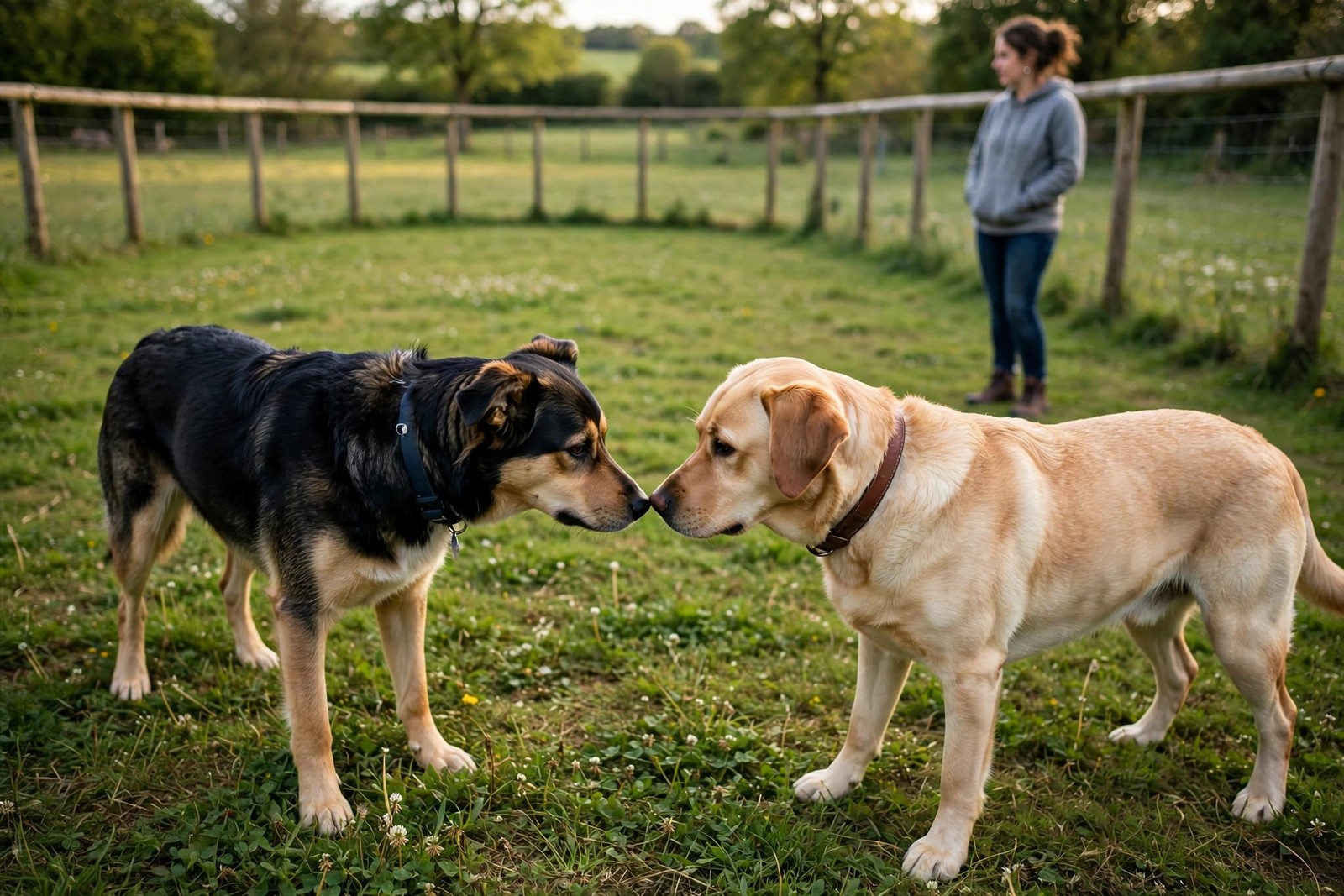
A dog who charges at every dog she sees is not being friendly in any way the other dogs would recognise. A head-on rush is rude in dog language, it startles or frightens the dog on the receiving end, and it is self-rewarding: every charge ends in the contact she wanted, so the habit strengthens each time it is practised. Polite greetings are a trained skill with several parts, and off-leash freedom is the last stage of the training, not the place where it happens.
Start with a recall and check-in that survive other dogs
Before greetings enter the picture, your dog needs two behaviours proofed around dogs at a distance: orienting to you when she notices one, and recalling away from play once engaged. Train both on a long line in quiet areas first, paying with whatever she values most, then practise near — not in — places where dogs play. The working distance is the one where she can see a dog, look back at you, and take a reward. If she locks on, drags toward the other dog, or cannot eat, she is too close, and greetings trained at that distance will fail in exactly the way you are trying to fix.
Install the permission system
The rule you are installing is simple: seeing a dog is not the starting pistol, your release cue is. On the long line, let her notice a dog, wait for or cue the check-in, mark and reward it, then either release her with a go-say-hello cue or redirect into a game with you. Both outcomes must feel like wins, because a dog who believes checking in might cost her the greeting learns to skip the check-in. At first, release her most of the time when she checks in promptly; the occasional not-this-one becomes acceptable later, when the habit is strong. Never release a dog who is pulling toward the other one, since releasing at peak arousal teaches her that intensity opens the gate.
What a polite greeting actually looks like
Choose the partners carefully: socially fluent adult dogs who enjoy greetings and will correct rudeness with a look rather than a fight. A polite approach curves in an arc rather than a straight charge, slows as it nears, and offers a sideways body and a sniff of the other dog's rear rather than a face-to-face stare. Keep these first meetings to about three seconds, then call your dog away and pay her for leaving before excitement boils. Short, repeated, boring greetings teach the script; long greetings let arousal climb until somebody rehearses wrestling, humping, or a chase you did not plan. Parallel walking side by side, at a distance, is a halfway house for dogs who are not yet ready for contact.
Teach her to read the other dog's answer
Permission from you is only half the consent in a greeting. A dog who turns away, moves behind her owner, stiffens, or gives a hard stare is declining, and your dog must learn that those signals end the approach, with you calling her away and rewarding the disengagement. Practise calling her off mid-approach to known dogs in training so the skill exists before it matters. Dogs on leads, dogs in training vests, elderly dogs, and dogs recovering from injury are automatic no-greeting zones regardless of how friendly yours is, and unknown off-leash dogs rushing you are a reason to step between, scatter food, and leave rather than a greeting opportunity.
Earn the freedom in stages
Move from long line to a trailing line, then to off-leash work in secure fields with known dogs, and only then to open areas where unknown dogs appear. Any stage that produces a charge sends you back one stage. KinsLe's Care Teams keeps the staging honest across the household, because the walker assigned each outing works to the same permission rule and marks the session complete, so your dog never gets a rehearsing-the-charge walk from someone who did not know the plan.