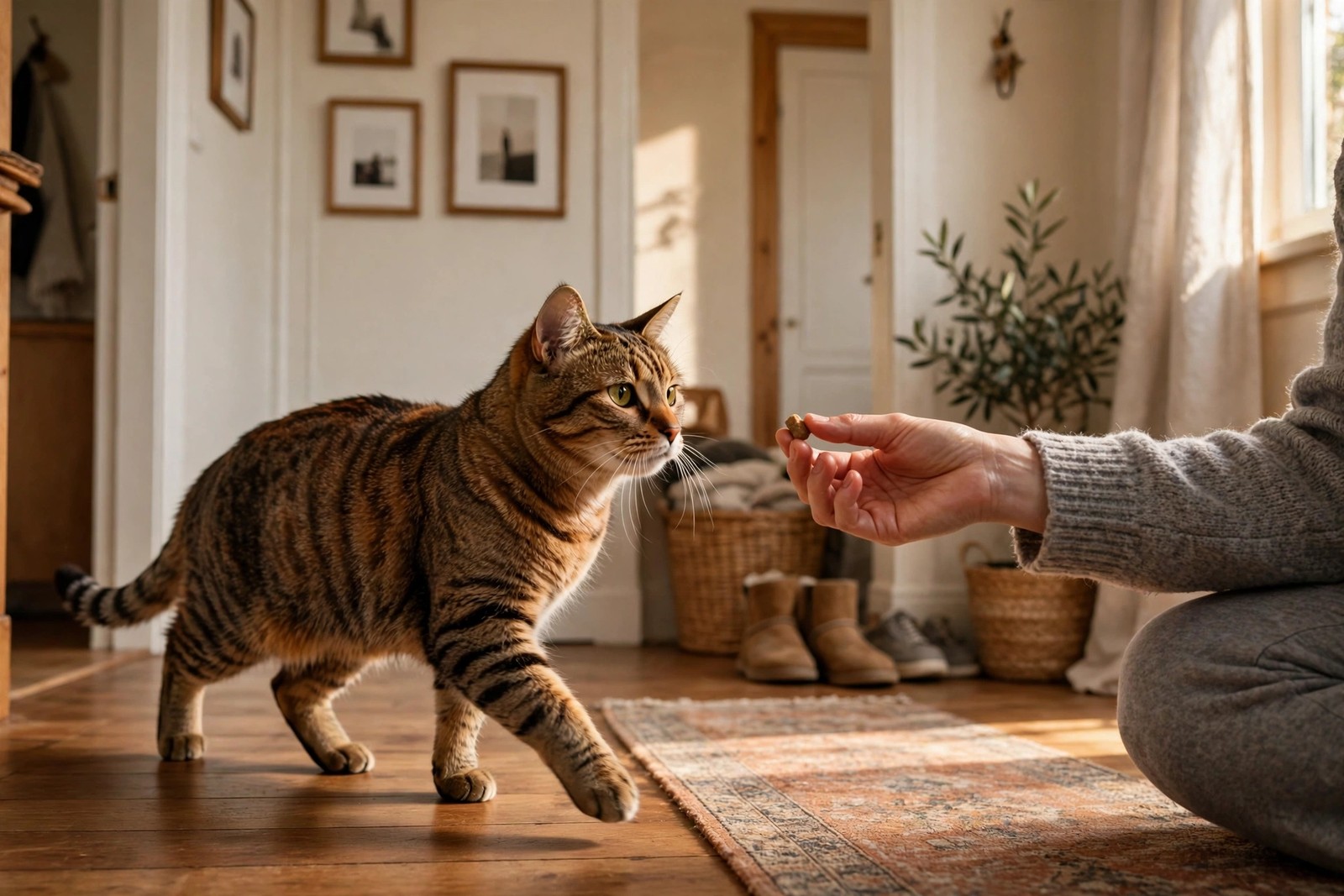
A reliable feline recall is not a trick for its own sake. It is the skill that turns a cat slipping through a closing front door from a neighbourhood search into a voice from the step and a cat trotting back across the garden. Cats learn recalls as well as dogs do; they simply need the payment to be worth it and the training kept short enough to stay interesting.
Choose the Cue and the Payment
Pick one cue and protect it: her name plus a single word such as here, or a distinct sound like a whistle or a shaken treat container, used for recalls and nothing else. Then find her genuine high-value reward, the food she will cross a room for without pausing, often a flake of tinned tuna, a small piece of cooked chicken, or a lickable treat. Ordinary kibble rarely funds a recall. Keep a small sealed portion of the special reward ready in the same place so practice never waits on preparation, and train when she is mildly hungry, before a meal rather than after one.
Pair, Then Practise, Indoors
Begin when she is a few feet away and already vaguely interested in you. Say the cue once, and the moment she turns her head toward you, mark it with an upbeat yes and deliver the special treat. Repeat three or four times, then stop while it is still fun. Over the following days, call from across the room, then from another room, then from behind furniture as a gentle hide-and-seek game, paying every single arrival for the first few weeks. Keep sessions under five minutes, once or twice a day. Two rules protect the cue for life: never repeat it over and over when she ignores it, which teaches her it is background noise, and never use it to summon her for medicine, a carrier, or anything she dislikes, which teaches her that answering is a trap. Call her for those things separately, or simply go and get her.
Proof It at the Doorway
Once she answers reliably throughout the house, practise the exact scenario you are insuring against. Call her to the closed front door and pay generously there. Then, with her on a harness and long line for safety if she tolerates one, practise just inside an open doorway with the garden in view, rewarding fast, happy returns. Retire the everyday payments slowly once the habit is deep: pay most recalls, always pay doorway recalls, and give the jackpot version, several pieces in a row, for any recall that felt slow or doubtful, so her best decisions pay best.
The Day She Gets Out Anyway
If she escapes, use the training rather than abandoning it. Do not chase her, because pursuit reads as a game or a threat and pushes an indoor cat further from home. Crouch near the door she left by, call the cue in your normal training voice, and put her favourite food just inside the threshold, leaving the door open if you safely can while you step back. Many indoor cats return to the same door around dusk when the street quietens, so repeat the cue calmly at intervals rather than shouting it continuously. KinsLe's Lost Pet Alert System backs the training up on exactly that day, sending a free alert to nearby Circle of Love members and letting anyone who spots her message you directly, so your recall has a whole neighbourhood helping it land.